Mossad Infiltrated Tehran's Traffic Camera Network in Years-Long Spy Operation
According to a detailed report, operatives from Israel's Mossad intelligence agency successfully hacked into Tehran's extensive traffic camera network, using it to conduct surveillance on Ayatollah Ali Khamenei, his bodyguards, and other senior Iranian officials for several years prior to his assassination. The cameras, which Iran itself employs to monitor regime opponents and the general population, provided Israel with near-total access to visual data across the city.
Intimate Knowledge Gained Through Camera Feeds
Images captured by the compromised cameras were transmitted back to intelligence centers in Tel Aviv and southern Israel. This allowed Mossad to develop an intimate understanding of the bodyguards' personal details, including their home addresses, work schedules, and specific protection assignments. One particular camera angle proved especially valuable, enabling agents to track where guards parked their personal vehicles upon arriving at the Supreme Leader's compound on Pasteur Street in central Tehran.
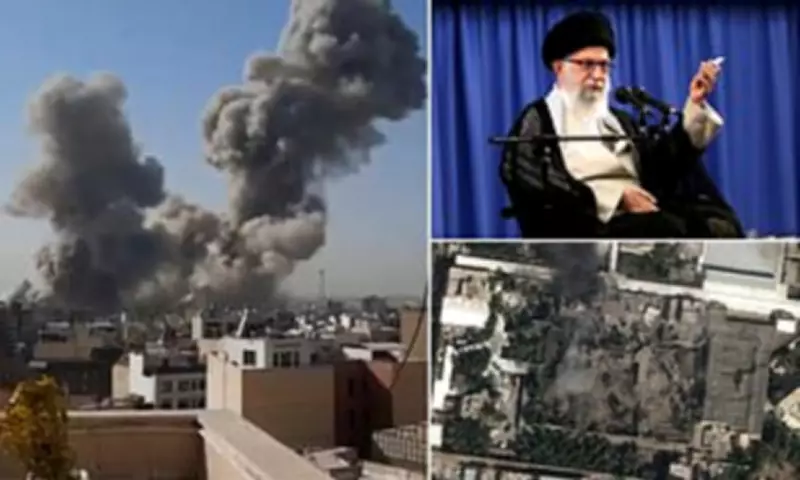
This hacking initiative was part of a prolonged intelligence campaign that culminated in the killing of Khamenei on Saturday. Israeli jets, flying directly from military bases for hours, launched up to thirty precision munitions at his complex. Following a daylight bombing raid aimed at destabilizing the regime, Khamenei's body was recovered from the rubble. He had presided over a brutal regime for thirty-six years, overseeing the slaughter of thousands of citizens, repression of women, and funding of terrorist proxies like Hamas and Hezbollah, which seek Israel's elimination.

Disruption Tactics and Coordinated Intelligence
Upon locating Khamenei on Saturday morning, Israeli forces disrupted approximately a dozen mobile phone towers near Pasteur Street. This made phones appear busy when called and prevented his security team from receiving potential warnings. An Israeli intelligence official later told the Financial Times, 'We knew Tehran like we know Jerusalem. And when you know [a place] as well as you know the street you grew up on, you notice a single thing that’s out of place.'
The operation also benefited from a human source provided by the CIA, who supplied vital intelligence. Combined with Israeli AI tools and algorithms that sifted through vast amounts of data on Iran's leadership and their movements, this source helped trace Khamenei to the meeting where he was targeted. Once Israel and the United States confirmed his location, they decided to act immediately, fearing that during a war, he would be moved into bomb-resistant bunkers, thus losing the element of surprise.
Planning and Execution of the Strike
Mossad officials had planned the attack for months but moved swiftly upon confirmation of Khamenei's whereabouts. They utilized the hacked traffic cameras to verify that his meeting was on schedule, alongside the compromised phone networks and the CIA's ground source. During the strike, senior Iranian national security officials were in another part of the building, but the assault resulted in significant casualties.
Among those killed were two high-level military leaders: Rear Adm. Ali Shamkhani and commander of the IRGC Maj. Gen. Mohammad Pakpour. Additionally, Khamenei's daughter, grandchild, daughter-in-law, and son-in-law were obliterated, along with his 79-year-old wife, Mansoureh Khojasteh Bagherzadeh, and former Iranian President Mahmoud Ahmadinejad.
Regional Retaliation and Escalating Conflict
In response, Iran has carried out furious strikes across neighboring Gulf states, with explosions reported in Qatar, Israel, Bahrain, Kuwait, Iraq, Oman, and Saudi Arabia. The conflict expanded further on Monday, involving exchanges of fire between Israel and Hezbollah militants in Lebanon, the downing of US jets in Kuwait, and Qatar taking out Iranian fighter planes.
On Monday night, former US President Donald Trump warned Iran that the 'big one' was imminent, stating he was not afraid to deploy ground troops if necessary. Trump estimated the conflict might last 'four weeks or so', but boasted that US and Israeli forces were 'way ahead of schedule', adding that soldiers would be sent 'if they were necessary'.