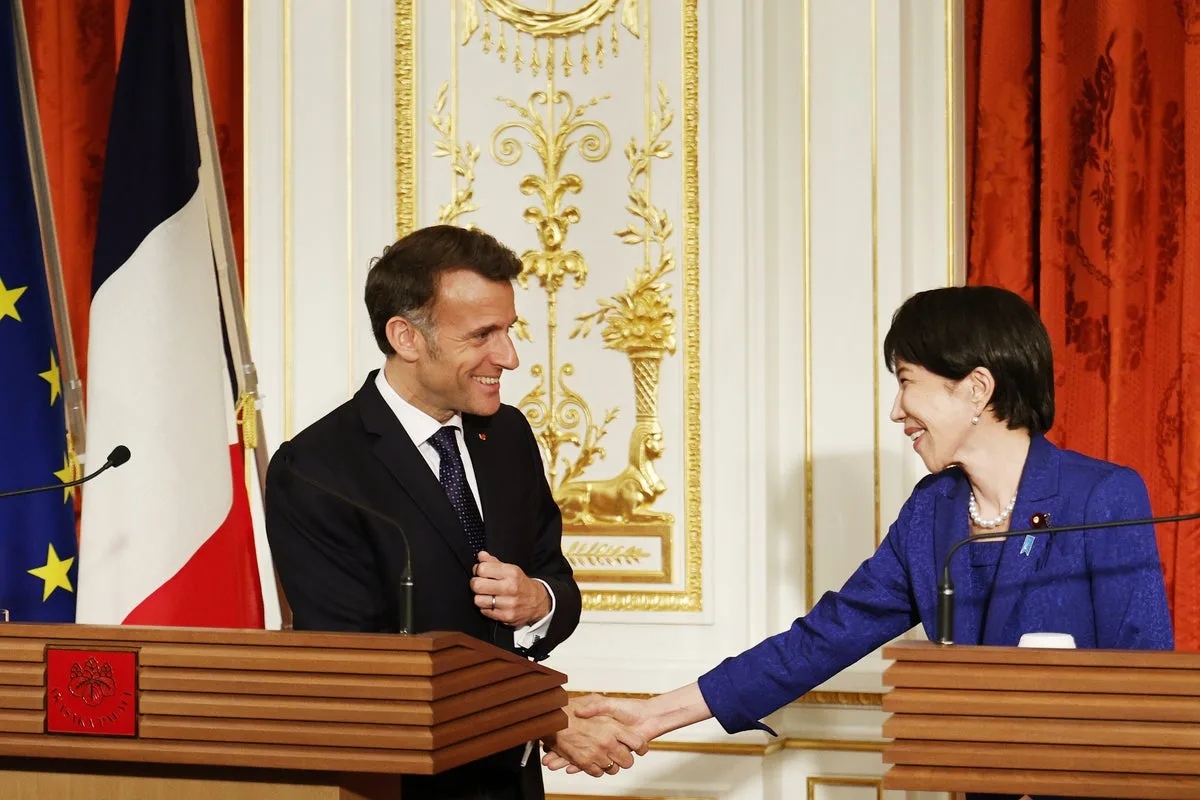
French President Emmanuel Macron has issued a strong call for a ceasefire in the Middle East during his official state visit to Japan on Wednesday, April 1, 2026. Macron held high-level talks with Japanese Prime Minister Sanae Takaichi in Tokyo, where both leaders emphasised their shared commitment to international law, democratic values, and the urgent need for de-escalation in the volatile region.
Joint Advocacy for Peace and Stability
At a joint news conference held at the Akasaka Palace in Tokyo, Macron stated, "We both believe in international law, the international order, and democratic values. This is why we both advocate for a return to peace, a ceasefire, calm, and free passage through the Strait of Hormuz." Prime Minister Takaichi echoed these sentiments, highlighting the critical importance of swiftly reducing tensions and ensuring the safety of the vital waterway to maintain stable global trade flows.
Strengthening Bilateral Ties Amid Global Challenges
Takaichi remarked, "With the international environment increasingly severe, I believe it is especially meaningful for the Japanese and French leaders to deepen our friendship and cooperation." The discussions extended beyond immediate geopolitical concerns, with both nations agreeing to enhance collaboration in several strategic sectors. These include defense, rare earths development, nuclear energy, and space exploration, reflecting a comprehensive partnership aimed at addressing shared global challenges.
Deepening Defense and Economic Cooperation
In a significant move to bolster their alliance, Japanese Defense Minister Shinjiro Koizumi and French Defense Minister Catherine Vautrin signed a detailed road map for defense cooperation on Tuesday. This agreement focuses on increased joint military exercises and exchanges in the Indo-Pacific region, where France maintains a significant presence with troops, citizens, and resources. This cooperation is seen as a counterbalance to China's growing influence, aligning with like-minded democracies seeking to protect their interests.
Additionally, the trade ministers of Japan and France inked a deal for a joint rare earths project. This initiative is particularly strategic, as China currently dominates global production of rare earths, which are essential for manufacturing powerful, heat-resistant magnets used in defense and electric vehicle industries. The leaders also confirmed cooperation in developing a fast reactor and nuclear fuel recycling program, areas where Japan has faced technical struggles.
Context of U.S. Comments and Future Engagements
Macron's visit occurred against a backdrop of recent comments from U.S. President Donald Trump, who suggested that responsibility for keeping the Strait of Hormuz open should fall on countries reliant on it, specifically mentioning France. Trump expressed frustration over Europe's perceived lack of support for U.S.-Israeli military efforts, criticising France as "very unhelpful." Macron did not address these remarks during the news conference, where questions from reporters were not permitted.
Looking ahead, Macron and Takaichi are scheduled to visit a company specialising in space debris removal technology on Thursday, underscoring their commitment to space cooperation. Macron will then have a courtesy meeting with Emperor Naruhito and attend a palace lunch before departing for South Korea, continuing his diplomatic tour in Asia.
Associated Press video journalist Ayaka McGill contributed to this report, providing coverage of the high-stakes discussions between these key global leaders.






