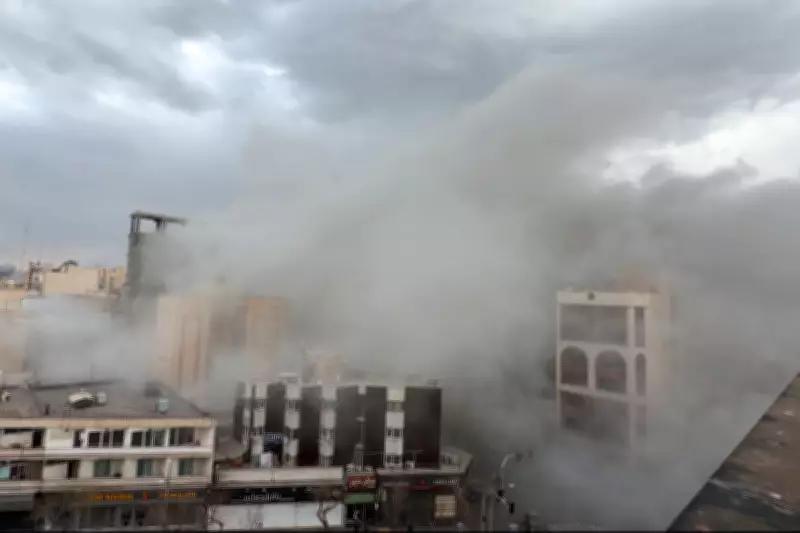
Iranian Drone Strike Targets US Embassy in Riyadh Amid Regional Escalation
Iran has carried out a drone strike on the United States Embassy in Riyadh, the capital of Saudi Arabia, early on Tuesday, March 3, 2026. This attack occurred as Iran continued to strike targets across the Middle East, while the United States and Israel responded with intense airstrikes on Iran. US President Donald Trump indicated that this military campaign could persist for over a month, marking a significant escalation in regional tensions.
Details of the Embassy Attack and Regional Retaliation
According to Saudi Arabia's Defense Ministry, two drones struck the US Embassy in Riyadh, causing a limited fire and minor damage. No further details were released. This incident follows a similar attack on the US Embassy in Kuwait the previous day, highlighting Iran's expanding retaliation across the Gulf region.
The conflict has intensified with the killing of Iranian Supreme Leader Ayatollah Ali Khamenei and a lack of clear exit strategies, suggesting a prolonged confrontation with far-reaching consequences. Iran has targeted various locations deemed safe havens, including Amazon data centers in the United Arab Emirates and Bahrain, energy facilities in Qatar and Saudi Arabia, and ships in the Strait of Hormuz. These actions have driven global oil and natural gas prices higher, as the strait is a critical passage for a fifth of the world's traded oil.

Humanitarian Impact and International Response
The humanitarian toll is severe. The Iranian Red Crescent Society reported at least 555 deaths from US-Israeli operations, while Israel confirmed 11 fatalities from Iranian missile strikes. In Lebanon, Israeli retaliatory strikes against Hezbollah killed dozens. Additionally, the US military confirmed six American service members killed in Kuwait, all from the same logistics unit.
Other casualties include three deaths in the United Arab Emirates, and one each in Kuwait and Bahrain. Amy Pope, director general of the International Organization on Migration, warned that military escalation could displace more families and harm civilians, noting that millions are already displaced in the region. The US State Department has urged citizens to leave over a dozen Middle Eastern countries due to safety risks, though closed airspace has left many stranded.
Military Objectives and Nuclear Concerns
President Trump stated that the campaign aims to destroy Iran's missile capabilities, eliminate its navy, prevent nuclear weapon development, and curb support for groups like Hezbollah. Secretary of State Marco Rubio emphasized that the hardest hits from the US military are yet to come. Israel has targeted Iran's leadership and nuclear infrastructure, with strikes reported at the Natanz nuclear enrichment site, though Iran denies pursuing nuclear weapons and claims its program is peaceful.
Israeli Prime Minister Benjamin Netanyahu asserted that Iran is rebuilding underground sites for atomic bombs, though he provided no evidence. Satellite imagery analyzed by The Associated Press showed limited activity at Iranian nuclear sites, with analysts suggesting Tehran may be assessing damage from previous strikes.
Proxy Involvement and Regional Spread
The conflict has drawn in proxy forces, with Hezbollah firing missiles at Israel from Lebanon, though no injuries or damage were reported. Israel retaliated with strikes on Lebanon, killing at least 52 people and wounding 154 in Beirut suburbs and southern areas. An Israeli military spokesman mentioned keeping all options on the table, including a potential ground invasion of Lebanon.
In a chaotic incident, Kuwait mistakenly shot down three American fighter jets during an Iranian attack, with all pilots ejecting safely. Iranian-linked militants in Iraq have also claimed strikes on US military facilities, further complicating the situation.
As the conflict escalates, with no immediate resolution in sight, the international community faces mounting pressure to de-escalate and address the growing humanitarian crisis.