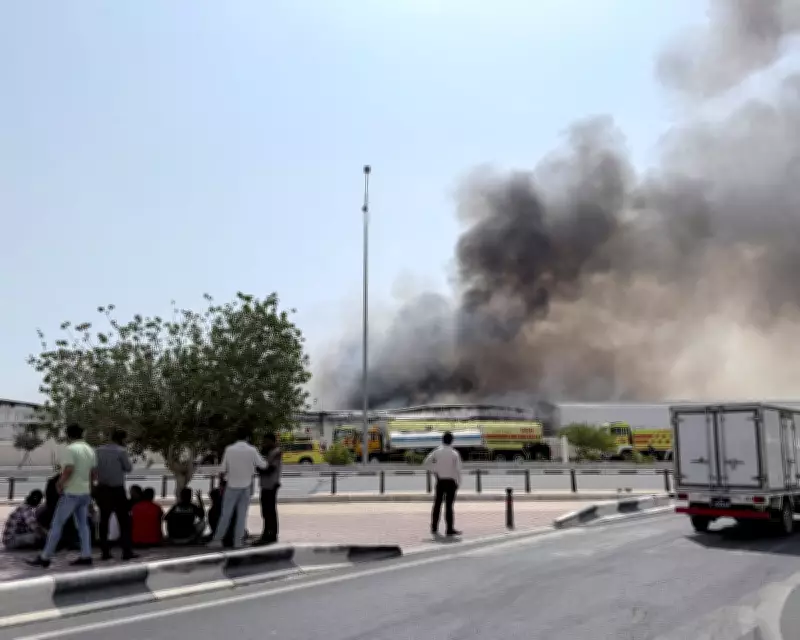
Gulf States Edge Towards Military Action Against Iran After Missile Strikes
Gulf states are on the brink of abandoning their neutrality in the conflict with Iran, driven by a series of what they describe as "reckless and indiscriminate" attacks on their territory. Encouraged by former US President Donald Trump, nations within the six-member Gulf Cooperation Council (GCC) are considering self-defence measures that could align them more closely with Israel, reshaping the geopolitical landscape of the Middle East.
Escalating Tensions and Diplomatic Breakdown
In a video meeting on Sunday, GCC foreign ministers did not explicitly endorse military action but affirmed that the "option to respond to Iranian attacks" remains open to protect regional stability. This stance marks a significant departure from Iran's extensive diplomatic efforts over the past two years, which aimed to convince Gulf states that Israel, not Iran, is the primary destabilising force in the region. Those efforts, involving speeches, conferences, and diplomatic visits, have rapidly unravelled amid recent hostilities.
Ali Larijani, secretary of Iran's supreme national security council, justified the strikes as targeting US forces based in Gulf states, stating, "We do not intend to attack you. But when the bases of your country are used against us and the United States operates in the region with its own forces, we target them." However, this justification has lost credibility as attacks have expanded to include hotels, apartment blocks, and oil refineries, seen by Arab leaders as disproportionate and revealing Iran's perceived arrogance towards its neighbours.

Economic Disruption and Regional Fallout
Iran's strategy appears focused on maximising economic disruption in the Gulf, potentially forcing these states to urge Trump to end a war initiated without their support. Recent incidents include an Iranian drone strike on Saudi Arabia's Ras Tanura refinery, an attack on an oil tanker off the coast of Muscat, Oman, and drone strikes on energy facilities in Qatar's Ras Laffan industrial city. Majed al-Ansari, Qatar's foreign ministry spokesperson, emphasised, "This cannot go unanswered, a price has to be paid for this attack on our people."
Qatar's former prime minister, Hamad bin Jassim bin Jaber al-Thani, warned that Iran has eroded Gulf sympathy and sowed lasting doubts in future relations. Yasmine Fariouk of the International Crisis Group noted, "The Gulf countries now are at a point where there's a lot of anger at Iran. Many of them have invested a lot in the detente with Iran and in mediating and trying to find solutions only to find that Iran still sees them as a platform for its bigger war with the US and with Israel."
Surprise Attacks and Financial Costs
The scale and speed of Iranian attacks have caught Arab leaders off guard. The UAE has withdrawn its ambassador from Tehran, reporting 165 ballistic missiles launched, with 152 intercepted and 13 falling into the sea, alongside numerous drone interceptions. Kelly Grieco at the Stimson Center estimates the financial cost to the UAE at nearly $2 billion, highlighting the high expense of defensive measures.
In a joint statement, Bahrain, Iraq, Jordan, Kuwait, Oman, Qatar, Saudi Arabia, and the UAE condemned the targeting of civilians and non-combatant countries as "reckless and destabilising." Notably, the attacks have prompted a temporary rapprochement between rivals UAE and Saudi Arabia, who had been at odds over conflicts in Sudan and Yemen.
Internal and External Pressures
Saudi authorities have denied reports of covertly encouraging US-Israeli attacks on Iran, a charge that could complicate domestic positions given accusations against Israel in Gaza. Meanwhile, Iranian Foreign Minister Abbas Araghchi nearly apologised for an attack on a US facility in Oman, citing decentralised military command as a precaution against headquarters destruction.

Rob Geist Pinfold, a defence studies lecturer at King's College London, observed, "It's picking the Gulf countries because it sees them as a soft target. They're easier to hit than Israel. These countries have less of an appetite for a fight, because at the end of the day, this is not their war." As Gulf states weigh potential military reprisals, the risk of further escalation threatens to destabilise the region further, with little public debate within Iran's hierarchy on the consequences of alienating its neighbours.