Stop Using Bleach on Shower Grout: 3 Better Items to Remove Mould
Stop Using Bleach on Shower Grout: 3 Better Items

Cleaning shower tiles can be frustrating, but it ranks among the most crucial household tasks because once mould begins infiltrating the grout, it can prove extremely challenging to eliminate. Shower grout refers to the narrow gaps between bathroom tiles, typically composed of a cement-based mixture, and this substance can be rather porous, enabling moisture to accumulate within it.

Without regular cleaning of these lines, black marks will frequently appear around your shower as grime and soap residue become lodged in the grout and rapidly turn mouldy. Mould surrounding a shower does not just look dreadful, but it can also generate a stale odour in bathrooms and refuses to shift, regardless of how vigorously you scrub. Nevertheless, Leslie, a cleaning expert and founder of Lemon Grove Lane, is cautioning people against attempting to eliminate this mould with bleach, as superior results can be achieved using non-toxic alternatives.

Leslie stated: "Bleach can discolour or strip colour away. That said, if you are using it to clean coloured grout, it will likely fade the colour or make the colour uneven or remove it altogether. Bleach erodes, so it can also weaken the grout causing it to crack and crumble."

Wide Pickt banner — collaborative shopping lists app for Telegram, phone mockup with grocery list

Numerous people attempt to clean grout with bleach as it is recognised for killing surface mould and brightening the lines, but it lacks sufficient penetration into the grout to eradicate it entirely. Mould already embedded in the grout will persist, and because bleach is a water-based solution, the spores will thrive on the dampness as it starts to regrow.

Mould cleaning products are not only ineffective, but they typically inflict considerable harm to grout with repeated use, frequently resulting in yellowing or completely removing it from your bathroom tiles. A superior approach involves using baking soda, which can work its way deep into the grout, alongside hydrogen peroxide, a gentler substitute for bleach that is commonly employed as a disinfectant renowned for eliminating mould.

How to Deep Clean Showers Without Using Bleach

You will need:

  • 120ml of baking powder
  • 60ml of hydrogen peroxide
  • 10ml of Castile soap

What makes hydrogen peroxide exceptional is that it destroys spores and damages the proteins essential for their survival, completely preventing mould from proliferating in a bathroom. Castile soap will dissolve oils and greasy residues like soap scum to help extract dirt from the grout and eliminate those dark marks in a shower. Baking soda is abrasive, and when worked into grout, it allows the solution to reach deep into the grout for thorough cleaning, ensuring the mould will not return.

Method

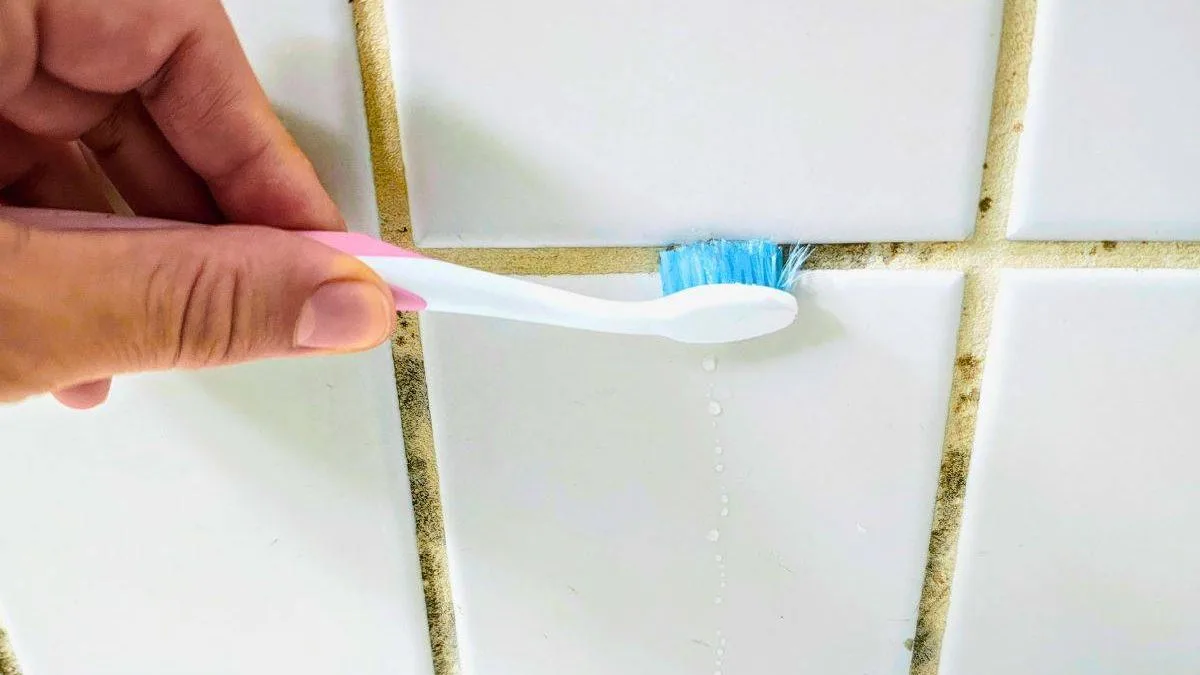
To start, combine the hydrogen peroxide and baking soda in a bowl, then incorporate the Castile soap. Mix the ingredients until it creates a paste, and it is ready for application. Apply the paste between the tiles on the shower floors and walls. Then, leave it undisturbed for 10 minutes to allow the solution time to decompose the mould. Once the time has elapsed, simply use a stiff-bristled brush to work the grout, and any marks should come away with minimal effort. Give the tiles a thorough rinse, then buff them dry with a clean cloth, and your shower should be gleaming without the need for bleach.

Pickt after-article banner — collaborative shopping lists app with family illustration




