

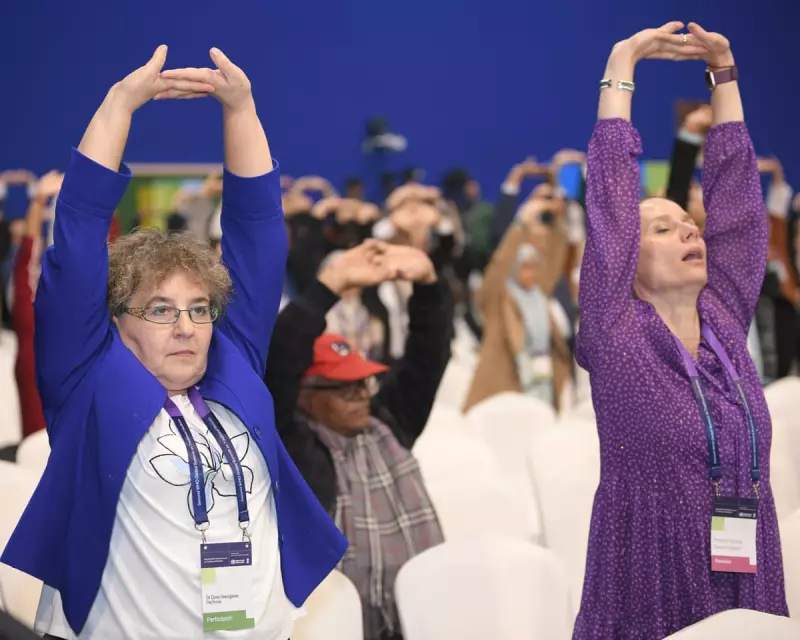
The World Health Organization (WHO) is embarking on a groundbreaking mission to unlock the secrets of the world's oldest healing practices. At a recent global summit in New Delhi, the UN health body outlined ambitious plans to rigorously study and, where evidence supports, integrate traditional medicine into mainstream healthcare systems worldwide.
Bridging Ancient Wisdom and Modern Science
Led by Dr Shyama Kuruvilla of the WHO Global Traditional Medicine Centre, the new decade-long strategy seeks to build a robust evidence base for practices ranging from herbal poultices in Africa to acupuncture in China and meditation in India. The goal is to harness their potential contribution to health and wellbeing, based on solid scientific proof.
"It's super-exciting," says Dr Kuruvilla. "I'm not saying we know what works and what doesn't work at scale – but I think there's this opportunity [to find out] right now." She emphasises that a historical lack of formal evidence, which has led some to dismiss these practices, can now be addressed with modern investment and technology.

A New Era of Research and Regulation
The WHO's approach is multifaceted. It includes establishing that evidence base, developing global standards for regulating treatments and practitioners, and facilitating appropriate integration into biomedical healthcare. This move comes as countries agreed earlier this year that the WHO should adopt this new global strategy.
Dr Kuruvilla points to Thailand as a leading example, where researchers document traditional practices and conduct randomised trials to get herbal treatments onto the national essential medicines list. In May, Thailand's health ministry even recommended doctors switch from some biomedicines to traditional remedies for conditions like muscle pain.
The organisation is clear, however, on drawing a line at unscientific systems. Dr Kuruvilla notes that homeopathy, created in the late 18th century, does not fit the WHO's definition of traditional medicine and lacks strong evidence. "We have to, as WHO, just stick to the evidence," she states. The bottom line is whether a practice is "supported by robust reliable evidence, especially on safety and efficacy."
Unlocking a 'Potential Treasure Trove'
The potential benefits are vast. The WHO suggests that the millions of university-educated traditional medicine professionals in countries like China and India could help ease global healthcare workforce shortages. In an era of aid cuts, these practices could also foster greater self-reliance among nations.
New technologies like artificial intelligence, genomics, and advanced brain scanning are pivotal to this exploration. For instance, functional magnetic resonance imaging can now trace the neurological pathways activated during meditation, transforming understanding of its benefits. "Meditation was all this 'woo-woo stuff'," says Kuruvilla, "but now... this is really, really exciting."
Dr Yukiko Nakatani, WHO's assistant director-general, told the summit that this is a "pivotal moment" for traditional medicine, calling it a vital component of cultural heritage and primary health care strategies. The risk of not investing, warns Dr Kuruvilla, is leaving people without safe access to their preferred care and failing to utilise a shared heritage that could offer holistic solutions for people and the planet.






