

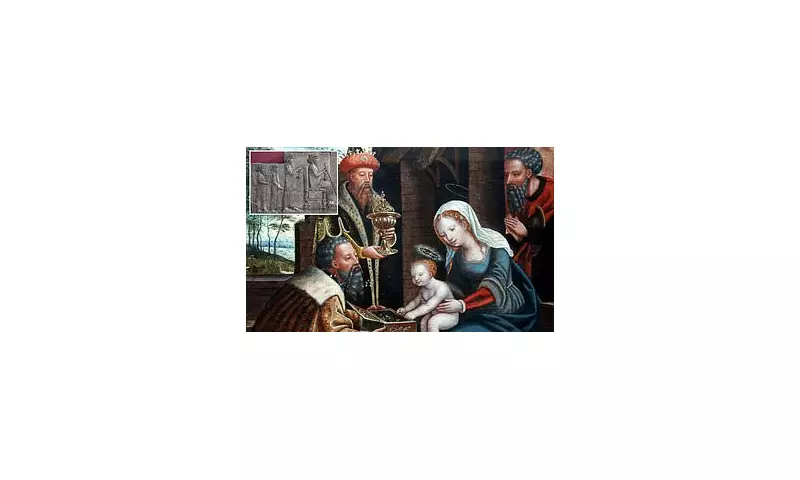
New research is challenging one of the most enduring images of the Christmas story, proposing that the Three Wise Men were not the regal kings of tradition but rather priests or astrologers from an ancient kingdom in the Middle East.
Unravelling Centuries of Tradition
The iconic figures, said to have followed a star to the birthplace of Jesus, are central to nativity scenes worldwide. However, a researcher from the Associates for Biblical Research argues that many details, including their number and royal status, were embellishments added through Christian stories and traditions centuries after the events described.
In a recent YouTube video, researcher Bryan Windle explained that the Gospel of Matthew, the only one of the four biblical gospels to mention them, uses the term 'magi'. This word, he notes, could have meant 'magician' and only later became synonymous with 'Wise Man' in modern translations. Crucially, the Bible never names them or confirms there were three; that assumption likely stems from the trio of gifts they bore: gold, frankincense, and myrrh.

From Persian Priests to Nabatean Advisors
Windle's investigation, which re-examines biblical texts alongside historical records, places the magi as likely advisors in an ancient Middle Eastern court. Their names—Melkon, Kaspar, and Balthasar—first appeared in a fifth-century Armenian text, not in the original scripture.
Scholars have proposed two primary origins. They may have served in the Nabatean kingdom, an Arab realm covering parts of modern-day Jordan and Syria, renowned for trading frankincense and myrrh. Alternatively, they could have come from the east, from the Parthian Empire in what is now Iran, an area once ruled by Babylonians and Persians.
Windle points out that theories identifying them as Babylonian astrologers or Persian priests are historically 'out of sync', as those empires had fallen by the time of Jesus's birth. However, the term 'magi' may have evolved from an ethnic Median tribe, mentioned by the Greek historian Herodotus in the fifth century BCE, into a term for an order of Persian priests. By the New Testament era, it was used more broadly for magicians.
Clues in the Gospel and Historical Trade
The Gospel of Matthew states the magi came 'from the East' to honour the 'king of the Jews'. Windle suggests parts of this account may have come directly from Mary, Jesus's mother. The text specifies their gifts but not their number.
Supporting the Nabatean theory, Windle notes that King Herod's mother was Nabatean, and Nabateans were long-distance traders expert in astrology and the very spices offered as gifts. 'I also believe the idea of Nabataean magi has merit and needs to be studied in further detail,' he concluded.
This research shifts the Magi from mythical monarchs to plausible historical actors—learned men interpreting celestial signs from powerful, neighbouring kingdoms, their story refined through generations of retelling.






