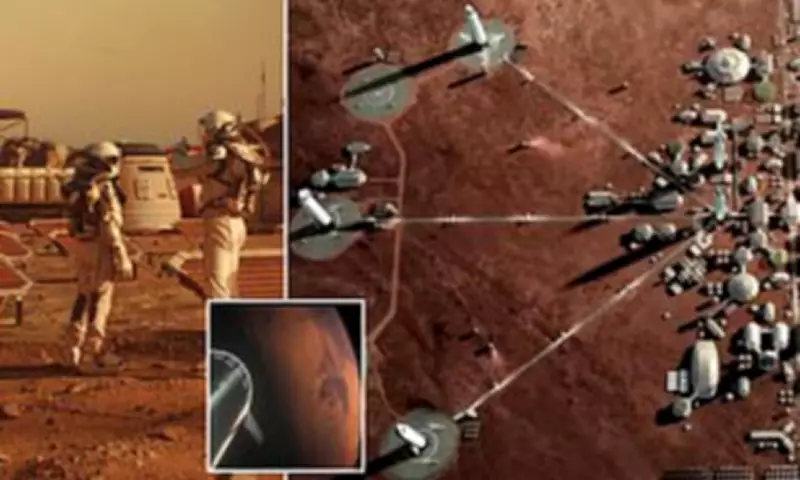
Humanity's ambition to colonize Mars could trigger profound changes to the human body, from altered size and weakened immune systems to childbirth complications, according to a new book by Rice University professor Scott Solomon. In "Becoming Martian: How Living in Space Will Change Our Bodies and Minds," Solomon argues that before seriously considering a permanent presence on the Red Planet, critical questions about human reproduction and evolution must be addressed.
Reproduction in Space: An Unanswered Question
Solomon highlights that one of the most pressing unknowns is whether humans can reproduce outside Earth. With no confirmed cases of sex in space and minimal research on fetal development in low-gravity environments, it remains unclear if childbirth is feasible on Mars, where gravity is about one-third of Earth's and radiation levels are significantly higher. "The idea of building a city on Mars assumes people can go there and have children and raise a family," Solomon said in an interview with the Daily Mail. "Could we have children on Mars? I think that's still an open question."
Evolutionary Pressures on the Red Planet
Solomon suggests that generations of living on Mars could lead to humans becoming smaller, citing the "island rule" observed on Earth, where animals often shrink due to limited resources. "The smaller you are, the fewer resources you need to consume," he explained, noting this might be advantageous in Mars's early settlement days. Additionally, the low-gravity environment could favor individuals with denser bones to counteract bone density loss, a known issue for astronauts in space.

Health Risks and Immune System Vulnerabilities
Childbirth on Mars poses particular risks, as women born there might have more fragile bones, increasing complications. Moreover, Solomon warns that Martians could face severe immune system challenges. Exposed only to a tiny fraction of Earth's microbes, a child born on Mars might find common microorganisms dangerous if they returned to Earth, akin to the disease decimation when Europeans arrived in the Americas.
Cultural and Biological Divergence
Solomon explores how Martian culture might evolve, with early settlers feeling connected to Earth but later generations identifying more as Martian. The pace of this cultural and biological distinction depends on travel ease between planets. If interplanetary travel is limited due to health risks, Martians could become distinct culturally, politically, and biologically. Communication delays of up to 20 minutes further complicate real-time interaction, fostering separate civilizations.
Skepticism and Future Prospects
While many argue for focusing on Earth's problems, Solomon believes we can address terrestrial issues while exploring space. He remains curious about Martian exploration, stating he would "love to go visit" but would want to return home. Elon Musk's vision of Mars settlement by 2050 faces these hurdles, emphasizing the need for more research before colonization plans advance.
"Becoming Martian" delves into these complexities, urging a cautious approach to off-world expansion. The book, with a foreword by astronaut Scott Kelly, is set for release on February 17 by The MIT Press, offering a thought-provoking look at humanity's potential future among the stars.