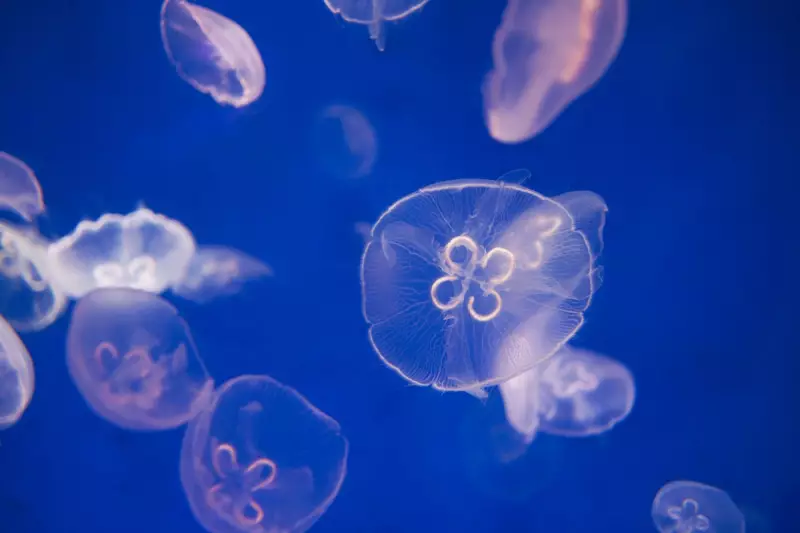
Ancient Jellyfish Sleep Patterns Illuminate Fundamental Biological Function
An intriguing new study published in Nature Communications has revealed that primitive marine creatures without brains still experience sleep-like states that serve a crucial biological purpose: repairing DNA damage in their nerve cells. The research, focusing on upside-down jellyfish and starlet sea anemones, provides compelling evidence that sleep's restorative function predates the evolution of complex brains by hundreds of millions of years.
Tracking Sleep in Brainless Creatures
Researchers faced the unique challenge of determining when creatures without central nervous systems enter sleep states. Using infrared field cameras and behavioural tests, scientists monitored cassiopea jellyfish in Florida lagoons and nematostella sea anemones in laboratory tanks. They discovered that jellyfish pulsing below 37 beats per minute for three minutes, and anemones remaining still for eight minutes, showed significantly reduced responsiveness to stimuli—meeting the universal biological criterion for sleep.
The study revealed these ancient creatures follow distinct daily rhythms, with jellyfish taking brief midday "siestas" to compensate for disturbed nighttime rest, while maintaining their characteristic bell contractions even during rest periods.

DNA Damage and Repair Cycle
Through innovative staining techniques, researchers tracked DNA breakages in nerve cells throughout daily cycles. They discovered a clear pattern: DNA damage accumulated during active periods, peaking at species-specific times (mid-morning for jellyfish, late afternoon for anemones), then significantly decreased following extended rest periods.
"When we prevented normal sleep by manipulating water currents, we observed both increased DNA damage and subsequent sleep rebound—exactly as occurs in humans," explained the research team. This parallel suggests conserved biological mechanisms across vastly different species.
Experimental Confirmation of Cause and Effect
To establish causality, scientists conducted several controlled experiments:
- Exposing animals to UV-B light, which directly damages DNA, resulted in doubled DNA breaks within one hour and prompted significantly increased sleep later the same day
- After sleep periods, DNA damage returned to baseline levels and normal daily rhythms resumed
- Adding melatonin to tank water induced sleep during typically active periods without affecting normal rest cycles
The melatonin finding proved particularly surprising, as this hormone's sleep-inducing properties were previously thought to have evolved alongside vertebrates with centralized brains and light-responsive circadian rhythms.
Evolutionary Implications
This research pushes the origins of sleep back more than 600 million years, to before cnidarians (jellyfish, anemones, corals) diverged from the evolutionary line that led to worms, insects, and vertebrates. The study suggests sleep began as a cellular defence mechanism, providing periods of sensory deprivation during which DNA repair enzymes could work unimpeded.
"If jellyfish require sleep to maintain their simple nerve nets, this need likely predates the evolution of brains, bilateral symmetry, and complex sensory organs," the researchers noted. In evolutionary terms, regular repair windows may have been crucial for survival, with organisms skipping sleep potentially accumulating mutations in irreplaceable neurons.
Broader Scientific Context
These findings align with previous research in more complex organisms. Studies in fruit flies and mice have linked chronic sleep deprivation to neurodegeneration, while insomnia has been associated with accumulations of reactive oxygen molecules that damage DNA and cellular structures.
While the study doesn't entirely settle the long-running debate about sleep's multiple functions—memory consolidation and energy conservation likely represent additional benefits layered onto this ancient maintenance programme—it significantly strengthens the argument that DNA protection represents a core, fundamental purpose of sleep across the animal kingdom.

Future Research Directions
The current study examined species living in specific environmental conditions. Future research will need to investigate whether DNA repair during sleep occurs in cnidarians inhabiting different environments, including cold deep waters, turbid coastal areas, and varying light conditions. Such comparative studies could help determine how universal this sleep function remains across diverse habitats and evolutionary lineages.
This groundbreaking work on some of Earth's most ancient animals provides fresh perspective on a biological process that affects all complex life, suggesting that the need for restorative sleep represents one of evolution's most enduring and fundamental innovations.