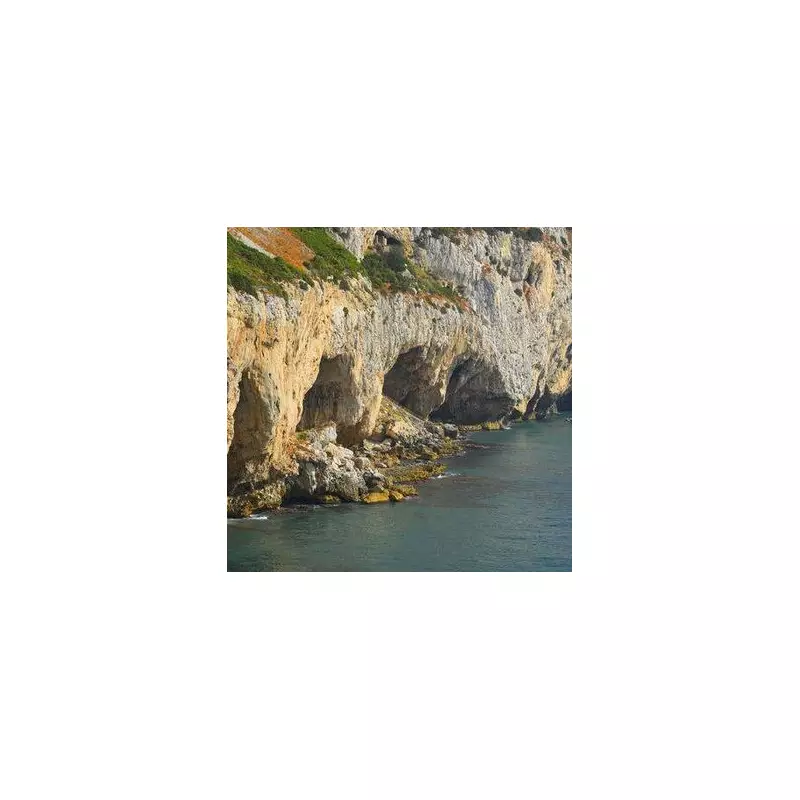
Archaeologists working on the iconic Rock of Gibraltar have made a discovery that is fundamentally reshaping our understanding of human history. Upon gaining access to a section of Gorham's Cave that had been sealed for an astonishing 40,000 years, the team uncovered evidence suggesting Neanderthals survived in the region far later than previously believed.
A Refuge at the Edge of the World
Gorham's Cave complex, a UNESCO World Heritage Site on Gibraltar's eastern coastline, has long been recognised as one of the last known habitats of Neanderthals. The broader Iberian Peninsula is thought to have been a final sanctuary for these ancient humans as their populations dwindled globally. Notably, Gibraltar itself was the location where the very first Neanderthal skull was discovered back in 1848.
For decades, the established scientific consensus held that Neanderthals died out in this region around 42,000 years ago. However, the recent analysis of artefacts and sediments from the newly opened section of the cave is challenging that timeline. Researchers now posit that Neanderthals may have persisted on the Rock until as recently as 24,000 years ago.

Inside the Time Capsule
The significance of Gorham's Cave was officially recognised in 2016 when it was inscribed as a UNESCO World Heritage Site for its exceptional testimony to Neanderthal culture. The cave was originally discovered in 1907 by Captain A. Gorham, was lost, and then rediscovered in 1940, with major archaeological excavations beginning in the 1980s.
It is one of four interconnected caves—including Vanguard, Hyaena, and Bennett's Caves—hollowed into the limestone cliffs, where Neanderthals are believed to have lived for about 100,000 years. UNESCO highlights evidence found within of sophisticated behaviour, including bird and marine animal hunting, the use of feathers for ornamentation, and the presence of abstract rock engravings.
Previous digs have yielded a wealth of relics: charcoal, bones, stone tools, and charred seeds. In 2012, beneath a layer dated to 39,000 years ago, archaeologists found what they described as the 'world's oldest abstract art'—a pattern of crossing lines carved into a rock shelf deep inside the cave.
A Chamber of Ancient Secrets
The recent breakthrough echoes another exciting find made in 2021 in the neighbouring Vanguard Cave. There, researchers discovered a previously unknown chamber containing the bones of lynx, hyaena, and griffon vultures, alongside a large whelk shell.
Clive Finlayson, Director of the Gibraltar National Museum, emphasised the importance of that shell to CNN, stating, "It's probably about 20 meters from the beach. Somebody took that whelk in there... over 40,000 years ago. So that's already given me a hint that people have been in there... Those people, because of the age, can only be Neanderthals." He described the thrill of such a discovery as a once-in-a-lifetime event.
The cumulative evidence from these sealed chambers is forcing a major historical reassessment. As reported by IFLScience, while it is typically held that Neanderthals went extinct around 40,000 years ago, the artefacts from Gibraltar strongly indicate that isolated populations may have endured in this southern refuge for millennia longer. This revelation doesn't just add years to a timeline; it changes the narrative of human evolution and the ultimate fate of our closest ancient relatives.