

Archaeologists believe a single, 2,000-year-old fingerprint could finally identify the mysterious attackers who launched a sea raid on a Danish island in the 4th century BC.
The Bog-Borne Clue
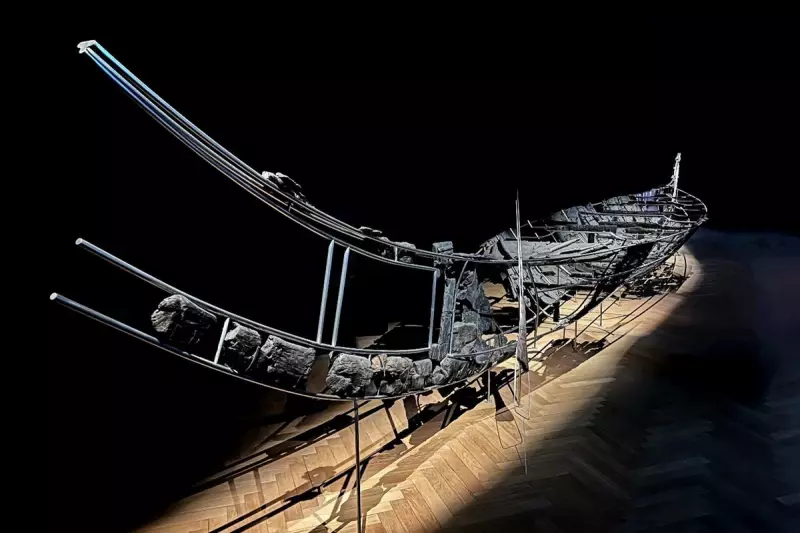
The key evidence comes from the Hjortspring boat, a wooden vessel discovered in the Hjortspring Mose bog on the island of Als. Sunk as a trophy after its crew was defeated, the bog's unique conditions left it 'exceptionally well preserved' for millennia.
First uncovered in the 1880s, the boat has long puzzled historians. 'Where these sea raiders might have come from, and why they attacked the island of Als has long been a mystery,' said Mikael Fauvelle, an archaeologist at Lund University.

Modern Science Meets Ancient Tar
New analysis has focused on the tar used to waterproof the vessel. Using advanced x-ray tomography, researchers created a high-resolution 3D digital model of a fingerprint pressed into the pine pitch.
This tiny impression offers a potential direct link to one of the assailants. Experts now hope that future analysis could yield DNA evidence, pinpointing the sailor's geographical origins.
Previous studies had dated the boat's lime bast cordage, confirming it predates the Roman Iron Age. The use of pine pitch initially suggested builders from pine-rich forests, with some scholars pointing to the Hamburg area of Germany.
Rewriting the Raiders' Route
The latest findings, however, point elsewhere. Researchers now believe the boat and its warrior crew originated from the Baltic Sea region.
'If the boat came from the pine forest-rich coastal regions of the Baltic Sea, it means that the warriors who attacked the island of Als chose to launch a maritime raid over hundreds of kilometres of open sea,' explained Mr Fauvelle. This indicates a bold and long-distance seafaring capability much earlier than previously thought.
The Hjortspring boat is currently on display at the National Museum of Denmark. Its story emerges as Danish archaeology continues to reveal secrets, following the recent discovery of over 30 Viking-era graves near Aarhus, which included a rare coffin belonging to a high-status 10th-century woman.






