

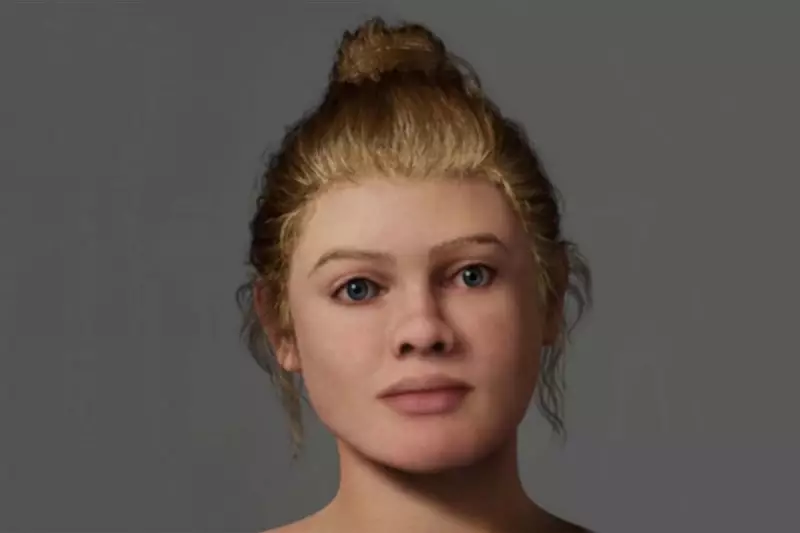
Archaeologists have made a remarkable discovery that rewrites the history of one of Britain's most intriguing Roman-era skeletons. Advanced genetic testing has finally pinpointed the origins of the 'Beachy Head Woman', revealing she was a local to southern England and not a long-distance traveller as previously hypothesised.
A Scientific Breakthrough Rewrites History
Using state-of-the-art DNA sequencing techniques, scientists have conclusively determined that the woman's genetic ancestry is most similar to other individuals from the local population of Roman-era Britain. This breakthrough overturns two prominent earlier theories: one suggesting she had recent sub-Saharan African ancestry, and another proposing she hailed from the Mediterranean island of Cyprus.
The research, announced on Thursday 18 December 2025, demonstrates the powerful role of evolving scientific methods in historical interpretation. The analysis indicates she lived during the Roman period in Britain, and her genetic profile settles a longstanding debate about mobility and migration in ancient times.

Reconstructing the Beachy Head Woman
Forensic analysis of the skeleton has painted a vivid picture of this young woman from the past. Scientists estimate she was between 18 and 25 years old at the time of her death. She was of small stature, standing at just over four foot nine inches tall.
The DNA evidence suggests her physical appearance likely included light skin, blue eyes, and fair hair. Examination of her bones provided further personal details: they showed evidence of a healed leg wound, a testament to an injury she survived during her life. Furthermore, isotopic analysis of her remains pointed to a diet rich in seafood, offering a direct link to her coastal environment near Beachy Head.
The Implications for Understanding Roman Britain
This discovery has significant consequences for how historians and archaeologists view Roman Britain. Proving the Beachy Head Woman was locally born challenges simpler narratives of population movement and highlights the complexity of identity in a province of the Roman Empire.
The case perfectly illustrates how new technologies can radically alter our understanding of the past. What was once considered evidence of a long-distance journey is now seen as part of the rich tapestry of local life. The findings underscore that the population of Roman Britain was diverse, but not exclusively due to long-range immigration from the Empire's farthest reaches.
This resolution to the mystery of the Beachy Head Woman's identity closes one chapter while undoubtedly opening new avenues for research into the daily lives, health, and origins of people in Roman Britain.






