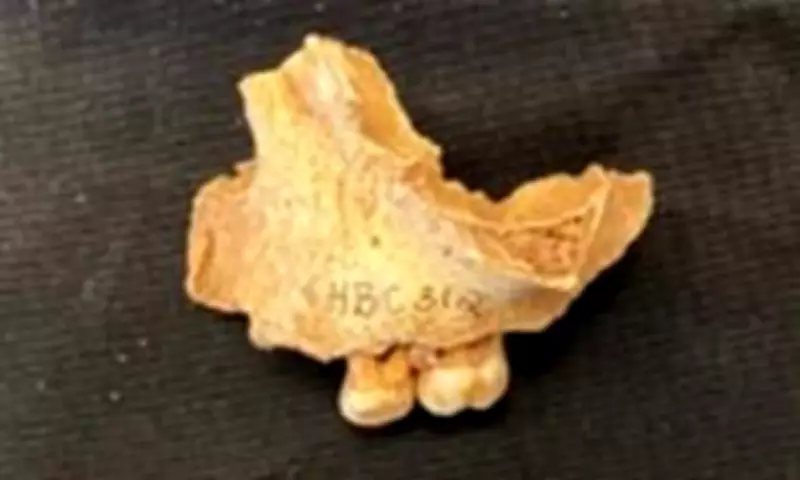
Britain's 'Oldest Northerner' Revealed as 3-Year-Old Girl in 11,000-Year-Old Cave Find
A new study has unveiled that Britain's 'oldest northerner' was a three-year-old girl, with remains dating back 11,000 years discovered at Heaning Wood Bone Cave in Cumbria's Great Urswick in 2023. Initially, scientists believed the ancient bones belonged to a man, but experts from the University of Lancashire have now extracted sufficient DNA to confirm the individual's true identity.
DNA Analysis Unlocks Ancient Secrets
According to the analysis, the remains are of a female child aged between 2.5 and 3.5 years old. The research team has affectionately named her the 'Ossick Lass,' which translates to 'Urswick girl' in the local vernacular. Dr Rick Peterson, lead author of the study, stated, 'It is the first time we have been able to be so specific about the age of a child whose remains are so old and be certain that they are from a female.'
While earlier human remains have been found in southern England and Wales, this discovery marks the oldest in Northern England. The destructive effects of glaciations have made such finds rare in northern Britain, adding to the significance of this breakthrough.

Excavation and Historical Context
Local archaeologist Martin Stables began excavating the site in 2016, uncovering a wealth of artifacts including human and animal bones, stone tools, prehistoric pottery, and jewellery. Reflecting on the journey, Mr Stables said, 'It's nearly 10 years since I started the excavations in July 2016 and I couldn't have envisaged the journey I have undertaken. Effectively, I was the first to bear witness to the obviously caring burial of someone's child that occurred over 11,000 years ago.'
In total, eight humans have been found in the cave, with others dated to the Bronze Age (4,500 to 2,500 years ago) or the Neolithic period (7,100 to 3,500 years ago). Researchers were surprised to find that the Ossick Lass remains were much older than the others, placing her as one of the first humans to reoccupy Britain after the last Ice Age.
Pioneers of Post-Ice Age Britain
During this period, glacial ice and waterflows extended as far south as the Bristol Channel, with about 30 per cent of the world's land covered in ice. Dr Peterson explained, '11,000 years ago is astonishingly early for the north. To put it in perspective, the last Ice Age lasted until about 11,600 years ago. After that period, the global temperature warmed rapidly over about 100 years to give us the climate we've got today. These people are just about as early as we could expect them to be – the pioneers reoccupying the land after the Ice Age.'
Before this discovery, the 'earliest northerner' was a 10,000-year-old burial from the nearby Kents Bank Cavern, found in 2013. The new findings push back the timeline of human habitation in the region.
Artifacts and Cultural Insights
As part of the latest study, the team also analysed a perforated deer tooth and beads discovered at the site, confirming they date back 11,000 years – around the same age as the Ossick Lass. Dr Peterson noted, 'Dating the jewellery to the same time frame as the remains provides more evidence that this was a deliberate burial and opens up conversations about the significance of cave burials during this period. Modern hunter-gatherer groups often see caves as a gateway into the spirit world. This may be why we see so many caves used for burial by Early Mesolithic hunter-gatherers in northern Europe.'
This discovery not only reshapes our understanding of early human settlement in Britain but also highlights the advanced techniques in DNA analysis that are unlocking long-held mysteries of our past.