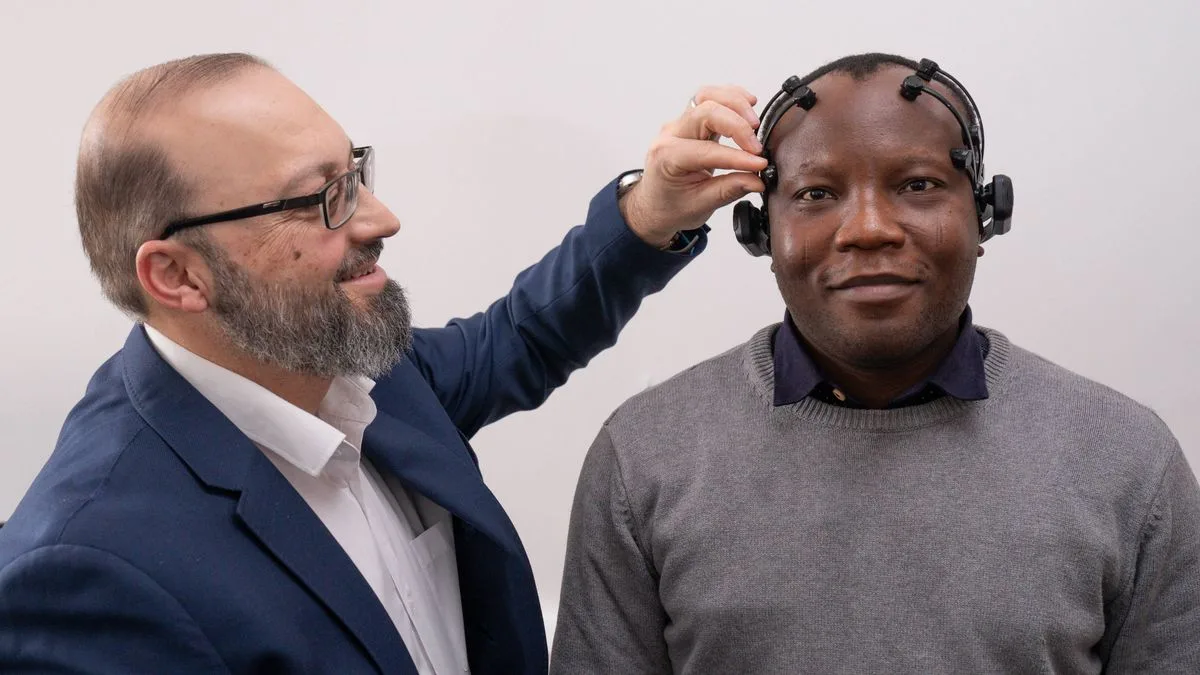
Scientists at Glasgow Caledonian University have created a groundbreaking AI-powered headset that can predict epileptic seizures several minutes in advance. The wearable device, which analyses brain activity and cardiac functions, aims to provide early warnings to patients, allowing them to take protective measures or alert those nearby.
The headset uses an AI algorithm trained on thousands of hours of historical electroencephalography and electrocardiography data, along with a custom-made 'phantom head' equipped with electrodes. With an accuracy rate of up to 95%, the system can detect the subtle electrical and physiological patterns that precede a seizure and issue an alert, giving patients and their families vital minutes to prepare.
Professor Hadi Larijani, who leads the research team, described the headset as 'very unique' and expressed hopes of launching it as a discreet, wireless, and lightweight wearable device resembling a cap. 'We want it to be as discreet as possible, to be wireless, light – it's a lot of features that none of the other tools right now have,' he told the Press Association.

The team is refining the design to make it suitable for children. While initial prototypes used third-party hardware, the goal is to develop their own models. However, due to regulatory requirements for medical devices, widespread availability may take time. 'It takes time to get through the hurdles,' Professor Larijani said, adding that the team is now looking at a more commercial-ready product.
The research has received renewed backing from UK Research and Innovation through its £9 million Proof of Concept programme. Professor Larijani emphasised the impact of the technology: 'For families affected by epilepsy, even a brief warning means they can prevent injuries and reduce fear. That is the true measure of success for us.'