

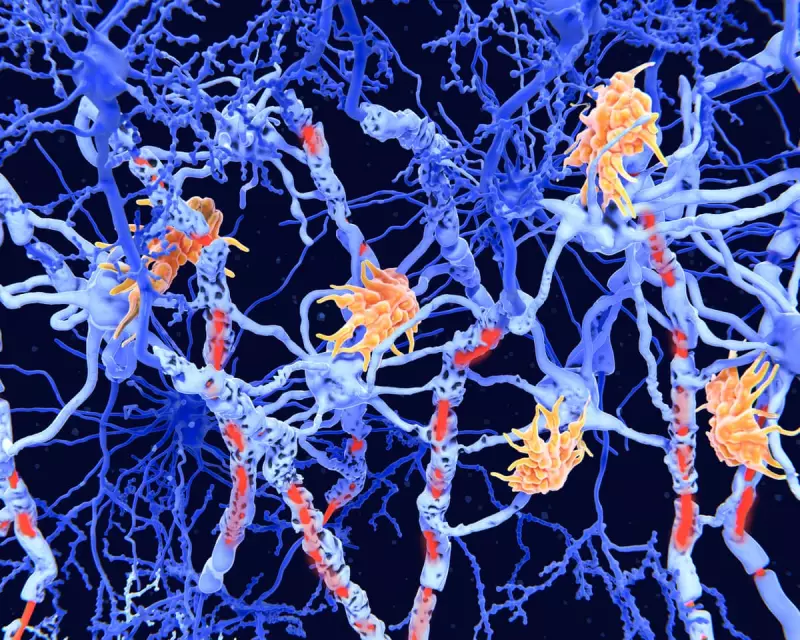
In a landmark development for neurology, scientists have harnessed the power of artificial intelligence to identify two entirely new biological subtypes of multiple sclerosis (MS). This 'exciting' breakthrough promises to revolutionise how the complex condition is understood and treated, moving away from a one-size-fits-all approach towards truly personalised care.
The AI-Powered Discovery
The pioneering research, led by experts at University College London (UCL) and Queen Square Analytics, analysed data from 600 patients. The team focused on a specific protein in the blood called serum neurofilament light chain (sNfL), which acts as a key indicator of nerve cell damage and disease activity. By feeding sNfL data alongside MRI brain scans into a sophisticated machine learning model named SuStaIn, the researchers uncovered two distinct biological patterns.
The findings, published in the esteemed journal Brain, categorise the new subtypes as 'early sNfL' and 'late sNfL'. In the first, more aggressive subtype, patients exhibited high levels of the damaging protein early in their disease course, accompanied by rapid lesion development and visible damage in a critical brain region called the corpus callosum. The second subtype presented differently, with initial brain shrinkage in areas like the limbic cortex occurring before sNfL levels rose, suggesting a slower, more insidious progression.

Transforming Diagnosis and Personalising Care
This discovery marks a significant shift from defining MS based purely on clinical symptoms—such as 'relapsing remitting' or 'progressive'—to understanding its underlying biology. Dr Arman Eshaghi, the study's lead author from UCL, emphasised the importance: "MS is not one disease and current subtypes fail to describe the underlying tissue changes, which we need to know to treat it."
The implications for patient care are profound. In the future, a simple blood test and MRI, interpreted by AI, could quickly determine a patient's subtype. Those with the 'early sNfL' profile could be fast-tracked for higher-efficacy treatments and closer monitoring from the outset. Conversely, patients with 'late sNfL' MS might benefit from different therapeutic strategies, such as neuroprotective therapies designed to shield brain cells from damage.
A Hopeful Future for MS Treatment
The charity the MS Society hailed the research as an "exciting development." Caitlin Astbury, the charity's Senior Research Communications Manager, noted that while there are around 20 treatments for relapsing MS, options for progressive forms remain limited. "The more we learn about the condition, the more likely we will be able to find treatments that can stop disease progression," she stated.
This breakthrough underscores a growing movement in medicine to use AI algorithms and biomarkers to transform centuries-old clinical examinations. By providing a clear biological map of a patient's disease, doctors will be empowered to make more precise predictions about risks and outcomes, fundamentally changing the treatment landscape for the millions living with MS globally.






