
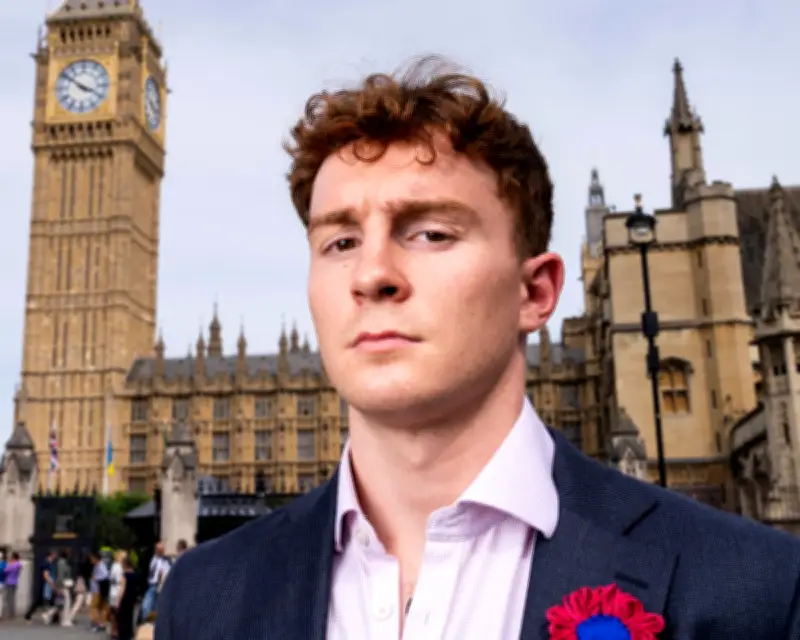
Archie Goodburn, a 24-year-old champion swimmer diagnosed with a rare, inoperable form of brain cancer, is urging the UK government to enhance support for individuals suffering from the condition. He stated, "I grew up representing my country, and I want to see my country supporting me back."
Life-Changing Diagnosis
Two years ago, Goodburn's life took a dramatic turn. Just months before the Paris Olympics qualifiers, he began experiencing strange episodes during training, including loss of strength, numbness on his left side, and intense fear and nausea. "I felt like my consciousness was being pulled away from me," he recalled. In April 2024, he missed qualifying by a fraction of a second, and soon after, doctors discovered three oligodendrogliomas—rare tumors accounting for about 3% of brain cancer diagnoses.
Breakthrough Treatment
A breakthrough drug, Vorasidenib, has allowed Goodburn to continue competing, including at the Commonwealth Games in Glasgow next month. It delayed the need for chemotherapy and radiotherapy, which would have impaired his cognitive abilities and interrupted his training and chemical engineering degree. However, Goodburn argues that one new drug in 20 years is insufficient. "Vorasidenib only bought me four years, according to the trials. I need more. And I’m not going to stop campaigning until my last breath."
Funding Disparities
Brain cancer is the leading cancer killer for children and adults under 40, yet since 2002 it has received only 1% of the government's national cancer research budget. Progress in UK drug development for the disease remains limited. Goodburn highlights a "translational gap" between early research discoveries and drug funding, where promising research fails to reach clinical trials accessible to patients. The all-party parliamentary group on brain tumours describes this gap as a "valley of death" for patients, blaming a siloed, risk-averse funding system.
Government Response
Even when funding is available, regulations can hinder its use. Of the £40m pledged by the government for brain cancer in 2018, only a small fraction has been spent. Goodburn and the Brain Cancer Justice campaign demand immediate release of the remaining funds to frontline scientists. They also call for a named brain cancer lead in government, expanded genome sequencing for patients at diagnosis to increase clinical trial access, and a "right to try" potentially life-saving treatments. The Department of Health and Social Care acknowledged that "more needs to be done to boost research into brain tumours" and committed to securing patient access to innovative medicines.
Personal Journey
Standard treatment for Goodburn's cancer involves radiotherapy and chemotherapy, which he would have started in July 2024 without Vorasidenib, accessed through an expanded access programme. The drug halts protein production that fuels tumour growth. It became available to UK patients only in the last three months after the National Institute for Health and Care Excellence (Nice) initially recommended against it, a decision overturned following campaigning by Goodburn and the brain cancer community. Shortly after starting Vorasidenib, Goodburn broke the Scottish record in the 50m breaststroke, the event he will compete in at the Commonwealth Games. He believes the experience demonstrates the power of new treatments to change lives. "There’s that much space for change. Change is so possible," he said.
Balancing Act
Goodburn, who watched the 2014 Commonwealth Games as a child in Glasgow, looks forward to competing in July. However, his most daunting task is sitting in Westminster Hall on Monday as MPs debate the petition he and Brain Cancer Justice spent months collecting signatures for. Balancing campaigning with training has been challenging, but Goodburn remains driven. "I campaign, if I’m being completely honest, because of the disparity in care, the lack of funding, but also because I believe that my campaigning can actually make a difference to my own future. In some ways, it’s a treatment of its own."




