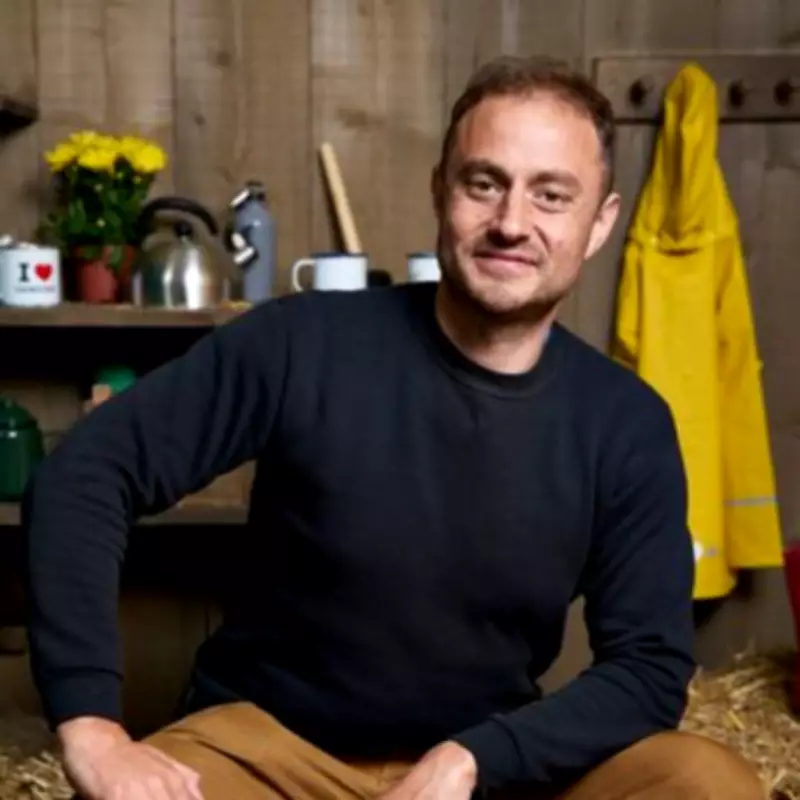
Child Psychologist Exposes Common Parenting Phrases That Harm Emotional Growth
Renowned child psychologist Professor Sam Wass has issued a stark warning to parents about the detrimental impact of certain everyday phrases used when addressing children's emotions. In an exclusive discussion, the expert highlighted how well-intentioned remarks can inadvertently suppress emotional development and create long-term psychological issues.
The Critical Mistake: Invalidating Children's Feelings
Professor Wass, a leading authority on child stress and attention who has appeared on Channel 4's The Secret Life of 4 and 5 Year Olds, identifies the single worst approach as attempting to tell children not to experience their emotions. "Inhibiting emotions doesn't work," he states emphatically. "It doesn't work for adults and it definitely doesn't work on a child. You cannot simply instruct someone to cancel an emotion."
The psychologist provides a vivid example: "In September, you always see parents marching children to their first day of school, dragging them by the hand while the child is in floods of tears. The parent walks along saying in a cheerful voice, 'It's going to be fine, you're going to have a lovely time, don't be scared.' That is precisely what not to do, as it simply doesn't work."

A Better Approach: Building Emotional Awareness
Rather than dismissing emotions, Professor Wass advocates for helping children understand what they're experiencing. "What we think does work is describing what a child might be feeling," he explains. "We call this building metacognitive awareness—the awareness of one's inner state and emotions. This is something we never teach children in schools but something they must learn."
He elaborates: "Children often aren't aware of what they're feeling and cannot describe it because they don't recognize it themselves. Only by you describing to them what they are experiencing do they gain that crucial self-awareness. Something about being self-aware of our feelings helps us manage those emotions and helps them to reduce."
The practical application involves using non-judgmental language. Professor Wass suggests saying something like, "It seems to me you are feeling this," and putting a verbal label on the emotion to help children better understand and learn about their own emotional landscape.
Applying the Principles to Tantrum Management
This advice follows Professor Wass's previous guidance on effectively managing toddler tantrums. He explains that many parents mistakenly attempt to use logic during emotional outbursts, an approach doomed to fail because young children's brains haven't developed sufficiently to process reasoning.
"Toddlers are at a stage when the emotional centers of their brains are massive and their reason centers are tiny," Professor Wass clarifies. "A much more effective way to deal with a tantrum is to comment on what they're saying and echo it back to them using their language."
He provides specific implementation strategies: "If the child is talking in two-word phrases, saying things like 'want juice' or 'want custard,' you can match their language and intonation. They'll be very up and down in their voice, so you copy that. Match their state and what they're saying, commentate on it almost like a football commentator would. If they're saying 'I want custard,' you would say, 'Freddie wants custard' to ensure they feel understood."
This approach creates a feeling of being understood that helps children calm down, after which parents can more successfully shift their attention to something else. Professor Wass emphasizes that this method respects children's emotional reality while guiding them toward better emotional regulation.
The psychologist's insights, shared in collaboration with Virgin Media O2's Connected Playground initiative, underscore a fundamental shift in parenting philosophy—from emotional suppression to emotional education. By avoiding phrases that dismiss feelings and instead helping children identify and understand their emotions, parents can foster healthier psychological development and stronger emotional intelligence that will benefit children throughout their lives.