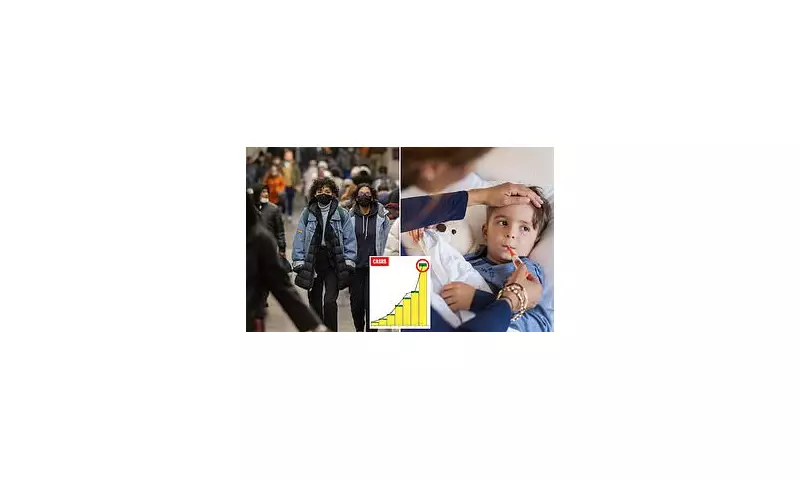
Health experts in the United States are sounding the alarm as an already severe influenza season threatens to intensify, propelled by a dangerous new strain of the virus.
A Sharp Spike in Infections and Hospitalisations
The latest figures from the US Centers for Disease Control and Prevention (CDC) reveal a dramatic acceleration in flu activity. For the week ending December 13, positive influenza tests surged by 56 percent compared to the previous week. The situation in hospitals is equally concerning, with admissions jumping by 47 percent over the same period.
When measured against the same time last year, the increase is even more stark. Positive tests are up 50 percent, while the number of people hospitalised with flu has doubled. Transmission is currently rated as 'very high' in New York City, New York state, New Jersey, Rhode Island, Colorado, and Louisiana.

The New Threat: H3N2 Subclade K
This alarming surge is being largely attributed to the rapid spread of a specific flu variant: influenza A(H3N2) subclade K. CDC data indicates this strain is rising in all but four US states: Arkansas, Wyoming, Utah, and Hawaii.
While it shares classic symptoms like fever, cough, fatigue, and body aches with other flu viruses, doctors believe H3N2 subclade K can cause more severe illness. "This year’s dominant flu strain is brand new to people’s immune systems, making them highly vulnerable," experts noted.
Dr Robert Hopkins Jr, medical director for the National Foundation for Infectious Diseases, expressed concern: "Knowing that there’s a new mutated strain out there and H3N2 generally causes more severe disease is concerning."
Recognising Severe Symptoms and High-Risk Groups
Medical professionals are urging the public to be vigilant. Dr Neal Shipley, medical director of Northwell Health-GoHealth Urgent Care, emphasised the importance of recognising warning signs. In children, flu often begins suddenly and may include vomiting and diarrhoea.
Adults over 65 are at the highest risk of serious complications, including hospitalisation and death. Dr Shipley advised: "If your symptoms worsen quickly, or you have trouble breathing, weakness, dehydration or symptoms that don’t improve after a few days, you should find your nearest urgent care."
The real-world impact is already being felt. Several schools across the US have temporarily closed due to outbreaks, and a growing number of hospitals have reinstated mask mandates for staff, patients, and visitors.
A Triple Threat: Flu, COVID-19, and RSV
Compounding the problem, other respiratory viruses are also circulating at high levels. The COVID-19 XFG variant, known as Stratus, is now dominant and is growing or 'likely growing' in over two dozen states, according to the CDC.
Respiratory syncytial virus (RSV), particularly dangerous for infants and older adults, is also increasing in at least two dozen states, with activity 'very high' in Wyoming and Louisiana.
Professor Frederick G Hayden of the University of Virginia School of Medicine, who co-authored a recent analysis in JAMA, warned that the presence of this new H3N2 variant suggests this season could mirror last year's severe outbreak. He stated, "Unfortunately, we are seeing the circulation of a new variant of H3N2 virus for which our vaccines may be somewhat less effective. However, available vaccines will reduce the risk of serious illness."
Current Statistics and Protective Measures
The scale of the outbreak is significant. CDC data shows 15 percent of flu tests were positive in the week to December 13, up from 8.4 percent. The hospitalisation rate has increased from 4.8 to 11 per 100,000 people.
So far this season, an estimated 3 million Americans have contracted influenza A (which accounts for three in four cases), leading to roughly 30,000 hospitalisations and 1,200 deaths.

Health officials continue to stress that annual flu vaccination remains the best defence, even with potentially reduced effectiveness against the new strain. As of late November, about 40 percent of American adults had received their seasonal jab. Other crucial measures include regular handwashing and avoiding close contact with symptomatic individuals.