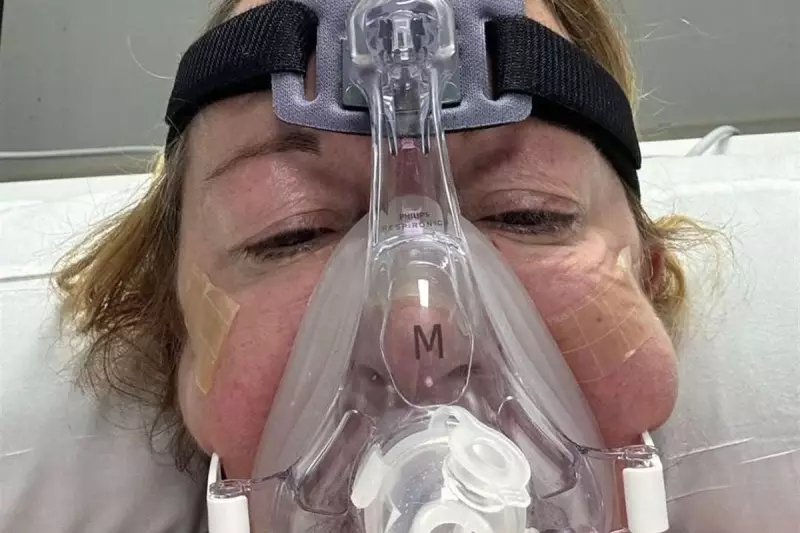
Retired Teacher's Holiday Nightmare: Legionnaires' Disease Leaves Her in Induced Coma
A retired primary school teacher from Kent has revealed how she nearly died after contracting a serious waterborne disease during what was supposed to be a relaxing holiday to Gran Canaria.
Four Days in an Induced Coma
Juliet Leith, 58, from Maidstone, spent four days in an induced coma and twelve days in intensive care after developing Legionnaires' disease while staying at the TUI BLUE Suite Princess hotel in Playa Taurito.
The mother-of-two had booked a £2,000 holiday through tour operator TUI UK Limited, arriving at the resort with her sister Maureen on September 18, 2025. Just four days later, she began experiencing flu-like symptoms that rapidly escalated into a life-threatening condition.

Rapid Deterioration and Emergency Hospitalisation
"When I first started feeling unwell, I thought it was just flu or maybe Covid. Legionnaires' disease never even crossed my mind," Juliet recalled.
Her symptoms progressed to include severe joint pain and breathlessness, leading to her admission to a nearby hospital on September 26, 2025, where she tested positive for Legionnaires' disease.
Despite initial treatment, her condition deteriorated so severely that doctors placed her in an induced coma for four days. Medical staff warned her daughters, Jenny Gower, 38, and Josie Leith, 34, that their mother might not survive, prompting them to fly from the UK to be by her bedside.
Understanding Legionnaires' Disease
According to NHS England, Legionnaires' disease is a serious lung infection contracted by inhaling water droplets containing Legionella bacteria. Common sources include:
- Air conditioning systems
- Hot tubs and spa facilities
- Showers and baths that are not regularly used
While relatively uncommon, the disease can prove fatal, particularly for vulnerable individuals. Juliet's doctors later revealed her chances of survival had been as low as 20% during the most critical phase of her illness.
Long Road to Recovery
After twelve days in intensive care, Juliet had recovered sufficiently to return to the UK, where she was immediately transferred from Gatwick Airport to Maidstone Hospital for further assessment and treatment.
She has since been discharged and referred to a respiratory consultant, continuing her recovery as an outpatient under specialist supervision. However, she acknowledges the ongoing challenges: "Even now, I'm still missing chunks of memory and trying to process what happened."
Legal Investigation Launched
Juliet has now instructed serious injury lawyers at Irwin Mitchell to investigate how she contracted Legionnaires' disease during her holiday. The legal firm is particularly interested in hearing from anyone else who became ill while staying at the TUI BLUE Suite Princess in Gran Canaria.
Jatinder Paul, the expert international serious injury lawyer representing Juliet, commented: "Juliet's near-death experience must have been terrifying. Public buildings like hotels often have complex water systems, so strict precautions are essential to stop the bacteria that cause Legionnaires' disease from developing."
Tour Operator's Response
A TUI spokesperson stated: "We are sorry to hear about Ms Leith's circumstances as we want customers to have the best possible holiday experience. As this is a legal matter, we are unable to comment at this stage."
Raising Awareness and Seeking Answers
Juliet hopes that by sharing her traumatic experience, she can help prevent similar incidents: "I never imagined Legionnaires' could be so serious, and I believe there needs to be more awareness of its symptoms and how dangerous it can be. Only after my diagnosis did I learn that simple steps like running showers and checking air conditioning units can help prevent Legionnaires'."
The symptoms of Legionnaires' disease that holidaymakers should be aware of include:

- Shortness of breath
- High temperature or fever
- Chest pain or discomfort, particularly when breathing or coughing
"I know I'm one of the lucky ones," Juliet reflected. "Now, I just want answers and hope that by sharing my experience, we can stop others from finding themselves in the same situation."