French Teen's Medically-Induced Coma Dream: Seven Years as a Mother to Triplets
Teen's Coma Dream: Seven Years as Mother to Triplets

Clélia Verdier possesses strikingly vivid memories of delivering triplets. She recalls the excruciating agony of labour, the profound joy of cradling her newborn daughters for the very first time, and the soul-crushing devastation when one infant tragically passed away shortly after birth. The astonishing catch? Verdier was never pregnant, never endured labour, and never actually became a mother. In stark reality, she spent the entire period in a medically-induced coma within a hospital bed.

The Blurred Line Between Dream and Reality

Verdier, a 19-year-old from Lyon, France, is not the first individual to fabricate an entire alternate life while unconscious, only to awaken to the harsh truth that none of it was real. However, for Verdier, reconciling with the fact that the babies she believed she had birthed never existed proved exceptionally complex and emotionally harrowing.

She disclosed to the Daily Mail that in June 2025, she made a serious suicide attempt by ingesting a large quantity of medication. This led to her being placed into a medically-induced coma for a duration of three weeks to facilitate her physical recovery.

Wide Pickt banner — collaborative shopping lists app for Telegram, phone mockup with grocery list

An Alternate Reality Spanning Seven Years

During the coma, Verdier experienced what she describes as 'extremely intense' dreams and nightmares. Crucially, because she was completely unaware of her comatose state at the time, these vivid mental constructs 'became her reality.' One particular dream has remained indelibly etched in her mind: the narrative in which she became a mother.

She explained that the hallucination felt utterly authentic, with both physical sensations and emotional pain permeating the experience. 'I could feel so many things. When I dreamed about giving birth, I felt the stress. I also felt a lot of pain,' she recounted.

'In this dream, I gave birth to triplets, which I named Mila, Miles, and Maïlée. Maïlée died shortly after birth. I felt so awful - overwhelmed with sadness and guilt,' Verdier shared, detailing the profound grief woven into her dreamworld.

Vivid Memories of Motherhood

The realism extended to tactile memories. Verdier even recalls the first 'skin-to-skin contact' with her imaginary infants. 'It was incredible. I felt an overwhelming wave of love,' she added. Although her coma lasted merely three weeks in real time, the immersive dream narrative spanned an astonishing seven years, allowing her to witness her daughters grow from newborns into young girls.

She described each daughter developing distinct personalities: one was 'quite shy' while the other was a 'bundle of energy.' 'I remember walks, meals we shared and bedtime stories,' she said, illustrating the depth of the fabricated familial bond. She 'loved them with all her heart.'

The Shattering Awakening

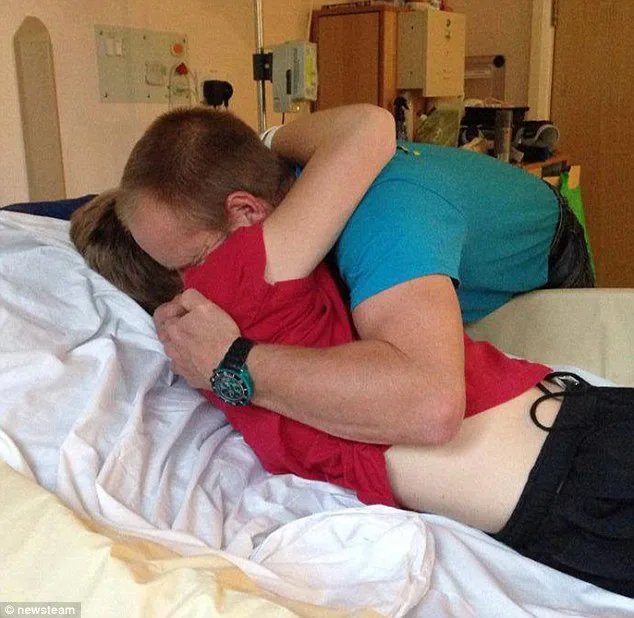
When medical staff finally revived her from the coma, Verdier's first instinct was to inquire about the whereabouts of her children. 'That's when they told me they didn't exist. It was a shock,' she stated. 'I was so convinced it was real that the first time I saw my parents again, I told them they were grandparents.'

Verdier confessed it has been extraordinarily difficult to process the realization that the seven years she spent nurturing and loving her daughters were entirely a construct of her mind. Nearly a year later, she continues to grapple with the psychological aftermath of this ordeal.

'Now I feel very disconnected from others,' she admitted. 'I still miss [my daughters] today. I lived as a mother - even if it was "just a dream," with everything I felt and experienced, I will always be their mother. It was my only reality for a while.'

Looking Toward a Real Future

The 19-year-old expressed hope that she may one day have biological children, but clarified, 'They will have a different place in my heart, but one just as important.' Her story underscores the lasting psychological impact of such profound neurological experiences.

A Recognised Neurological Phenomenon

Verdier's experience is not isolated. In 2021, Caroline Leavitt authored an essay for Psychology Today titled, In a Coma, I Dreamed a Whole Other Life - I'm Still Dreaming It. She described the disorienting return to consciousness: 'When I woke up, it felt like someone had pulled me violently from one world I knew to another, as if I had stepped from one room to another.'

Pickt after-article banner — collaborative shopping lists app with family illustration

Similarly, Claire Wineland, who spent two weeks in a medically-induced coma, told ABC in 2015 about vivid, recurring dreams of visiting Alaska, a place she had never been or shown interest in during her waking life. 'It was so beautiful,' she recalled.

Expert Insight on Coma States

Stephan Mayer, director of neurocritical care at Mount Sinai Health System, provides expert context. He explained in a prior interview that medically-induced comas differ significantly from those caused by trauma. 'What happens is that you have glimpses of awareness. It's sort of like an old TV with static,' he analogised.

'It's just lots of fuzz until the picture comes on for just a minute - and then, boom, gone again. What you end up with is a collection of disjointed, disconnected glimmers of awareness.' This fragmentation can coalesce into coherent, extended narratives like Verdier's, creating powerful pseudo-memories that challenge a patient's grip on reality upon awakening.