Trump's Iran War Decision Splits Conservatives at CPAC Conference
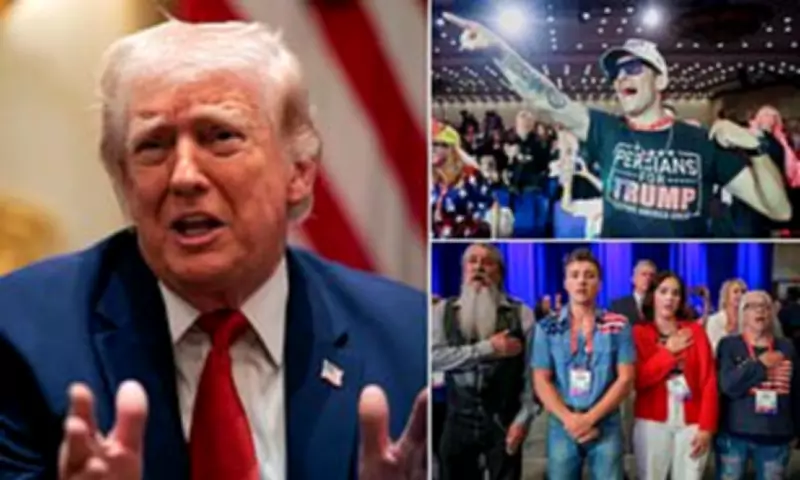
The Conservative Political Action Conference in Grapevine, Texas became a battleground of opinions as supporters of President Donald Trump wrestled with his decision to pursue military action in Iran. The annual gathering revealed significant fractures within conservative ranks regarding foreign policy direction.
Divided Loyalties Among Conservative Base
Some attendees and speakers at CPAC actively worked to rally conservatives behind Trump, urging them to "trust his judgment" as he pursued an array of goals in his second term. Others, however, remained deeply skeptical about a foreign policy approach that has increasingly emphasized overseas interventions, particularly as the United States considers putting boots on the ground in Iran.
Mark Lynch, a Republican challenging South Carolina Senator Lindsey Graham in his primary, expressed fury at Graham's advocacy for military action. "The biggest thing is they're sick of his warmongering patterns he's had his whole tenure," Lynch told the Daily Mail. "He's all about starting more wars. He's sick, he's warped, he's blood-lustful, he's evil."

Lynch criticized Graham for ignoring constituents in South Carolina to focus attention on foreign entanglements in the Middle East. "He's AWOL," he said, referring to Graham. "He's all over the world trying to start World War III and ignoring South Carolinians."
Leadership Support and Strategic Calculations
CPAC chairman Matt Schlapp endorsed Trump's decision in an interview with the Daily Mail, asserting that most conservatives would follow the president's lead. "Most people here trust Trump. They trust his judgment," Schlapp said. "They believe that he and Marco Rubio have been very wise in how they've handled this diplomatically and militarily. You trust him, and we'll see how this goes."
Former White House chief strategist Steve Bannon provided insight into Trump's strategic thinking during his War Room podcast broadcast from the conference. Bannon paused his live show to air President Trump's cabinet meeting, which he described as a carefully orchestrated "war cabinet" gathering designed to demonstrate seriousness about the mission in Iran while sending a message about negotiation opportunities.
After his audience watched the cabinet meeting, Bannon noted that the majority cheered when he asked whether they wanted the president to "finish the job right and come home" rather than exit immediately. However, he observed zero support when asking if the president should send in ground troops.
Iranian-American Support and Royal Endorsement
The CPAC conference attracted a significant contingent of Americans of Persian descent who praised the president's decision to launch military strikes in Iran. One Iranian-American attendee revealed that at least 1,000 fellow patriots attended the conference this year.
Exiled Crown Prince Reza Pahlavi addressed the conference on Saturday, urging Americans to support the president's war effort. As the son of the shah overthrown in the 1979 revolution, Pahlavi emphasized what he described as the evil of Iran's current leadership while offering hope to skeptical conservatives.
"A free Iran is not a fantasy," Pahlavi declared. "A free Iran is within reach right now, but as we all know, freedom never comes free."
The Persian contingent demonstrated visible support throughout the conference, wearing Iranian flags, pins, and shirts alongside pro-Trump memorabilia. They organized flash mobs that erupted in cheers and Farsi chants, signaling support for the crown prince and thanking Trump for his military decisions.
Generational Divides and Historical Perspectives
Younger conservatives expressed more skepticism about the president's military approach. "I think it's stupid," said Luke, a 20-year-old student from Cincinnati. "Trump did run on no new wars and a lot of people came on board because of that."
Charles, another 20-year-old attendee, told the Daily Mail: "I'll tolerate it if it ends quickly and we do well. I don't know if it was the best move but it depends on how well it goes."

Older attendees, drawing on personal memories of the Iran hostage crisis and other attacks on American targets in the Middle East, proved more likely to back the president's decision. Henry, 63, from Florida, stated: "I think it was necessary, I think it was high time that we settle everything."
His wife Fern agreed, adding: "I think Trump is moving forward and he is worried about years from now, just not today. I understand that a lot of people are upset, I get it, but I think it is something that needs to be done."
Strategic Concerns and Economic Considerations
Bannon highlighted the strategic challenges facing the administration, noting that Iran's closure of the Straits of Hormuz had shifted momentum in the conflict. "It really shifted the initiative in this thing," he observed. "I think you've got to get the initiative back."
Matin, a 28-year-old originally from Iran now living in California, acknowledged the "trauma" in the United States from wars in Iraq and Afghanistan but urged Americans to be patient with Trump's military operation. "It wouldn't be a bad idea to put some trust in the plan," he suggested. "Ultimately this will be beneficial for the entire world. Oil prices will be lower than ever before."
Jeff, 67, from Oregon, expressed strong support for the president's efforts: "I pray that this will lead to a toppling of that evil regime," he said, praising Trump's foreign policy as "amazing." He added: "Wouldn't it be wonderful if we end up with Cuba free, Venezuela free, and Iran free and figure out how to end that war in Ukraine?"
The conference revealed that while Trump maintains significant support within conservative circles for his Iran policy, substantial concerns persist about military escalation, particularly regarding ground troop deployment and the potential for prolonged conflict.