
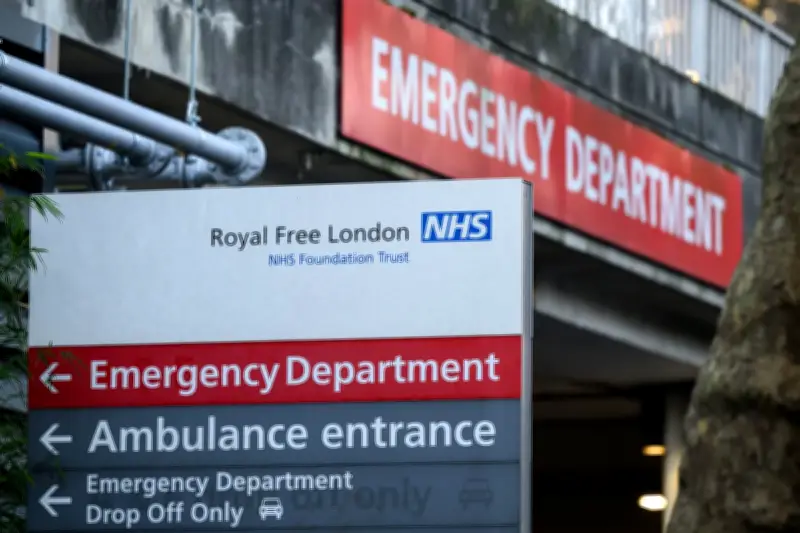
A patient undergoing resuscitation had a guidewire accidentally left inside their body in one of three 'never events' recorded by a North London NHS trust in the past two months. The mistakes were discussed by Julie Hamilton, board trustee and group chief nurse at Royal Free London NHS Foundation Trust, during the board's meeting last Wednesday.
What are 'never events'?
NHS guidelines define 'never events' as serious incidents that are wholly preventable if national guidance and safety recommendations are followed. These provide strong systemic protective barriers and should be implemented by all healthcare providers.
Hamilton expressed disappointment that such incidents keep occurring. She argued that these events should be preventable with the right systems in place, emphasising that they are called never events because they should never happen.
Details of the incidents
Royal Free London runs Barnet Hospital, Chase Farm Hospital, North Middlesex University Hospital and Royal Free Hospital. The three never event incidents happened in April and May. None were reported by the trust during the entirety of the previous twelve-month period, Hamilton said.
Two of them fall under what the NHS calls wrong site incidents. One of these saw a patient receiving a wrong injection during a procedure, and another had a line placed into an artery instead of a vein. The third, and most serious, involved a guidewire accidentally being left inside an acutely unwell patient who was in a resuscitation situation. Hamilton did not disclose where this accident happened.
Trust's response
The trust board member argued Royal Free London normally has a low threshold for reporting such serious mistakes and said two of the three incidents had no harm. However, she also emphasised that the trust was taking the opportunity to do a bit of a relook at actions taken following a previous little spell of never events in previous years.
North Middlesex University Hospital NHS Trust was merged into Royal Free London in January 2025. This move came after both trusts had been experiencing ongoing issues, highlighted by poor waiting times and critical reports from Care Quality Commission (CQC) inspectors. The merger, designed to improve services and offer better joined-up community services, made Royal Free London one of the largest NHS organisations in the country. It now runs four major hospitals, including three accident and emergency (A&E) departments, across the North London boroughs of Enfield, Barnet and Camden, with North Mid also serving large parts of Haringey.
Historical data
Between 1st April 2022 and 31st March 2023, Royal Free London recorded eight never events, while the former trust running North Mid recorded four. In the 2023/24 financial year, the last complete financial period before the merger, Royal Free London recorded two while the North Mid recorded none.
Speaking at Wednesday's meeting, Royal Free London chair Mark Lam said never events needed continued monitoring to ensure a pattern of mistakes does not start to develop. When Royal Free London carries out its audits on the checklists designed to prevent such incidents, the trust's compliance is usually pretty good, Hamilton said.
Human factors and training
The board member said these checklists are important, but admitted that addressing the wider dynamic in some of the locations where these mistakes are happening was also a key factor. She said human factor elements are usually at play during such incidents. These, Hamilton said, include specific details of how staff work together and the culture in those situations. Hamilton said the trust will be making sure there's a real clear dynamic between specific teams. Focusing on improving this, Hamilton said, is what the board hope will make the difference.
Dr Gillian Smith, chief medical officer of Royal Free London NHS Foundation Trust, agreed that human factors training is really important. She added that it is about how the trust maintains that because however often people are reminded about checklists and do this work, it is that constant training and iteration as teams that needs to be maintained, and that is the culture shift needed. It is not just a one-off training intervention, it is something the trust needs to shift towards and do on a continuous basis.




