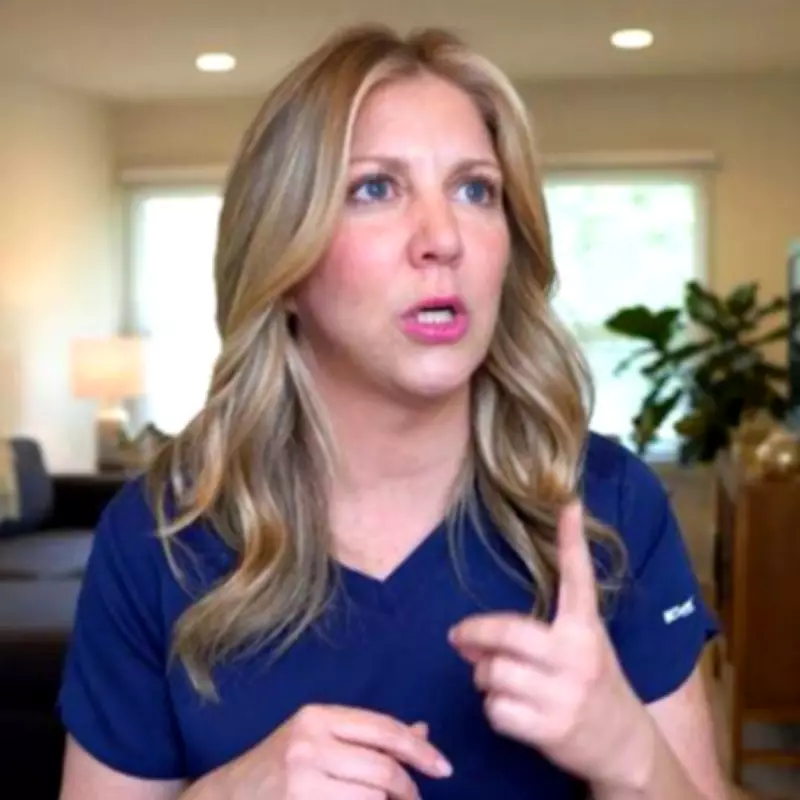
Julie McFadden, a hospice nurse based in Los Angeles known as 'Hospice Nurse Julie' on social media, has shared moving insights into the 'beautiful' signs she observes in patients approaching the end of their life. With over 1.7 million followers on TikTok, McFadden uses her platform to demystify the dying process and foster open conversations about this often-taboo subject.
Common Phenomena at the End of Life
In a recent YouTube video, McFadden highlighted two key phenomena that frequently occur in terminal patients. The first is what she refers to as the 'death stare,' where individuals become fixated on a specific part of the room, unresponsive to external stimuli. She explains that patients may stare intently or even engage in conversations with unseen figures, often accompanied by 'big smiles' that suggest they are witnessing something joyful.
End-of-Life Visioning
McFadden describes 'visioning' as one of the main phenomena observed by healthcare workers in end-of-life care. This involves patients seeing visions of deceased loved ones, such as parents, friends, or other relatives, and sometimes having audible conversations with them. She recalls one patient who displayed a 'huge smile' as if watching something in another part of the room, which she notes can provide comfort to families and offer a timeline for the dying process.

Timing and Variations in Visions
According to McFadden, these signs typically begin to appear a few weeks to a month before death. The content of the visions often varies based on the individual's religious or personal beliefs. Some patients report seeing 'beautiful clouds' or 'flowers,' while others describe visions of religious figures like Jesus, God, or angels. Importantly, she emphasises that patients at this stage are usually 'happy and smiling,' regardless of what they perceive.
Promoting Dialogue and Reducing Fear
McFadden's goal is to address the fear surrounding death by sharing these experiences openly. She believes that understanding these 'beautiful' signs can help families prepare emotionally and provide better support during the final days. By discussing end-of-life phenomena, she aims to normalise conversations about death and highlight the peaceful and often positive aspects of the dying process.