Canadian Senior Offered Euthanasia for Back Pain in Emergency Room
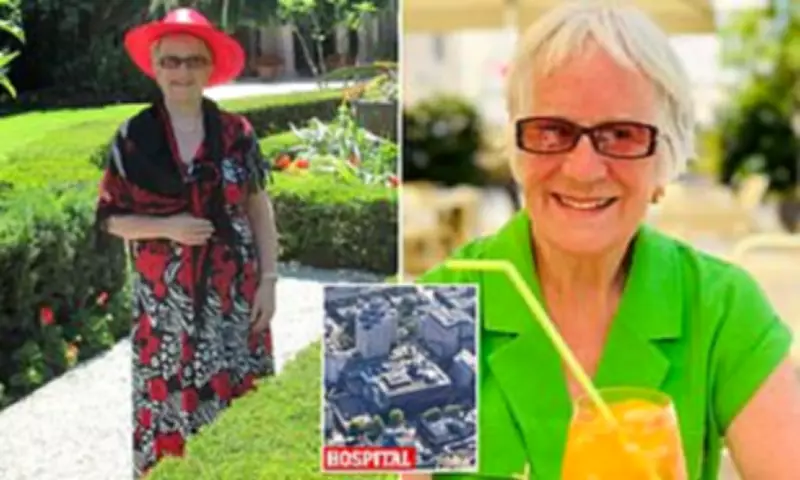
An 84-year-old Canadian woman has described her shock after a doctor immediately suggested euthanasia when she arrived at hospital emergency with severe back pain. Miriam Lancaster, a retired piano teacher from Vancouver, was rushed to Vancouver General Hospital last April with a fractured sacrum – a break at the base of the spine that is relatively common among elderly people.
'The Last Thing on My Mind'
Lancaster said she was stunned by the doctor's immediate suggestion upon examination. 'I was approached by a young lady doctor whose very first words out of her mouth is we would like to offer you [euthanasia],' Lancaster revealed in a video posted on social media platform X. The retired piano teacher emphasized she simply wanted to understand why she was in pain and had never considered a medically-assisted death.
'That was the last thing on my mind,' Lancaster added firmly. 'I did not want to die.' She expressed particular distress about the 'timing' of the request, noting that patients arriving at emergency are typically 'already upset and disoriented and wishing they weren't there.'

'To give them a decision, a life-terminating decision, when they are in this condition, that's what I object to,' she told the National Post newspaper.
Recovery and Resilience
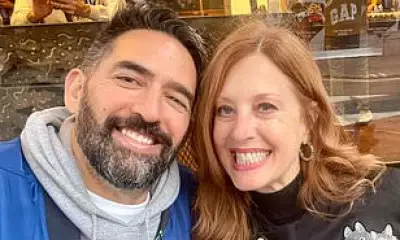
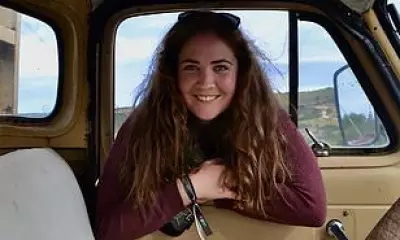
Lancaster's daughter, Jordan Weaver, insisted her mother was 'not frail' and remained active in her daily life. 'To be offered [euthanasia] right off the bat for a non-life-threatening condition? It was a matter of pain management,' Weaver argued. 'Just because someone is 84 does not mean they're ready to go on the scrap heap of life.'
Lancaster chose rehabilitation instead and recovered remarkably well after ten days at the hospital and approximately three weeks in a rehabilitation program at Vancouver's UBC Hospital. Just six weeks after her fracture, she walked her daughter down the aisle at her wedding. Since her injury, she has traveled to Cuba, Mexico, and Guatemala, and most recently hiked and rode on horseback up Guatemala's Pacaya volcano, which rises 8,373 feet.
'My mother is not frail,' Weaver emphasized. 'She's a dynamo. She reads books. She goes to the theatre. She's alert.' Weaver added that Lancaster took public buses independently and remained 'active' in her daily routine.
Previous Experience and Religious Convictions
Lancaster shared that she had a previous experience with a euthanasia offer around the time her husband John died from metastatic cancer in 2023. She recalled that a doctor at Vancouver General Hospital was required by law to raise the suggestion after John collapsed at home. 'Of course, he turned it down,' Lancaster said. 'We are churchgoers. We both are ready to go when the Lord calls us, and that's what happened to him.'
Lancaster described how the doctor who made the suggestion to her 'sounded eerily like the doctor who had offered it to my husband—as if she was reading from a script.' She noted that after her refusal, 'She heard my refusal, took one look at my daughter's and sister's faces, and swiftly changed the subject.' Lancaster added that 'The polite, distinctly Canadian tone of the exchange made the situation seem all the more absurd.'
Weaver confirmed their religious stance prevented acceptance of euthanasia, also known as medical aid in dying (MAID). 'My mother and I are practicing Catholics,' she said. 'We would never accept MAID under any circumstances.'
Hospital Response and Legal Context
Vancouver Coastal Health (VCH), which oversees Vancouver General Hospital, stated it was 'committed to the health and safety of everyone in our care.' In a statement to the National Post, they noted: 'While VCH is limited in what we can say due to patient privacy and confidentiality, we are not aware of a conversation between the patient and emergency department physicians at Vancouver General Hospital related to [MAID].'

The hospital authority explained that 'Staff may consider bringing up MAID based on their clinical judgement, provided they possess the necessary knowledge and skills to do so.' However, they claimed that emergency department staff were 'not generally in a position to raise the topic of MAID with patients.'
Euthanasia is legal in Canada for those who:
- Are 18 and over
- Able to make decisions for themselves
- Have a 'grievous and irremediable medical condition'
This does not necessarily mean a fatal or terminal condition, but rather 'an advanced state of decline that cannot be reversed' or 'unbearable physical or mental suffering.' According to Canadian government statistics, there have been 76,475 medically assisted deaths in the country since euthanasia was legalized in 2016.
Aftermath and Reflection
Lancaster did not file a formal complaint at the hospital when the alleged incident occurred because she 'wanted to forget about the whole incident and just get on with my life.' She explained: 'I really didn't want to hang people out to dry.'
Weaver claimed that other treatment options were only suggested after euthanasia was firmly rejected. 'The doctor said, "Well, you could get rehab, but it will be a long road, and it will be very difficult,"' Weaver recalled.
Reflecting on the experience, Lancaster admitted the 'disturbing' question left her stunned. 'All I knew was that I was in tremendous pain and that a stranger had just suggested I might want to end my life,' she said. Weaver called the hospital's treatment of her mother an 'insult to seniors' and emphasized that 'Her life is valuable to the people who care for her.'