Gardener's Stroke Went Unnoticed Due to Rare Reading Impairment Symptom
A Scottish gardener experienced a life-threatening stroke while tending to his plants but remained completely unaware of the medical emergency until the following day, having developed an exceptionally rare symptom that affects just one percent of stroke sufferers.
The Day Everything Became Unreadable
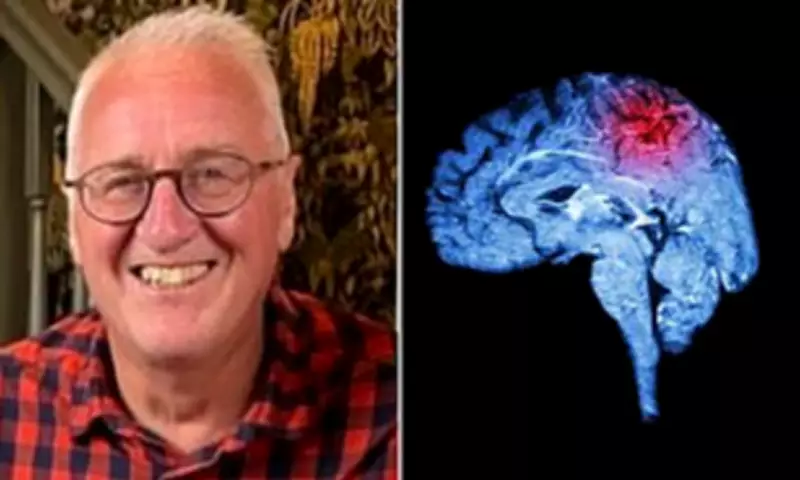
Gordon Robb, a 63-year-old resident of Bonnyrigg in Midlothian, was performing routine gardening tasks in September 2025 when he suffered what would later be diagnosed as a haemorrhagic stroke - a bleed on the brain. Remarkably, he experienced none of the classic FAST symptoms typically associated with strokes: facial drooping, arm weakness, or speech difficulties.
'I went in to have a cup of tea, listen to some music and check my emails on my phone - and it was like they were in a foreign language,' Mr Robb recalled. 'I could see them clearly, and see who they were from, but the words meant nothing to me. I just assumed I was tired because I had been up late the night before.'

This sudden inability to recognise written text extended to all forms of written communication throughout the day. When friends messaged him about the Ryder Cup that evening, he found himself unable to comprehend their texts. Even the screen of a cash machine appeared as though written in an unfamiliar language when he attempted to use it the following morning.
Emergency Intervention and Diagnosis
Initially planning to visit his GP after struggling with the cash machine instructions, Mr Robb's cousin intervened dramatically. Having recently lost her husband to a sudden stroke just three weeks earlier, she drove directly to his house and insisted on taking him to Accident and Emergency.
Medical examinations at the hospital confirmed he had experienced a haemorrhagic stroke - the less common type of stroke that occurs when a blood vessel ruptures in the brain, causing bleeding into the surrounding tissue. Experts confirmed that experiencing difficulty recognising written words as an isolated symptom, without accompanying traditional stroke indicators, affects fewer than one percent of people at the time of their stroke.
'I am incredibly lucky, and quite honestly felt like a fraud in the stroke ward because I was no different to how I am normally, except that I suddenly could not read words,' Mr Robb admitted. 'It just shows the importance of paying attention to unusual symptoms, even if they aren't ones you have heard of before.'
Understanding Stroke Statistics and Symptoms
Stroke represents a significant public health concern in the United Kingdom, with approximately 100,000 people experiencing a stroke each year and around 38,000 annual deaths attributed to the condition. This makes stroke the nation's fourth biggest killer and a leading cause of long-term disability.
While the FAST acronym (Face, Arms, Speech, Time) provides crucial guidance for recognising common stroke symptoms, medical professionals emphasise that several lesser-known indicators warrant equal attention:
- Blurred vision or sudden loss of sight in one or both eyes
- Severe, unexplained headaches
- Nausea or vomiting
- Sudden numbness affecting one side of the body
- Vertigo or dizziness
- Difficulty swallowing
There are two primary types of stroke: ischaemic strokes, which account for approximately 80% of cases and involve blocked arteries preventing blood flow to the brain; and haemorrhagic strokes like Mr Robb's, where blood vessels rupture and bleed into brain tissue.
Participating in Groundbreaking Research
Mr Robb has enrolled in a pioneering clinical trial funded by the British Heart Foundation and led by academics at the University of Edinburgh. The Aspiring study investigates whether antiplatelet medications - specifically clopidogrel or aspirin - can safely prevent future strokes, heart attacks, and premature deaths in individuals who have experienced haemorrhagic strokes.

Professor Rustam Al-Shahi Salman, who leads the trial, explained: 'It has been hard to overcome the instinctive fear that if people have had a haemorrhagic stroke, taking aspirin or a drug like it might cause more bleeding. So we were very relieved when our research showed such drugs to be safe after a haemorrhagic stroke.'
The study aims to gather definitive evidence about whether these commonly prescribed medications can reduce future cardiovascular risks for haemorrhagic stroke survivors without increasing bleeding dangers.
Recovery and Reflection
While Mr Robb's symptoms have shown gradual improvement, he acknowledges lingering effects from his stroke. Reading now takes considerably longer than before his medical emergency, and he occasionally experiences word-finding difficulties during conversations.
As an avid cyclist and runner, Mr Robb remains committed to both his recovery and contributing to medical research. 'Being involved in this trial provides some reassurance that this drug may reduce my risk of another stroke,' he noted. 'But it is also great to know that being involved could help improve treatment for people like me in the future, and relieve the pressure on the health system.'
Dr Sonya Babu-Narayan, the British Heart Foundation's clinical director, emphasised the critical importance of recognising unusual symptoms: 'Facial weakness, arm or leg weakness and speech problems are well-known signs you or your loved one may be having a stroke, but there are some lesser-known symptoms like being unable to recognise the written word. If you have a symptom that you feel is not right, however strange or unusual, it is really important to seek help. Every minute matters if you may be having a stroke or other medical emergency.'
Mr Robb's experience serves as a powerful reminder that stroke symptoms can manifest in unexpected ways, and that seeking immediate medical attention for any unusual neurological changes could prove life-saving. 'If I hadn't gone to the hospital, and quickly received treatment, I could have been walking around with a ticking time-bomb in my head,' he reflected.