Israel Approves Death Penalty by Hanging for Palestinians Convicted of Murder
Hundreds of protesters have taken to the streets across the embattled Palestinian territories in outrage after Israel's parliament passed a measure establishing the death penalty by hanging for Palestinians convicted of murdering Israelis. The legislation, which passed its final vote late Monday, has ignited fear and horror in the West Bank, where it is set to have the most sweeping impact.
Widespread Protests Erupt Across Palestinian Territories
Palestinians young and old held sit-ins and marches in the Israeli-occupied West Bank on Tuesday, the territory where the new law is most comprehensive. It orders West Bank military courts—which try only Palestinians—to make the death penalty the default sentence for those convicted, except in special circumstances. In the central West Bank city of Nablus, protesters carried signs reading, "Time is running out and silence is deadly," alongside animations of a prisoner wearing the Palestinian keffiyeh scarf next to a noose. Additional signs urged, "Stop the law to execute prisoners, before it's too late."
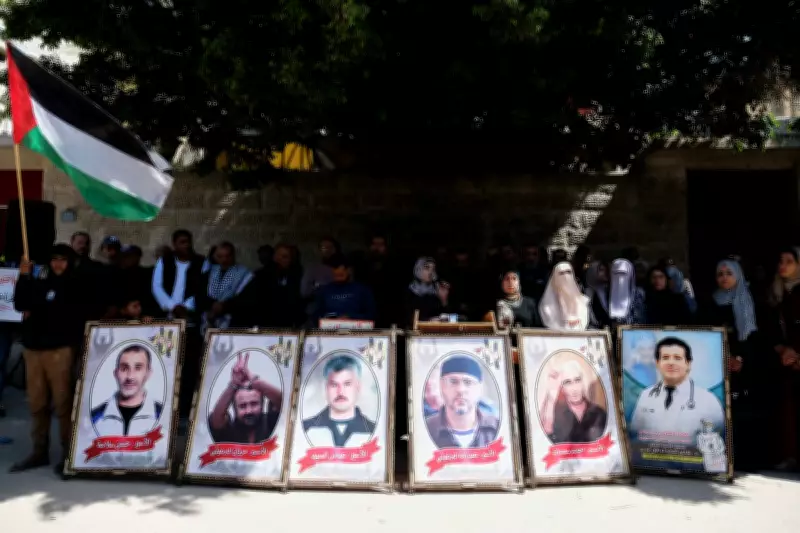
The demonstrators chanted, "You are the symbol of struggle, You are the symbol of steadfastness," with some holding up signs featuring the faces of friends and family currently incarcerated in Israeli prisons. In Gaza, dozens joined a demonstration in front of the Red Cross headquarters, where women in hijab displayed large framed photographs of well-known Palestinian prisoners like Marwan Barghouti.

Political and Legal Ramifications of the Legislation
Israel's firebrand minister of national security, Itamar Ben-Gvir, who spearheaded the push for the legislation, described the law as long overdue and a sign of strength and national pride. The bill passed to cheers and applause in the Israeli parliament, signaling an extreme hardening of Israeli penal policy that has elicited fear for all Palestinian prisoners in Israeli jails—often viewed as emblems of national resistance.
The law is set to take effect in 30 days, but its implementation could be delayed by pending court proceedings at Israel's highest tribunal. It is not retroactive and will not apply to current prisoners. However, it extends to Israeli courts, giving them the option of imposing the death penalty on Israeli citizens convicted of nationalistic murder. Legal experts note that this language effectively confines those who can be sentenced to death to Palestinian citizens of Israel, excluding Jewish citizens.
International Condemnation and Calls for Intervention
Palestinian officials have released statements asserting that the death penalty measure violates international law and have called on other countries to intervene. The Palestinian Foreign Ministry demanded sanctions on Israel's parliament and its suspension from international bodies, stating, "The law represents a critical turning point in the formalization of extrajudicial killings under a legal guise. The Ministry stresses that this law, in its essence, constitutes an institutionalized policy of field executions based on discriminatory and racist standards."
Amnesty International has warned that the use of the death penalty under the new measure could violate the right to life and the prohibition of torture and other cruel, inhuman, or degrading treatment or punishment, as enshrined in international law. The Fatah political party announced a general strike in the northern part of the West Bank for Wednesday, further escalating tensions in the region.
As protests continue and international scrutiny intensifies, the implementation of this controversial law remains uncertain, pending legal challenges and global diplomatic pressure.