
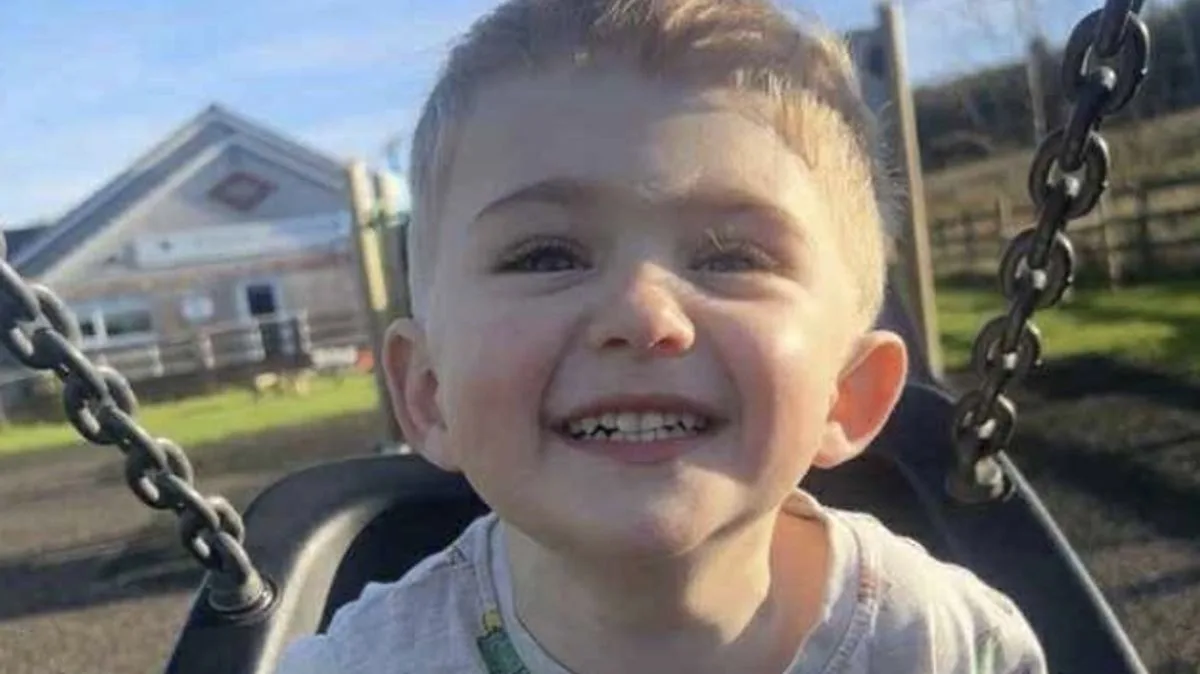
A three-year-old boy from Pontypridd, Wales, requires a life-saving bone marrow transplant after a rash on his cheek was found to be a symptom of a rare and life-threatening immune disorder. Elijah John has been diagnosed with primary haemophagocytic lymphohistiocytosis (HLH), a condition caused by a faulty gene that leaves him vulnerable to severe infections.
Elijah's father, Kyle, 38, said that without the transplant, his son will not survive. However, the procedure carries a 10 to 15 percent risk of death. “Without the transplant, he won’t live,” Kyle explained. “Every time he gets sick, it could mean a full HLH episode, which can kill.”
The family first became concerned in November when a small rash on Elijah's cheek spread across his body, accompanied by a high temperature and an enlarged abdomen. Specialists later confirmed primary HLH, triggered by a rare genetic mutation called XIAP. Genetic testing revealed that Elijah's mother, Chloe, 24, unknowingly carries the gene, which is passed from mothers to sons.
Elijah has already undergone intensive treatment, including chemotherapy to suppress his immune system. Following the transplant, he will have no immune system and will need to spend three to six months at Newcastle’s Royal Victoria Infirmary Children’s Hospital in specialist air-filtered rooms under strict infection control.
The family have launched a fundraising page to support them while Kyle and Chloe take time off work to isolate with Elijah. Kyle added, “If it’s successful, it’s a 100% cure – and that would mean everything to us.”




