Inside Gaza's Mental Health Centre: A Safe Haven for Children Amid Conflict
In Gaza, where approximately half of the population is under 18 years old, the needs of children are immense, and the suffering they have endured is unimaginable. Children who have witnessed the horrors of conflict are now finding support and a chance to reclaim their childhood at a Palestine Red Crescent Society (PRCS) mental health centre. This facility stands as one of the few remaining places where children in Gaza can play freely and feel safe, offering a vital respite from the daily realities of war.
The Healing Power of Play and Creativity
Dr Niveen, a mental health practitioner at the PRCS centre, explains the profound impact of the environment. 'Children have seen many things with their own eyes: bombing, destruction, displacement, and killing,' she says. 'For a long time, they hadn't touched or played with toys, so the child chooses the toy they want and starts playing freely.' This simple act of play is a crucial step in helping children process trauma and begin to heal.
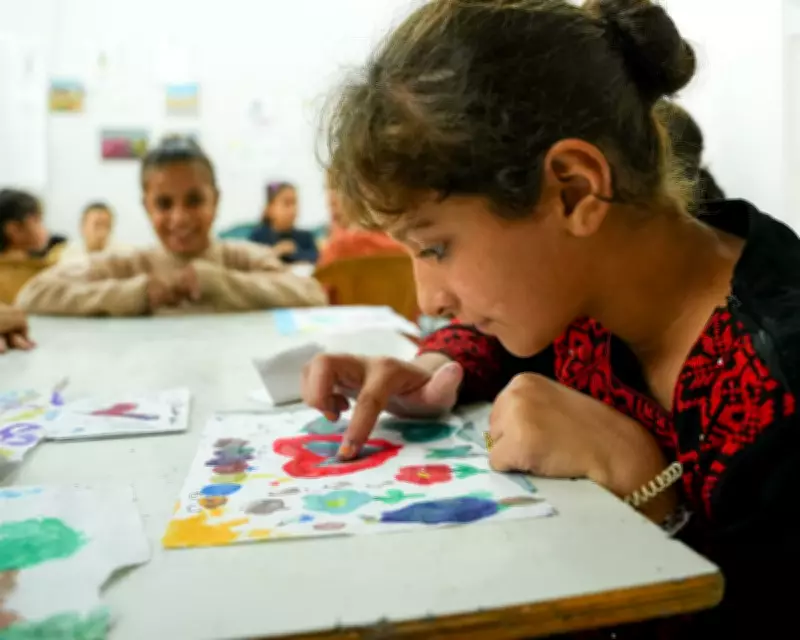
Art classes are a cornerstone of the therapy provided at the centre. Children are encouraged to express their thoughts and feelings through drawing and creativity. 'Perhaps the thing children express themselves with the most is through their drawings,' Niveen notes. Their artwork often features vibrant colours, hearts, and flowers, creating a stark contrast to the grim reality of life in Gaza. This creative outlet allows them to explore emotions in a safe and supportive setting.

Integrating Therapy with Physical Activity
Alongside storytelling and art therapy, the PRCS staff and volunteers harness the healing power of games and physical exercise. 'Children have a lot of energy, and they try to release it. We try to help them release this energy through ball games and other activities,' says Niveen. These activities not only promote physical well-being but also help children build social skills and reduce stress in a communal environment.
The centre operates with structured groups to maximise its impact. 'Children come here in two groups, each group has about 100 children,' Niveen explains. 'The staff try to integrate children who suffer from behavioural or psychological problems with other children to help them.' This integration fosters a sense of normalcy and peer support, which is essential for recovery.
Creating a Safe Space for Grieving and Recovery
For many children, the loss of loved ones has been a devastating reality. Art is used as a tool to support those struggling to cope with grief, providing a non-verbal means to process complex emotions. The centre aims to recreate the sense of safety and comfort that has been lost. 'Many children have lost the feeling of safety and comfort [that they felt when] their mothers used to tell them a story before bed,' Niveen says. 'We at the Palestine Red Crescent tried to create this safe space. Children come here every day; they don't want the session to end. They want to stay all day in the mental health centre because [it represents] a safe place and an environment where they can relieve their stress.'
Beyond mental health services, the PRCS provides essential aid and medical care across Gaza, addressing the multifaceted needs of a population under constant strain. The mental health centre specifically focuses on children, offering a beacon of hope in a region where such resources are scarce. Through play, art, and community, it helps young survivors begin to rebuild their lives, one session at a time.