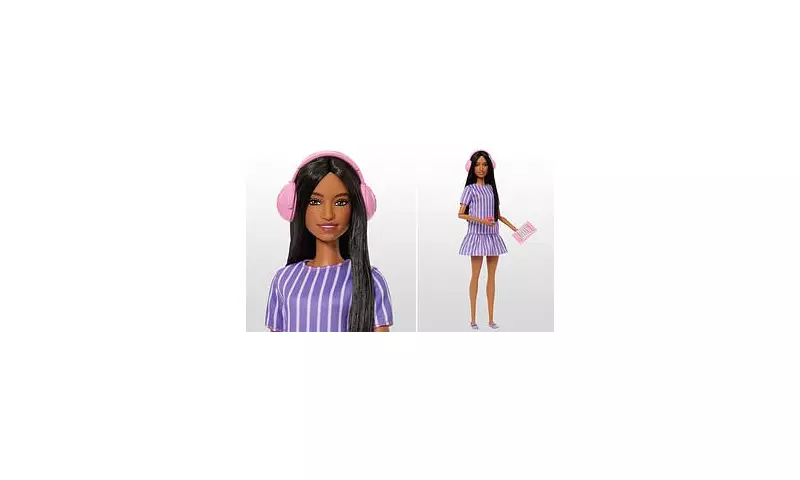
Mattel's landmark release of its first-ever autistic Barbie doll has ignited a fierce debate, with critics accusing the toy giant of promoting harmful stereotypes about neurodiversity. The doll, created in partnership with autistic advocates, includes features like a fidget spinner and noise-cancelling headphones, which some argue reduce the autistic experience to a narrow set of clichés.
Design Intentions and Community Collaboration
The American toymaker developed the doll with guidance from the Autistic Self Advocacy Network (ASAN), aiming to foster a more positive narrative around neurodivergence. The doll's specific design elements are intended to reflect experiences common within the autistic community. These include a shifted eye gaze to represent alternative eye contact, articulated wrists and elbows to enable stimming gestures like hand flapping, and a loose-fitting dress designed for sensory comfort.
Its accessories are central to the concept: a working pink fidget spinner serves as a sensory outlet, noise-cancelling headphones aim to reduce sensory overload, and a tablet displays symbol-based AAC (Augmentative and Alternative Communication) imagery. Mattel stated the doll was crafted to show some ways autistic individuals might "process sensory information or express excitement."

Social Media Backlash and Accusations of Stereotyping
Despite these efforts, a significant backlash has erupted on social media platforms. Many autistic individuals, parents, and allies have expressed dismay, contending that the doll reinforces reductive and stereotypical traits often associated with autism spectrum disorder.
One critic on X (formerly Twitter) highlighted the risk of generalization, writing: "My niece has been diagnosed with autism. How thrilled she'll be when she finds out she's supposed to have 'flappy hands'." Another shared an anecdote about two autistic teens who were "dumbfounded" and annoyed by the focus on stereotypical characteristics.
Further criticism centred on the use of props. A comment read: "Autism can't be summed up with a couple of props. Reducing it to noise-cancelling headphones and a fidget spinner risks reinforcing narrow stereotypes rather than challenging them." Others pointed out the danger of creating a single, monolithic representation of a profoundly diverse spectrum condition.
Advocates Defend the Doll as a Step Forward
In contrast, the advocates who collaborated on the project have defended the doll as an authentic and joyful representation. Ellie Middleton, an autistic and ADHD author and creator who consulted on the launch, became emotional, stating: "To now have an autistic Barbie doll makes me so emotional." She emphasised its potential to help undiagnosed or misdiagnosed girls feel "accepted and seen."
Colin Killick, Executive Director of ASAN, praised the partnership, saying: "It is so important for young autistic people to see authentic, joyful representations of themselves, and that's exactly what this doll is." The National Autistic Society also acknowledged the importance of the effort, with Peter Watt, Managing Director of National Programmes, noting the value of more depictions of autism, provided they are based on extensive consultation.
The doll, priced at an RRP of £13.99, is part of Mattel's broader 'Fashionistas' line expansion, which now includes dolls representing Down syndrome, blindness, and type 1 diabetes. This release underscores the ongoing challenge for brands navigating representation: balancing symbolic inclusion with the vast, individual diversity of the communities they seek to represent.