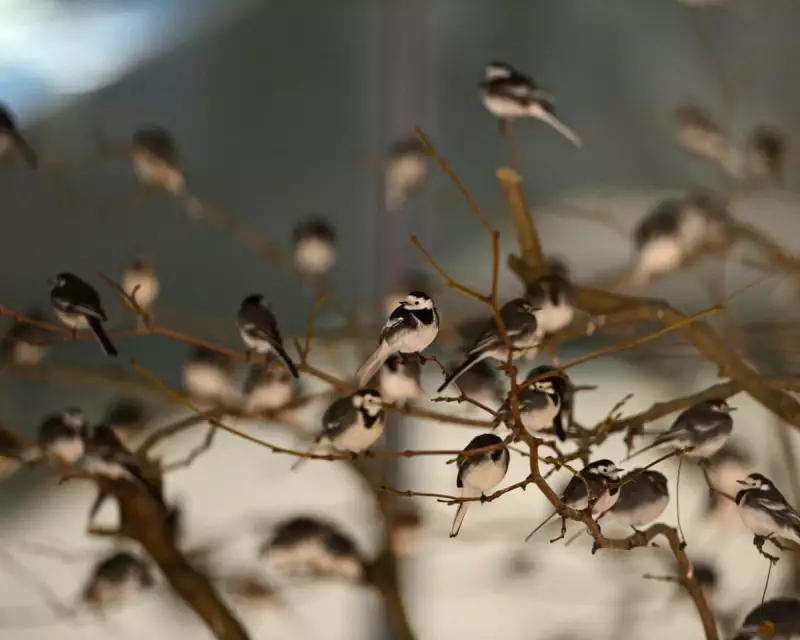
In the heart of a bustling Hampshire shopping centre, a remarkable natural event unfolds each winter evening. Hundreds of pied wagtails descend upon a mundane courtyard, transforming it into a vital, chattering sanctuary against the cold.
A Winter Gathering in an Urban Oasis
At the Whiteley shopping centre, a courtyard lined with ornamental silver birches becomes the unlikely stage for a large-scale avian gathering. As dusk falls, the air fills with the distinctive "chizzick" calls of pied wagtails arriving from all directions. Their characteristic tail-flicking motion creates a mesmerising spectacle against the glow of shopfronts, largely unnoticed by the hurrying shoppers below.
An observer recently witnessed the scene, noting the flock's restless behaviour for over ten minutes. Birds jostled for position on branches, lifting together in swirling clouds before settling again, their white faces catching the artificial light like glinting snowflakes.

The Critical Search for Warmth and Safety
This choice of roost is far from random. For small birds like pied wagtails, which lose body heat rapidly, finding shelter, warmth, and food is a matter of survival on harsh winter nights. The urban environment of the shopping centre provides a perfect microclimate.
The floodlights attract insects such as winter gnats and moths, offering a nearby food source. The surrounding buildings act as giant radiators, storing the sun's warmth and blocking the biting wind. Additional heat spills out from shop doors as customers come and go. The silver birch trees offer elevated perches, providing safety from ground predators like prowling cats and urban foxes.
The Subtle Dynamics of the Communal Roost
A communal roost of this scale, eventually settling several hundred strong across two adjacent trees, is shaped by complex social dynamics. While each bird competes for the prime, warmest spots, there are significant advantages to roosting together.
By gathering, the wagtails can observe the condition and foraging success of their neighbours. This information becomes crucial at dawn when the flock disperses, helping guide individuals to productive feeding grounds. In winter, their usually solitary feeding habits adapt, with females and juveniles forming temporary alliances as subordinates to territorial males.
As darkness deepens, the chatter fades to a whisper. The birds settle into a companionable silence, silhouetted along the branches, conserving their precious warmth for the night ahead. This annual ritual in Whiteley is a powerful testament to wildlife's adaptability and the unexpected sanctuaries found within our urban landscapes.