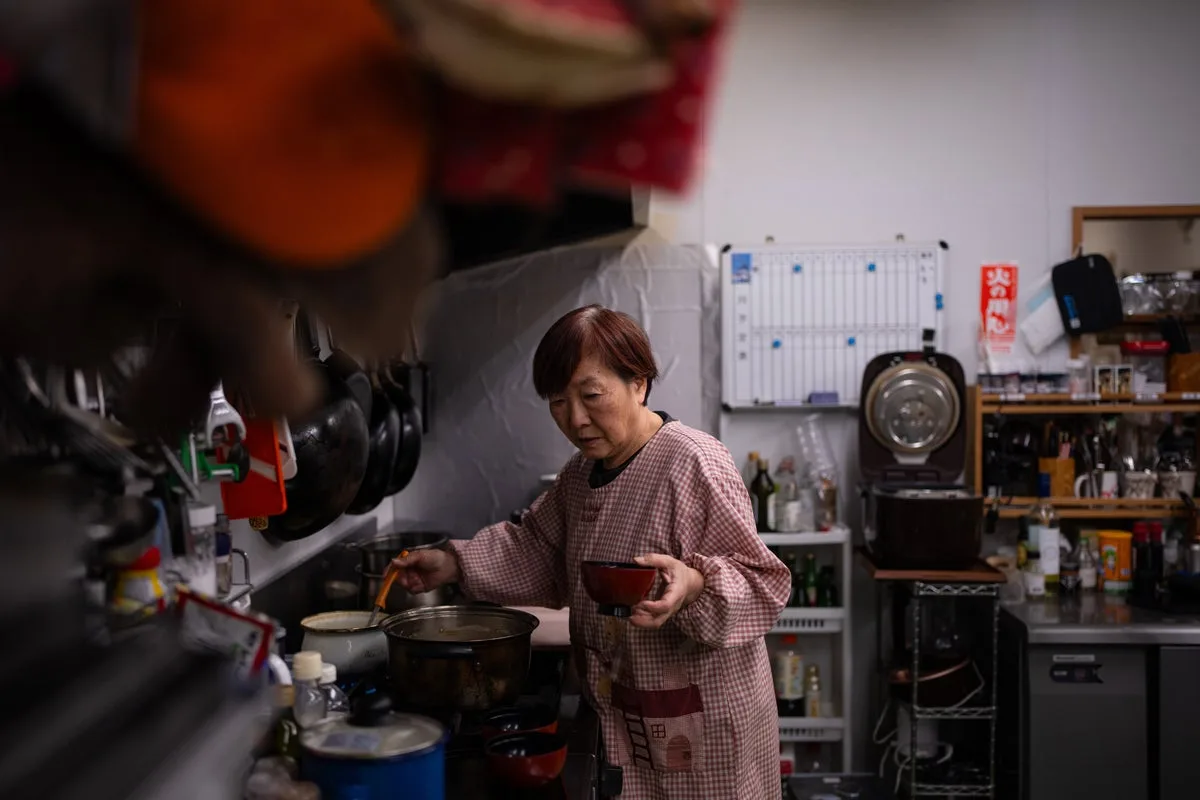
Fifteen years after the 2011 nuclear disaster, Tomoko Kobayashi continues her personal mission to revive her near-deserted hometown in northeastern Fukushima. Inside Futabaya Ryokan, the family-run inn she operates, colour-coded radiation maps serve as a stark reminder of the ongoing recovery.
Kobayashi, who reopened the inn in 2016 after conducting her own radiation surveys, now collaborates with other monitors to share crucial data, all part of a broader effort to rebuild the once-thriving textile town of Odaka. Reflecting on the past, she laments the loss of community as she passes a former kindergarten, now a museum, due to a severe lack of children.
"These empty lots used to be filled with shops," Kobayashi recalls. "There used to be businesses, community activity and children playing. We used to live our ordinary daily lives here, and I hope to see that again." Despite these dedicated efforts, only about a third of Odaka’s pre-disaster population of 13,000 has returned over the past decade.

Kobayashi acknowledges the immense challenge ahead: "The town was destroyed, and we need to rebuild it. It’s a time-consuming process that cannot be accomplished in just a couple of decades." She adds, "But I hope to see the progress, with new people and new development added to what this town used to be."
When a magnitude 9.0 quake struck off Japan’s northeastern coast on 11 March 2011, Kobayashi was at the inn. Despite violent shaking, the walls held, but an hour later a tsunami poured into the kitchen "like a river." The wave hit the Fukushima Daiichi nuclear plant, destroying cooling systems and causing meltdowns at three reactors. Hydrogen explosions at Units 1, 3, and 4 spewed radioactive particles, forcing hundreds of thousands to flee.
Kobayashi’s family first headed to a gymnasium in Haramachi, then to Nagoya for a year. In 2012, they returned to Fukushima to measure radiation while living in temporary housing near Odaka, still off-limits. Now, she and her comrades gather twice a year, spending two weeks measuring air at hundreds of locations to produce colour-coded maps. They have also set up a lab to test local produce. "We are not professional scientists, but we can measure and show the data," she says. "What’s important is to keep measuring, because the government maintains that it’s safe, as if radiation no longer exists. But we know for a fact that it’s still there."