When household batteries reach the end of their life, many people are unsure how to dispose of them properly. Often, they end up tucked away in junk drawers or discarded in the trash, but this common practice poses significant risks to both the environment and public safety.
The Hidden Dangers of Discarded Batteries
Dead batteries are not as inert as they might seem. Once they land in landfills, they can leak heavy metals such as cadmium and nickel into the soil and water, contaminating ecosystems. Additionally, certain types of batteries can overheat, sparking fires in garbage trucks and recycling facilities, endangering workers and infrastructure.
Michael Hoffman, president of the National Waste and Recycling Association, emphasizes the importance of responsible disposal. "Recycling old batteries keeps you safe, keeps the waste industry safe, keeps first responders safe, and ensures that batteries reach a proper end of life," he said.

The Environmental Impact of Battery Production
Batteries power countless devices in our homes, from alarm clocks to gaming controllers. According to the Environmental Protection Agency, millions are purchased and used annually in the United States alone. Their environmental footprint extends across their entire lifecycle.
Materials like lithium, nickel, and cobalt are mined to produce batteries, with over half of the world's cobalt reserves located in Congo. The transportation of these materials via ships, trucks, and planes contributes to carbon emissions, while manufacturing processes release further pollution into the air.
Although household batteries are smaller than those used in electric vehicles, their sheer volume makes proper disposal crucial. "One person's single battery is not necessarily a lot, but everyone uses many batteries," noted environmental scientist Jennifer Sun from Harvard University.
How to Recycle Batteries Safely
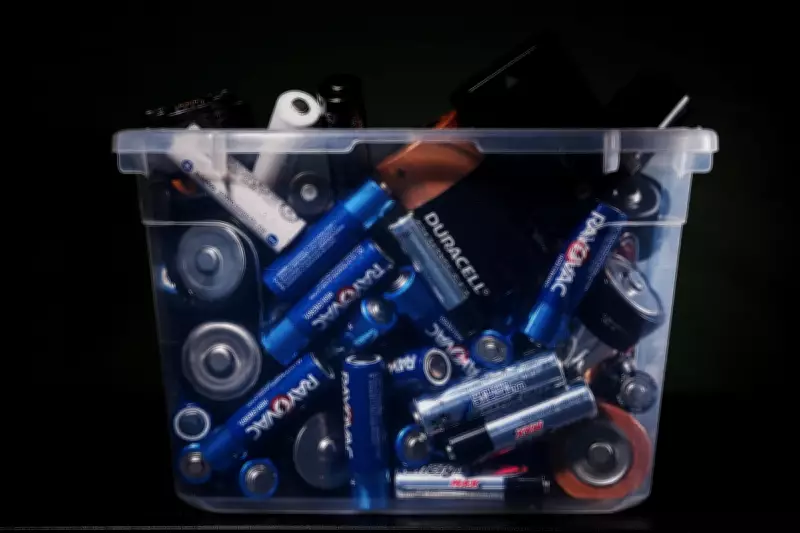
To start, gather your old batteries and identify their types. Matthew Bergschneider, a materials scientist at the University of Texas at Dallas, explains that batteries "come in all shapes and sizes, but what's inside differs."
Alkaline and zinc-carbon batteries, such as AA and AAA, are generally single-use. While they can often be thrown in the trash, the EPA recommends recycling them to reclaim materials for new products.
Lithium-ion batteries, common in power tools and cordless vacuums, pose a higher risk of causing fires and leaking toxic gases. Many rechargeable and an increasing number of single-use batteries are lithium-ion, requiring careful handling.
Check local disposal laws, as areas like New York, Vermont, and Washington, D.C., have specific regulations for household or rechargeable batteries. Before dropping off batteries, tape their ends or place them in plastic bags to prevent sparking.
Finding Drop-Off Locations
Locating a drop-off site varies by region. Many hardware and office supply stores accept old batteries. City and state programs or resources like The Battery Network, a nonprofit focused on safe recycling, can help you find nearby options using ZIP codes.
Todd Ellis of The Battery Network advises, "Have a location in your home to collect batteries over time, and then at some point, hopefully among all the other things in our lives, you can find a convenient drop-off location."
If batteries appear swollen, cracked, or leaking, do not drop them off. Contact your local hazardous waste removal agency for guidance on safe disposal.
The Second Life of Recycled Batteries
Once collected, batteries are sorted by type and sent to recycling facilities. There, they are broken down into components like cobalt, nickel, or aluminum, which can be repurposed. For instance, nickel might be used in stainless steel products, while alkaline batteries can be transformed into sunscreen ingredients.
While recycling doesn't erase the environmental cost of battery production, it maximizes resource reuse. "You continue to recycle and you don't have to go back to the Earth to mine," said Oladele Ogunseitan, a public health expert at the University of California, Irvine, who studies electronic waste.

Adopting good battery habits also protects households from leaks of toxic compounds in cabinets and drawers. Jennifer Sun highlights this as "one of the simplest and most controllable actions that we can take to reduce our impact."
Proper battery recycling is a straightforward yet impactful way to safeguard the environment and promote sustainability, turning potential waste into valuable resources for the future.