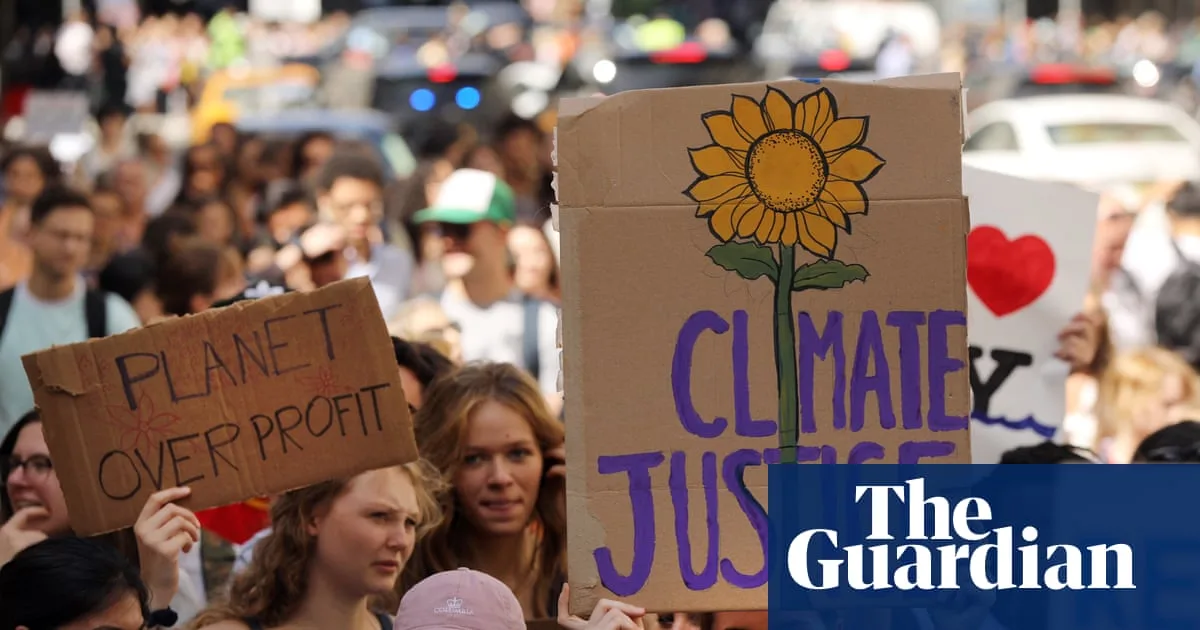
New Global Science Panel Launched to Accelerate Fossil Fuel Transition
Global Science Panel to Speed Up Fossil Fuel Exit

More than 50 countries have gathered in Santa Marta, Colombia, for a groundbreaking climate action meeting aimed at accelerating the global transition away from fossil fuels. The event, running from 24 to 29 April, has brought together national governments, subnational authorities, and around 2,800 civil society representatives in what is being described as a 'coalition of the willing' to reinvigorate international efforts to reduce planet-heating emissions from oil, gas, and coal.

Launch of the Global Science Panel

On the opening day, a new global panel of experts was announced to provide scientific and economic advice to countries seeking to reduce their dependence on fossil fuels. The initiative aims to help nations manage the growing risks associated with high oil prices, geopolitical conflicts, and extreme weather damage. The panel will be chaired by Vera Songwe, co-chair of the High Level Expert Panel on Climate Finance; Ottmar Edenhofer, director and chief economist of the Potsdam Institute for Climate Impact Research; and Gilberto M Jannuzzi, a Brazilian professor of energy systems.

Jannuzzi expressed optimism about the energy transition, stating, 'Technically, there is no problem. The problem is how to disseminate the information and secure the financing.' The panel's formation follows calls from the president of COP30 in Belém to establish clear roadmaps for moving away from fossil fuels and deforestation.

Wide Pickt banner — collaborative shopping lists app for Telegram, phone mockup with grocery list

Colombia's Draft Roadmap

Colombia, which relies on coal for about half of its export revenues, presented a draft roadmap for its own national energy transition. The plan, developed by global experts and Colombian officials, suggests that a rapid switch to cheaper and more efficient renewables would bring long-term benefits to energy security, health, the climate, and the economy. It calculates that reducing fossil fuel use by 90% by 2050 could allow energy demand to continue growing while generating direct economic benefits estimated at $280 billion over the next 24 years.

The roadmap acknowledges that 'considerable upfront investment is needed to achieve this transition, but by the early 2040s, this delivers annual net savings to the Colombian economy.' The authors stressed that the outline requires further debate and refinement but hope it will inform national discussions.

Support from Hosts and Experts

The Colombian and Dutch hosts of the Santa Marta meeting have expressed strong support for the initiative, which was convened by Johan Rockström of the Potsdam Institute and Carlos Nobre of the University of São Paulo. Rockström noted that the presence of a third of the world's countries would help keep the transition from fossil fuels on the global agenda. 'These are solvable problems that can create better futures for local communities,' he said. 'The science panel can play a unique role in providing updates on what needs to happen year by year.'

Professor Piers Forster, director of the Priestley Centre for Climate Futures at the University of Leeds, expressed excitement about the roadmap, highlighting its cost-effectiveness in phasing out petrol and diesel and building renewables. He hopes other countries will develop their own roadmaps and climate councils, saying, 'We want to work with countries to build internal capacity to do it themselves because they understand the opportunities, roadblocks, and political sensibilities within their countries.'

Challenges for Fossil Fuel Producers

The 54 countries attending the fast-track transition conference include major fossil fuel producers such as Nigeria, Mexico, Brazil, and Angola, for whom giving up a significant source of income will be challenging. The new science panel aims to provide intellectual weight to help these nations navigate the transition, offering advice on national and sector-level milestones aligned with scenarios that limit global heating to 1.5°C by the end of the century.

Pickt after-article banner — collaborative shopping lists app with family illustration




