Traditional Funeral Practices Face Decline as Green Alternatives Surge
For decades, casket burials and cremations have dominated funeral arrangements across the United Kingdom. However, a significant cultural shift is underway as increasing numbers of Britons are abandoning these conventional methods in favour of modern, environmentally conscious alternatives. From artificial reef memorials to celestial ash scatterings, UK residents now enjoy unprecedented choice regarding their final resting places. With potential legislative changes on the horizon, individuals may soon exercise even greater control over their posthumous arrangements and environmental legacy.
The Rise of Green Burial Grounds
Across the nation, more than 400 cemeteries now offer 'green' burial options, with industry experts reporting consistent growth in this sector. This movement represents a fundamental reimagining of funeral practices, driven by both environmental concerns and personal values. Louise Winter, founder of London-based independent funeral director Poetic Endings, observes: "People want their person to be in death as they were in life. If that involved being conscious of the environment, then natural burial is a really lovely choice."
Artificial Reef Memorials: Creating Marine Sanctuaries
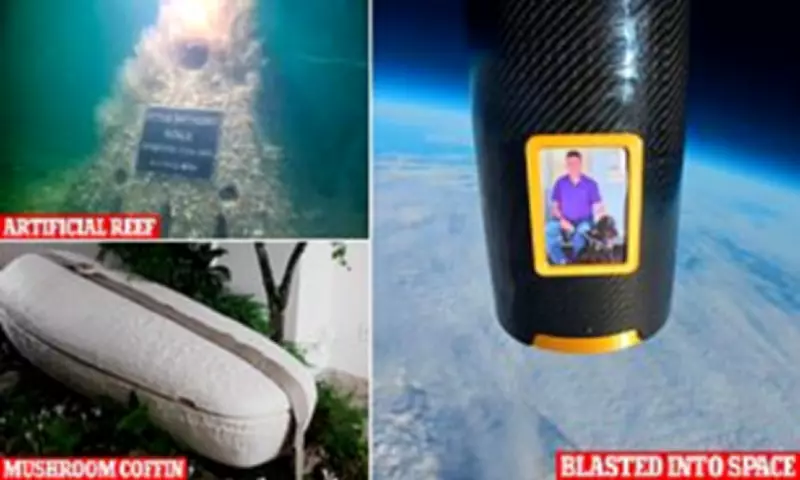
Even those opting for traditional cremation now confront numerous possibilities for ash disposition. One innovative approach involves transforming remains into components of artificial reefs. When Linda Tagg received a cancer diagnosis, she and her husband David, both passionate divers and travellers, discovered Solace Reef. This UK company encapsulates ashes within stone memorials submerged off the Weymouth coast, creating habitats for marine life.

David Tagg explains their decision: "As divers and nature lovers, this seemed like the sensible thing to do." Following Linda's passing in 2019 at age 65, her remains were sealed in a stone facing south, while her father Maurice's stone faced north. David plans to eventually join them, stating: "Instead of becoming part of a graveyard, you become a sea life reserve. It's just a very useful way of being there forever."
Sean Duncan, Solace Reef's founder, notes: "People are fed up of being processed in the traditional manner and looking for new and creative ways to mark their passing. The solace reef is giving life after a life lived." The company currently maintains 35 stones in their underwater memorial site.
Celestial Ashes: Memorials Among the Stars
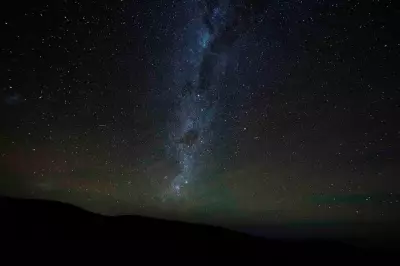
For those seeking more distant memorials, space burials offer an extraordinary alternative. Following her husband Mark's sudden passing, Jane Berwick chose to have his ashes scattered in the stratosphere. UK company Aura Flights collected the remains, placed them in a specialised capsule attached to a hydrogen balloon, and released them 100,000 feet above Earth.
"Looking up at the stars and thinking he's out there somewhere was a bit of comfort for us," Jane reflects. "I didn't want to think that he was just lying there while nobody bothered about him." Despite the £3,950 price tag (excluding cremation and funeral costs), demand for such services continues growing. Aura Flights has launched 350 missions since 2017, with increasing inquiries from younger individuals planning ahead.
Natural Burials: Returning to the Earth
Natural burials represent one of the UK's fastest-growing funeral alternatives, addressing both environmental concerns and practical limitations. Traditional funerals consume enormous resources annually, including millions of litres of embalming fluid and tons of concrete and metals. In natural burials, bodies are interred without preservation in biodegradable containers like linen shrouds or wicker baskets, allowing natural decomposition.
Rosie Inman-Cook, manager of the Natural Death Centre, describes natural burials as "a win-win-win: great, meaningful funerals for the mourners, better for the planet, and better for wildlife." However, she cautions about inconsistent standards across sites, warning that "some opportunists who have little regard for the ethos have jumped on the wagon."

Innovative Coffin Alternatives
The Loop Living Cocoon presents a revolutionary approach to burial containers. This "living coffin" grows from mycelium (fungal roots) mixed with recycled hemp fibre, forming a completely biodegradable structure within seven days. Once buried, it decomposes in approximately 45 days, enriching surrounding soil.
Inventor Bob Hendrikx explains: "If you put them in the soil, they're not hurting the planet, but enriching it. We talk about this as the logical option, not the green alternative." Beyond environmental benefits, the coffin's soft, almost furry texture provides comfort to grieving families. "For the grieving process that can be quite healing," Hendrikx notes, "and we often hear stories about people stroking the coffin, almost petting it."
Legislative Developments and Future Options
Scotland recently became the UK's first region to legalise alkaline hydrolysis, colloquially termed 'boil in the bag' funerals. This process involves dissolving bodies in pressurised alkaline solutions at 150°C, reducing them to sterile liquid and bone powder over three to four hours. Helen Chandler of Kindly Earth, which holds exclusive equipment rights in Scotland, emphasises: "It's about giving families more choice. Each family has different values and priorities."
Meanwhile, England and Wales await potential legalisation of human composting (terramation) through upcoming Law Commission proposals. This process transforms bodies into nutrient-rich soil over approximately 60 days using organic materials and microbial activity. Brienna Smith of Return Home funeral company observes: "What appeals to many people is the alignment with their values. Terramation is gentle, participatory, and rooted in ecology."
As traditional funeral practices continue evolving, UK residents increasingly seek arrangements reflecting personal values, environmental consciousness, and unique life stories. This transformation signals not merely changing consumer preferences but a profound cultural re-evaluation of mortality, legacy, and our relationship with the natural world.