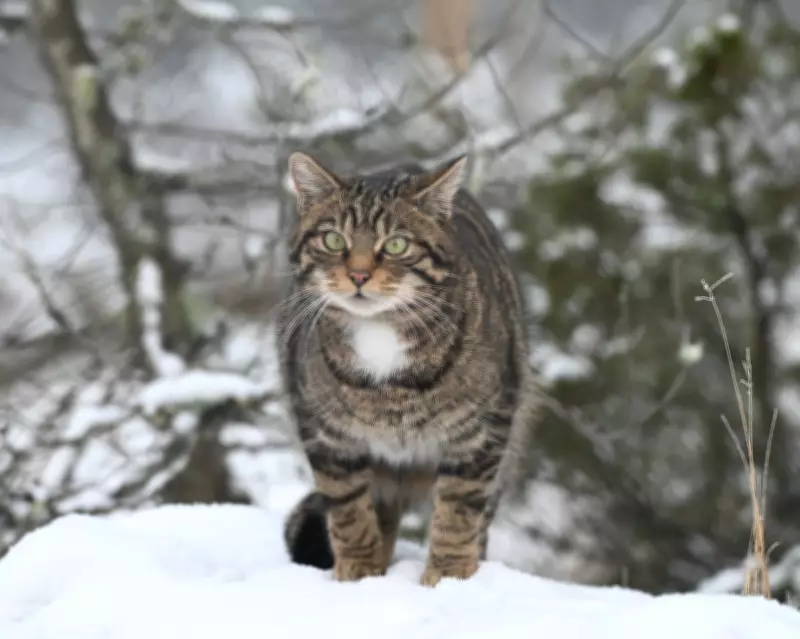
In the pristine blanket of overnight snow across the Cairngorms, the hidden activities of nocturnal creatures are laid bare for observant walkers. Among the familiar imprints of red squirrels, hares, badgers, pine martens, and deer, a recent discovery has sparked particular excitement: tracks that strongly suggest the presence of a wildcat, a species once feared to be on the brink of extinction in Britain.
Conservation Efforts Bearing Fruit
The Saving Wildcats project, initiated in 2015 by concerned conservationists, has been instrumental in reversing the decline of these elusive felines. Through a meticulous program of captive breeding, careful release, and ongoing monitoring, the initiative has achieved notable success. To date, 46 wildcats have been reintroduced into their natural habitat, with impressively high survival rates and confirmed reports of litters being born in the wild, marking a significant milestone in conservation efforts.
Tracking the Wildcats' Movements
Each released wildcat is equipped with a GPS collar, enabling researchers to map their movements and behaviors in unprecedented detail. The data reveals fascinating patterns, from territorial marking and mate-seeking crossovers to astonishing long-distance journeys. One individual was tracked traversing from Speyside to Deeside, scaling Ben Macdui, the UK's second highest mountain, showcasing their resilience and adaptability in the rugged Scottish landscape.

Identifying Wildcats in the Wild
Distinct from domestic cats, wildcats are notably larger, boasting thick coats with tabby markings and a characteristic blunt tail adorned with black rings and a dark tip. A key identifier is the black dorsal "spine" that ceases at the tail's base in non-hybridised specimens. A fleeting encounter with one of these majestic creatures last year left a lasting impression on a local observer, who recalls the awe-inspiring sight of its distinctive tail, fueling hopes for future detailed sightings.
A Broader Context of Conservation Success
The resurgence of wildcats adds to a series of positive conservation narratives in the region, including a modest increase in the capercaillie population noted last year. While both species remain elusive, the subtle clues they leave behind—be it tracks in the snow or scattered feathers—serve as powerful reminders of their enduring presence and the effectiveness of dedicated preservation initiatives.
This heartening progress underscores the importance of continued support for wildlife conservation, ensuring that future generations may also witness the beauty and diversity of Britain's native species in their natural habitats.