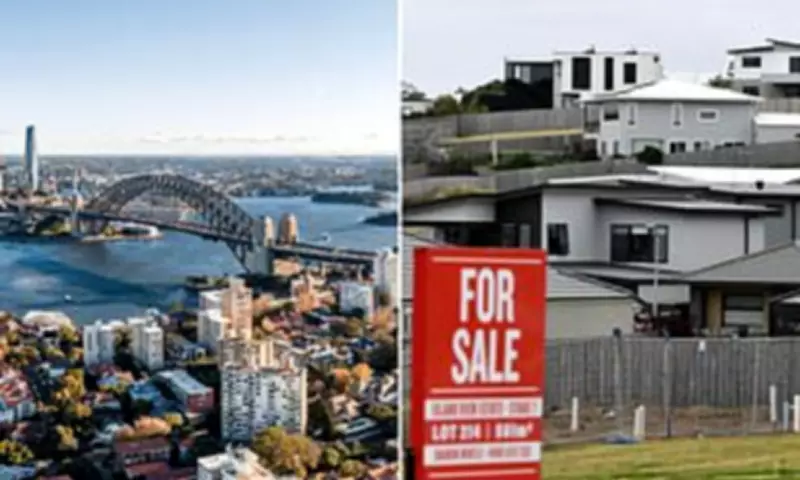
Sydney home prices have experienced their largest decline in 18 months, as the conflict in Iran and consecutive interest rate hikes by the Reserve Bank of Australia (RBA) exacerbated a downturn in the nation's two largest housing markets. According to property data firm Cotality, median home values in Sydney and Melbourne both fell by 0.6 per cent in April.
National Trends
Nationally, home prices rose by 0.3 per cent, but the pace of growth is slowing across the board as headwinds from the Strait of Hormuz intensify. Gerard Burg, head of research at Cotality, noted that affordability and serviceability constraints are weighing on demand. The RBA's two consecutive rate hikes, with a third expected soon, combined with uncertainty from the Middle East crisis, have dampened sentiment.
'When things get uncertain, people have a tendency to sit on their hands and wait and see, and that's a pretty negative trend for a high-value purchase, like making a home purchase,' Mr Burg told AAP.

Regional Variations
The median Sydney dwelling remains the nation's most expensive at $1.29 million, but Brisbane and Perth are rapidly closing the gap. Brisbane's median home price climbed 1.2 per cent over the month to $1.12 million, now worth 86 per cent of Sydney's median, compared to 76 per cent a year ago. In Perth, the median dwelling jumped 2.1 per cent to $1.04 million, representing 80 per cent of Sydney's benchmark, up from 68 per cent a year earlier.
Supply Dynamics
On the supply side, conditions are improving, particularly in Sydney and Melbourne, where total listings have exceeded the five-year average. Mr Burg noted that this suggests a market that is better balanced than during much of last year. However, the improvement in supply is primarily driven by more vendors seeking to sell before property values decline further, rather than a significant increase in new builds.
Australia's chronic supply imbalance is expected to continue providing a floor under prices for several years, beyond the short-term cycle. 'When you take a look at the significant increase in costs that we've seen over the last couple of years, just making new projects feasible has become increasingly challenging,' Mr Burg said.
Impact of Middle East Conflict
The National Housing Supply and Affordability Council has warned that supply chain disruptions from the Middle East conflict could reduce the housing pipeline by 33,000 new homes over the next three years. Housing Minister Clare O'Neil told a Property Council summit that the construction sector is particularly vulnerable to the oil shock due to its heavy reliance on diesel. The government is working to secure more fuel supplies and reduce the regulatory burden to facilitate building.
'I absolutely believe there is far too much red tape and regulation in housing and that, if we are going to support you to build the homes our country needs, we're going to have to wind that back,' O'Neil said. She highlighted a review of the National Construction Code that identified three priorities: making the document easier to use with AI, reducing regulatory variation across states, and clamping down on new additions that add complexity and cost.
Political Reactions
Opposition housing spokesman Andrew Bragg criticized the government, stating that for all its talk about slashing red tape, Labor has little to show for it. He pointed to the construction code being layered with gold plating, such as mandating grab rails in bathrooms for young home builders. 'Only in Australia would you find so much red tape as to make a cheap house illegal,' he said.