Singapore Launches World's First Sustainable Aviation Fuel Levy
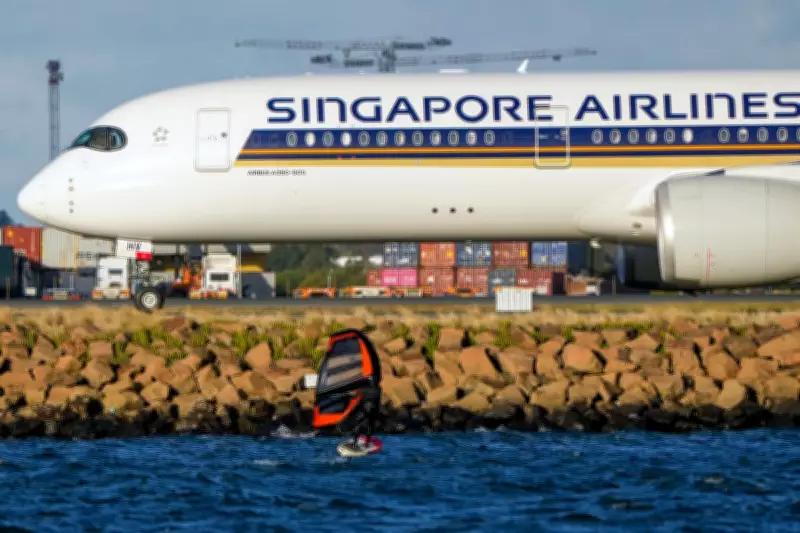
Singapore has initiated a pioneering levy on airline tickets to finance sustainable aviation fuel, marking a significant step in the global effort to reduce aviation emissions. Passengers flying from Changi International Airport will now contribute between 75 cents and $32 per ticket, depending on their travel distance and cabin class.
How the New Levy System Operates
The levy applies to flights departing after October 1st, with tickets sold after April 1st subject to the new charges. Economy class passengers traveling within Southeast Asia will pay the minimum amount of 1 Singapore dollar, while those in premium cabins flying to the Americas will face the highest charge of 41.60 Singapore dollars.
For cargo operations, the levy calculation incorporates both distance traveled and weight. To maintain transparency, all charges will be clearly displayed on passenger tickets and air cargo contracts, ensuring travelers understand exactly what they're paying for.

Daniel Ng, chief sustainability officer at the Civil Aviation Authority of Singapore, emphasized that this approach enables "all aviation users to do their part to contribute to sustainability at a cost which is manageable for the air hub."
Southeast Asia's Growing Sustainable Aviation Fuel Industry
Concurrently, Southeast Asia is rapidly developing as a major production center for sustainable aviation fuel. The region benefits from abundant access to essential ingredients like agricultural waste and used cooking oil, which serve as primary feedstocks for SAF production.
Tat Chuan Goh of Aether Fuels, the company constructing Singapore's new SAF facility, described the region's potential as "a pot of gold that can really be scaled up." His Chicago-based firm is currently building Singapore's next-generation SAF plant, with existing agreements to supply major carriers including JetBlue and Singapore Airlines.
Across the region, production milestones are being achieved. Thailand inaugurated a brand-new SAF plant in Bangkok during 2025, while Malaysia and Vietnam both reached significant domestic production targets last year. Indonesia has announced expansion plans for its current operations, and the Philippines is streamlining regulations to attract fuel developers.
Aung Soe Moe, a senior air transport officer for the Association of Southeast Asian Nations, stated that the region can "support competitive and scalable SAF production" if managed responsibly. ASEAN projections indicate Southeast Asia could produce up to 8.5 million barrels of SAF daily by 2050.
Global Context and Challenges
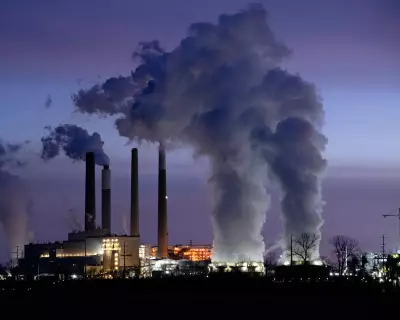
The aviation industry contributes approximately 2.5% of annual global carbon emissions, with these emissions growing faster than any other transportation sector according to the International Energy Agency. In response, the UN-backed International Civil Aviation Organization has established a goal of achieving net zero carbon emissions by 2050.
Sustainable aviation fuel presents a crucial solution, potentially reducing industry emissions by about 65%. However, scaling up production faces significant challenges, particularly due to policy reversals in the United States under the Trump administration.
Kelvin Lee, who leads sustainability efforts in the Asia-Pacific region for the International Air Transport Association, noted that while "people are paying quite a bit of attention to SAF production in this part of the world," substantial government support remains essential to maintain momentum.
Preeti Jain, head of IATA's net zero research, acknowledged that U.S. policy rollbacks have created uncertainty, stating they are "definitely a topic of discussion" within the industry. Global SAF production growth is forecast to slow for the first time since large-scale output began in 2018, highlighting the importance of consistent policy frameworks.
Despite these challenges, Singapore's innovative levy system and Southeast Asia's expanding production capacity demonstrate significant progress toward cleaner aviation. As the region capitalizes on its natural advantages and implements supportive policies, it positions itself as a crucial player in the global transition to sustainable air travel.