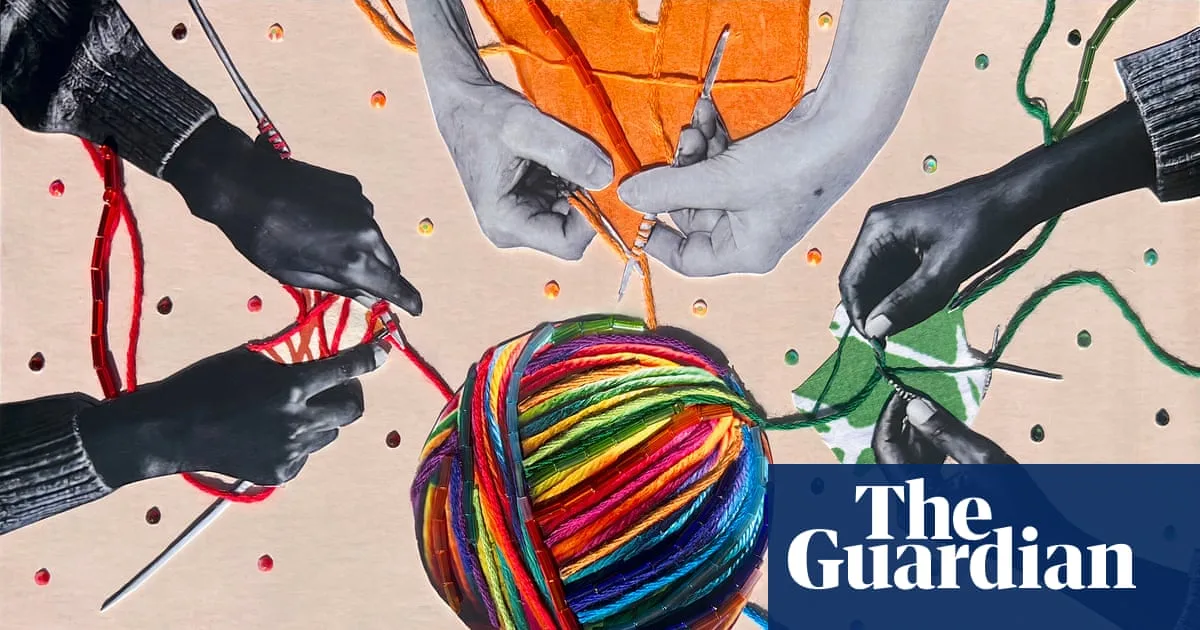
In the United States, a quiet but potent form of resistance is unfolding, stitch by stitch. For centuries, American fibre artists have harnessed their crafts for political expression, a tradition now vividly alive in the era of Donald Trump. Today, knitters, embroiderers, and crocheters are gathering, their needles and yarn becoming tools of protest against policies ranging from aggressive immigration enforcement to the rollback of abortion rights.
The Stitch of Solidarity: Knitters Against Fascism
In early October, following an order from then-President Donald Trump to deploy national guard troops to what he called a "war ravaged" Portland, Oregon, Tracy Wright made a decision. She invited fellow knitters to join her outside the local US Immigration and Customs Enforcement (ICE) facility. Armed with what they later termed their "weapons of mass construction"—knitting needles and yarn—they set up lawn chairs, aiming to present a calm, normal face to immigrants arriving for appointments and counter the administration's narrative.
"I didn't want to go by myself," Wright admitted, unsure of what to expect. This initial gathering sparked a weekly ritual, and the group eventually adopted the moniker Knitters Against Fascism. Their presence, a tableau of ordinary citizens peacefully crafting, became a powerful visual rebuttal.
Word spread through social media and knitting guilds, drawing in participants like knitwear designer Michele Lee Bernstein. She saw the knit-ins as a perfect way to show Portland wasn't "burning to the ground." At her second protest, Bernstein designed a hat pattern based on the Portland Frog, an inflatable costume worn by other protesters. She shared the pattern online, sparking an unexpected wave of support. A church group used it to raise $550 for a local food bank, and Bernstein sold one of her own hats for $100, donating the proceeds to the North-east Emergency Food Program.
Craftivism: A Century-Old Tool for Modern Movements
This work sits within a long historical lineage. The term "craftivism" was coined by writer Betsy Greer in 2003, but the practice is ancient. From the embroidered handkerchiefs of Argentina's Mothers of the Plaza de Mayo to the vast, community-stitched AIDS Memorial Quilt, craft has long been a medium for mourning, protest, and community building.
Political scientist Hahrie Han, a Johns Hopkins professor and 2025 MacArthur Fellow, explains the critical role of social bonds in sustaining movements. "In moments of stress, the motivations that keep people together... are often their social-relational commitments, more than their commitment to the issue," Han notes. In simpler terms, people show up not to let their friends down.
Artist Shannon Downey discovered this power firsthand over a decade ago. After a bullet came through her bedroom window, she processed her fear by embroidering a gun. Sharing the image on Instagram led to an astonishing response: 2,000 followers mailed her their own embroidered firearms. Downey later sold these at a fundraiser for Project Fire, a Chicago non-profit, raising $5,000.
"I just started to see this as, like, the greatest community organizing tool that could exist," Downey said. She now hosts workshops and authored Let's Move the Needle: An Activism Handbook for Artists, Crafters, Creatives and Makers, guiding others on how to leverage their craft.
Building Power, One Stitch at a Time
The impact of craftivism extends beyond high-profile protests like the pink "pussyhats" of the Women's Marches. Numerous projects harness this collective energy for specific causes. The non-profit Knit the Rainbow provides warm, handmade clothing for LGBTQ+ youth in New York City's foster and shelter systems. The Liberty Crochet Project created a collaborative mural protesting the Supreme Court's overturning of Roe v Wade.
Internationally, the Danish yarn brand Knitting for Olive, run by a mother-daughter team, demonstrated remarkable reach. In August, they raised a staggering $828,868 in one weekend for UNICEF's work in Gaza by donating a day's sales. "Placing an order on the donation day gave people a way to take action," said co-owner Caroline Larsen. This was their seventh such fundraiser since 2020, when they began supporting Black Lives Matter.
For Downey, the act of creation in a destructive time is itself a form of resistance. Yet she emphasises that craftivism's success also lies in the fact "it centres joy." Building community around a shared passion makes the arduous work of activism sustainable. Whether it's the Loose End Project, which connects crafters to finish projects for bereaved families, or political knit-ins, these initiatives forge human connections that transcend politics or belief.
As these artists demonstrate, the humble stitch can be a profound tool for building solidarity, funding causes, and challenging power—proving that the fabric of change is often woven by hand.




