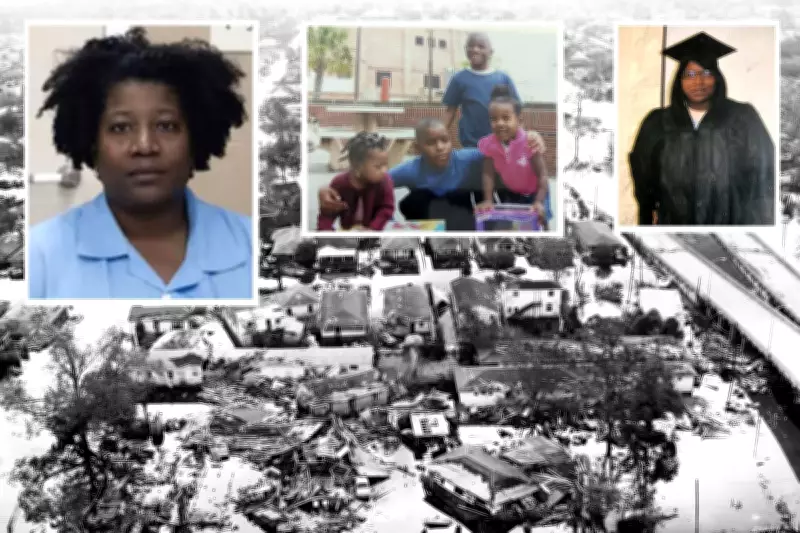
Mother Serving Life for Katrina-Era Infant Death Loses Parole Bid by Single Vote
Tiffany Woods, a 46-year-old mother incarcerated for nearly two decades following the death of her malnourished infant during Hurricane Katrina, has been denied parole by a single vote. The Louisiana Board of Pardons and Parole rejected her release in February 2026, despite substantial evidence of rehabilitation during her imprisonment.
A Family Shattered by Tragedy and Justice
Nie'John Woods, Tiffany's eldest son who was just eight years old when his baby brother died, described watching his mother's emotional collapse during the parole hearing via Zoom. "I was shocked and angry," he revealed, expressing frustration that the proceedings focused more on past events than his mother's transformation.
The case dates back to November 2005 when five-month-old Emmanuel Woods died from malnutrition in the chaotic aftermath of Hurricane Katrina. With supply chains devastated and government formula vouchers exhausted, Tiffany Woods made what she later called a "devastating decision" to dilute cow's milk with water to feed her premature infant.

Medical Context and Legal Consequences
Medical experts emphasize that cow's milk lacks essential nutrients for infants under one year and can cause digestive issues. Baby Emmanuel had additional complications, having tested positive for a metabolic deficiency that impaired fat breakdown. A follow-up appointment scheduled for August 29, 2005, was missed due to the mandatory evacuation order issued the previous day.
In 2008, both Tiffany Woods and the baby's father, Emmanuel Scott, were convicted of second-degree murder, a charge that doesn't require proof of intent to harm. Prosecutors argued they should have sought available help despite the post-Katrina chaos. Their original life sentences were reduced to 32 years in 2023, making Woods eligible for parole consideration this year.
Rehabilitation Versus Retrial
During the parole hearing, prison officials and supporters presented compelling evidence of Woods' rehabilitation:
- Completion of seminary training and paralegal education courses
- Mentoring and counseling other incarcerated women
- Maintaining a clean disciplinary record throughout her incarceration
Prison Warden Kristen Thomas testified that Woods presented "low risk and low needs" for release. However, the district attorney's representative focused on presenting graphic photographs of the malnourished infant from 2005, arguing that Hurricane Katrina didn't justify the failure to properly feed the child.
The Parole Board's Divided Decision
The three-member board split their votes, with two supporting parole and one opposing. Louisiana requires unanimous decisions for parole approval, meaning Woods' release was denied by a single vote. The dissenting board member acknowledged Woods' progress but stated she was swayed by the photographic evidence presented.
"I went in there thinking she only needed two out of three votes," Nie'John explained. "But turns out she needed a unanimous agreement. So I am a bit shocked and angry because one of the parole board members changed her vote based on photos of my dead brother."
Family Fractured by Multiple Tragedies
Following Tiffany Woods' arrest, her four surviving children were separated into different foster homes, cycling through the system for years. Nie'John, now an Air Force veteran living in California, had hoped his mother's release would facilitate family reunification in Louisiana.
"I know we all lost something that day," he reflected. "I lost a brother, she lost a son. We were put in foster care. So much happened to us because of this. Our family was shattered."
A Mother Transformed but Still Confined
Nie'John passionately argued that his mother represents exactly what the prison system aims to produce: a rehabilitated individual ready to reenter society. "The point of prison, I thought, was to rehabilitate you. And I believe she was successfully rehabilitated," he stated. "The person she is today is not the same person she was in 2005."

Despite the parole denial, Woods must wait five years for her next opportunity before the board. Her son maintains hope for eventual release, but for now, Tiffany Woods remains behind bars, her rehabilitation insufficient to overcome the tragic decisions made during one of America's most devastating natural disasters.