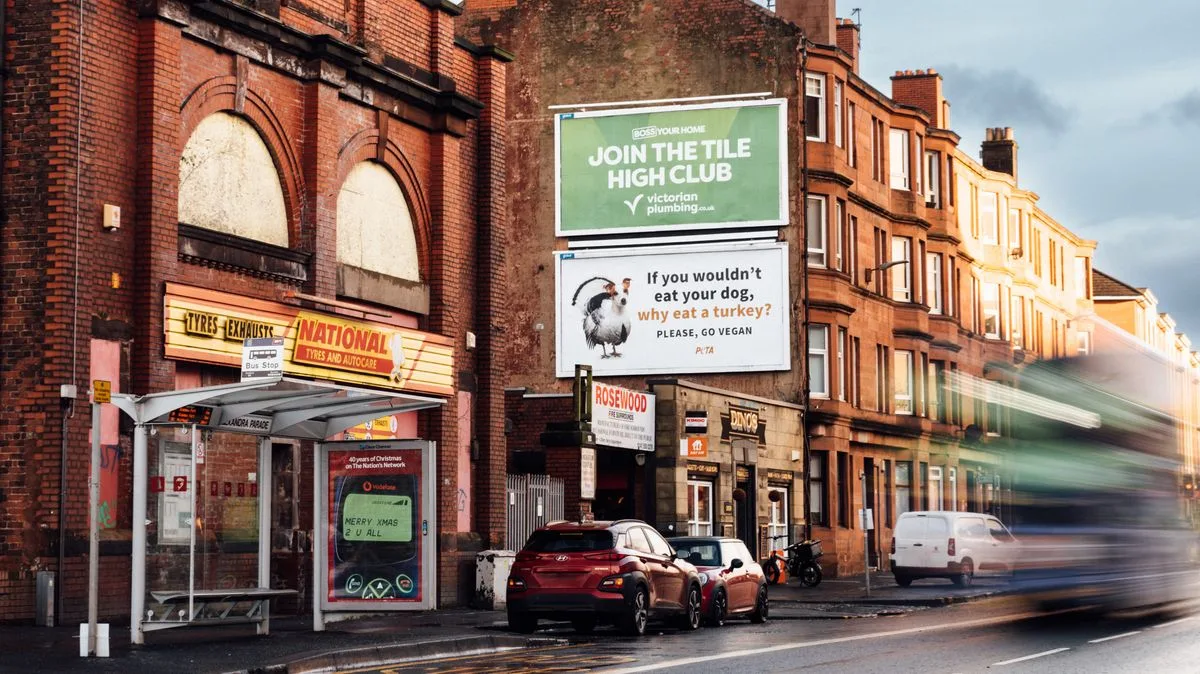
A prominent animal rights organisation has ignited a fierce public debate with a provocative Christmas billboard displayed in central London. The advert, unveiled by Animal Rising, directly challenges the UK's festive traditions by urging compassion over consumption.
A Direct Challenge to Festive Traditions
The billboard, strategically placed near London's busy Oxford Street, carries a stark message: "If you really care about animals, stop eating them." This campaign, launched on December 30th, 2025, deliberately targets the post-Christmas period when many reflect on the year. The group's spokesperson, Nathan McGovern, stated the timing was intentional, aiming to prompt a moral reckoning about the place of animals in our celebrations.
Animal Rising, known for its high-profile protests, argues that the seasonal focus on goodwill and family starkly contrasts with the industrial farming system. The billboard features imagery designed to connect the dots between the food on festive plates and the living creatures behind it. McGovern emphasised that the campaign is not about shaming individuals but about fostering a broader societal conversation on the ethics of meat consumption.
Public Reaction and Industry Response
The public response has been sharply divided. While many supporters have taken to social media to applaud the campaign's boldness, critics have accused the group of being overly confrontational and out of touch with traditional values. Some passing shoppers labelled the message as "preachy" and an unwelcome intrusion on personal choice during a time of celebration.
The farming and meat industry has robustly defended its practices. A representative from the National Farmers' Union (NFU) highlighted the UK's high welfare standards and the importance of balanced diets. They argued that responsible meat production is a vital part of the nation's agricultural economy and food culture, particularly during traditional holidays. The debate has spilled over into discussions about food security, personal liberty, and the definition of genuine animal welfare.
The Broader Context of Ethical Consumption
This billboard campaign arrives amidst a growing national conversation about sustainable and ethical consumption. Recent years have seen a significant rise in plant-based product availability and flexitarian diets. However, Animal Rising contends that incremental change is insufficient and that a fundamental shift in attitude is required.
The group points to scientific studies on animal sentience and the environmental impact of animal agriculture as core justifications for their direct message. They assert that true compassion must extend to all beings, suggesting that festive generosity should not have species-based limits. This campaign is likely a precursor to further activism, as the organisation signals its intent to keep ethical eating at the forefront of public discourse in the new year.
Whether this provocative approach will change hearts and minds or simply deepen existing divides remains to be seen. What is clear is that the question of our relationship with animals, especially during times of traditional feasting, is now firmly on the agenda for many Britons.




