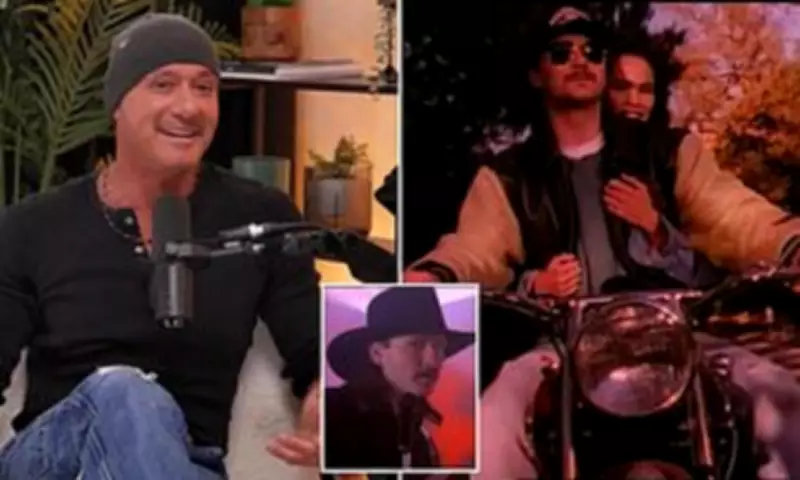
Tim McGraw Credits Controversial 'Indian Outlaw' for Career Launch
Country music icon Tim McGraw has revealed that his 1994 song Indian Outlaw, which features numerous Native American stereotypes, played a pivotal role in launching his career despite its controversial nature. The 58-year-old singer, who is of European descent, acknowledged that releasing such a track today would likely provoke substantial backlash, but in the mid-1990s it became his breakthrough hit.
Initial Label Rejection and Fan Embrace
McGraw originally planned to include Indian Outlaw on his self-titled debut album in 1993, but faced resistance from his label Curb Records. "They just said it was too controversial and it was a bad song," McGraw recalled during a recent appearance on The Tim Ferriss Show. "It wasn't country music. It won't work on radio...I knew it worked. But I didn't have any say-so on the first album."
Undeterred, the three-time Grammy winner began performing the song live at clubs and honky-tonks, where it received such enthusiastic responses that he would often have to play it "three or four times a night." This fan reaction convinced him to record the track for his second studio album Not a Moment Too Soon in 1994, despite knowing it could either make or break his career.

Chart Success and Career Momentum
"Luckily, it worked," McGraw stated, reflecting on the song's impact. "I'll forever believe that the combination of [Indian Outlaw and Don't Take the Girl] is what set my career in motion and gave me momentum that I probably couldn't have gotten any other way."
The gamble paid off handsomely. Indian Outlaw became McGraw's first top-40 country hit, peaking at number eight on Billboard's Hot Country Singles and Tracks chart and reaching number 15 on the Billboard Hot 100. The song's success helped establish McGraw as a major force in country music, ultimately contributing to his career total of over 106 million records sold worldwide.
Addressing Native American Concerns
McGraw has been candid about the song's problematic elements, which include references to wigwams, tom-toms, peace pipes, and teepees. He revealed that he has met with several Native American leaders over the years to discuss the track. "Some liked the song, some didn't like the song," he acknowledged.
The singer told these leaders: "Look, I understand what your concerns are. The song's not meant to be that way, I understand your concerns. My opinion, if you need to go after me in order to raise attention and awareness, by all means, use my song for that."
McGraw has developed a practice of consulting with Native American community leaders when performing at their venues. "When I play Native American casinos, when I meet with the elders or the chiefs before the show, I always say, 'You know, I have Indian Outlaw on my set, but I'm happy to take it out if it's offensive,'" he explained. "And invariably 99.9% of the time they [say], 'That's why we hired you is to sing that song!' So they love it."
Fan Reactions and Continued Relevance
The Indian Outlaw music video, which features McGraw romancing a 'Chippewa' woman, has amassed 11 million views on YouTube. The comments section reveals divided opinions, with some viewers passionately defending the song based on their Native American heritage.
YouTube user @douglasjames1943 and @PeaceTeaHippie have both defended the track, while @andreasorourke4252 wrote: "Real Indian here (Apache and Cherokee) love this song." Another user, @eaglefeather810, commented: "I'm 100% Native American [and] proud. Glad I found this song [it] brings back memories. I'm from Rosebud, SD Sioux tribe."
Despite the ongoing debate about cultural representation, the song remains part of McGraw's repertoire as he continues his successful career. The singer, who has undergone four back surgeries and double-knee replacements since 2024, is currently recording his 18th studio album.

Upcoming Tour and Legacy
McGraw is scheduled to headline the Houston Rodeo at NRG Stadium in Texas on March 21 before launching his 33-date Pawn Shop Guitar Tour on July 9. The Democrat-voting artist maintains significant popularity with 10.3 million monthly listeners on Spotify and an impressive catalog of 47 No. 1 radio singles and 19 No. 1 albums.
Reflecting on his controversial breakthrough hit, McGraw concluded: "So it's been really good to me." The song that nearly derailed his career before it began instead became the catalyst for one of country music's most enduring success stories.