Yeehaw Couture: The Rise of Cowboy Core Fashion Across America
Cowboy Core Fashion Sweeps America: From Brooklyn to Bozeman

The Widespread Appeal of Cowboy Core Fashion

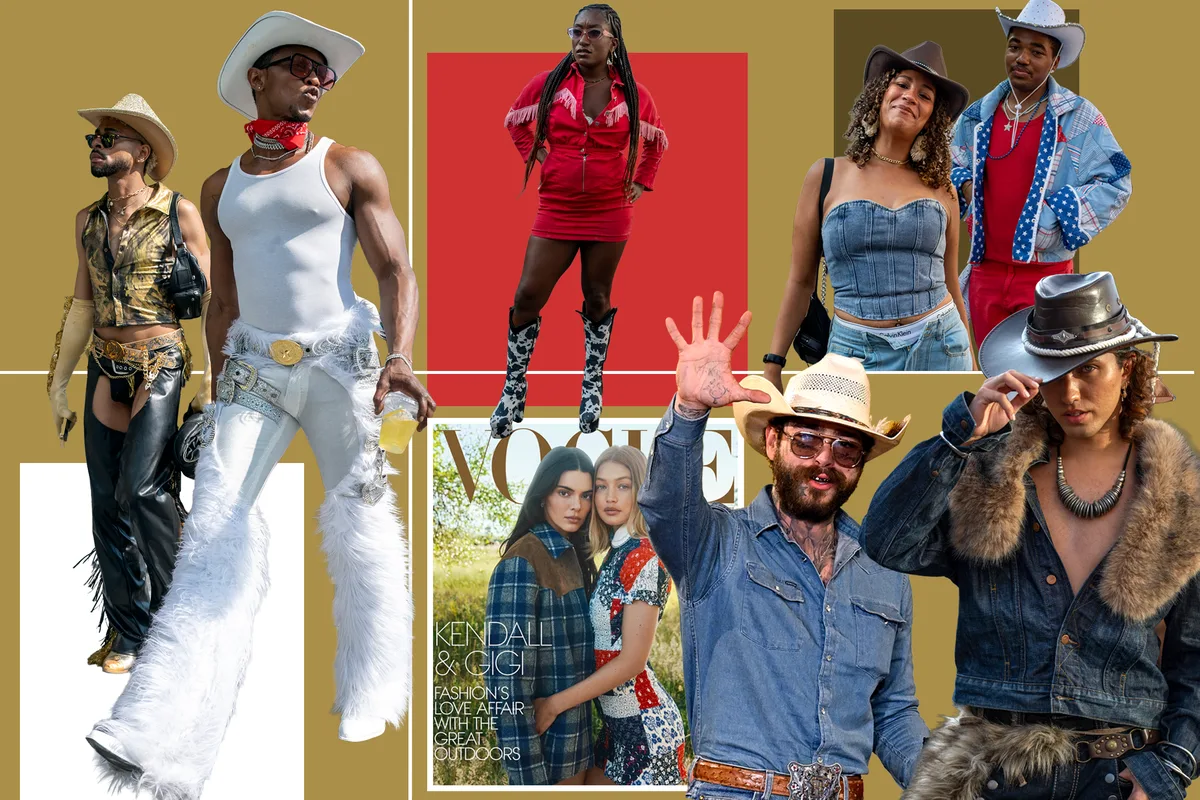
It is increasingly easy to spot the signs of a major fashion shift. A normcore friend might suddenly swap their dad trainers for a pair of authentic cowboy boots. The regular at the local coffee shop, once known for his beanie, may now be sipping a cortado while sporting a classic Stetson hat. Red bandana neckerchiefs have become unexpectedly ubiquitous. This transformation occurred gradually before accelerating rapidly: a significant portion of the population is now embracing cowboy-inspired attire.

The Cultural Catalysts: Television, Music and Luxury

Label it the Yellowstone effect, the Landman aesthetic, or attribute it to Beyoncé's groundbreaking country tour—suede fringed jackets, Wrangler jeans, rhinestone accessories and sturdy cowboy boots are now as prevalent in urban Brooklyn as they are in rural Bozeman. This wholehearted adoption of American Western style extends far beyond mere clothing choices. Taylor Sheridan's epic television series, Yellowstone, which chronicles the dramatic saga of the Dutton family in Montana, shattered records with 15.9 million viewers for its fifth season premiere. This made it the most-watched cable premiere since The Walking Dead in 2017.

Sheridan's subsequent series, Landman, shifted focus from cowboys to oil workers in the volatile terrain of West Texas, earning critical acclaim and becoming one of the standout shows of the previous year. Simultaneously, Beyoncé's Cowboy Carter tour, inspired by her Grammy-winning 2024 country album, generated a staggering $407.6 million from 1.6 million tickets sold. Her devoted fans enthusiastically participated, two-stepping in their finest Western outfits at every show.

Wide Pickt banner — collaborative shopping lists app for Telegram, phone mockup with grocery list

Fashion Industry Embraces the Western Wave

The fashion industry has taken decisive note of this trend. Louis Vuitton's creative director, Pharrell Williams, recently presented a collection where models paraded down the catwalk wearing embellished denim chaps and suits adorned with cactus motifs, set against a projected backdrop of a barren desert landscape. Referred to as "yee-haw couture" by Texan singer Kacey Musgraves, this Western influence has prominently featured in the latest collections from Gucci, Versace and Chanel.

For the October cover of Vogue, supermodels Kendall Jenner and Gigi Hadid were photographed on horseback at a picturesque Wyoming ranch. Bella Hadid took her connection to the culture a step further by dating professional rodeo champion Adan Banuelos. Meanwhile, rapper Post Malone launched his own streetwear-meets-Western clothing brand, Austin Post, offering items like grey zip-up hoodies with suede fringe detailing on the chest, retailing for $370.

Retail Success and Market Expansion

The surging demand to dress like a cowboy has proven immensely profitable for retailers specializing in ranch-inspired attire. Boot Barn, a California-based chain with over 500 stores nationwide selling cowboy hats and boots, has seen its market value more than triple over the past five years, according to Nasdaq data. Tecovas, an Austin-founded cowboy boot company, recently invested millions in a Super Bowl advertisement, shortly after opening its first store in New York's trendy SoHo neighborhood, complete with an integrated tequila bar.

The Tecovas advertisement featured a rugged, Kevin Costner-esque figure on horseback galloping across a dusty plain, intoning, "The true West has no fences. We might not need to have more people in the West. But would it hurt to have a little more West in the people?"

Historical Roots and Modern Interpretations

Since the late 19th century, cowboys have been subjects of fascination and fantasy in novels, comic books, television and film. However, the question remains: why has Western style migrated so decisively from the ranch to mainstream fashion now? Steve Soderholm, founder of the Western-inspired perfumery Ranger Station, exemplifies the modern cowboy aesthetic. His Instagram feed is filled with images showcasing bandanas, cream Stetson hats and cowboy boots.

Pickt after-article banner — collaborative shopping lists app with family illustration

At his brother's wedding, all the groomsmen wore bolo ties—neckwear consisting of a thin cord fastened with a decorative clasp. Soderholm, hailing from Nashville, Tennessee, grew up wearing practical brands like Wrangler and Dickies for outdoor work. He observes that this style has suddenly become fashionable. "I love the comfort of my jeans and my cowboy boots because I can wear them to a nice dinner if I want to, or wear them if I'm doing work in the yard," he explains. He has also noticed city-dwellers, including so-called "finance bros," adopting the look during his travels across the United States.

Psychological Appeal and Cultural Identity

Soderholm suggests that men, in particular, are drawn to this trend due to a yearning for a "simpler time." "People are craving analogue experiences when everything is speeding up so fast in this online, digital world," he says. "They're attracted to the idea of leading a quieter life that's more peaceful." Fashion historian Summer Anne Lee from the Fashion Institute of Technology in New York City adds that the cowboy aesthetic is deeply aspirational. The modern glamorization of the cowboy is rooted in a childlike fantasy that idealizes the lifestyle.

"Cowboys are independent, free, self-reliant, strong and tough, and they very frequently have guns," Lee notes. "It's the idea that the cowboy is someone who can protect himself and who can defend others." Functional, durable workwear originally designed for ranchers, oil workers and labourers is deeply embedded in American fashion history. Heritage brands like Levi's and Stetson initially crafted garments for labourers before adapting them for the mass market.

Levi Strauss, a Bavarian immigrant, founded his denim brand after moving to California in 1853 during the Gold Rush to sell dry goods to miners. He collaborated with tailor Jacob Davis to create riveted denim pants, patenting the first "blue jeans" in 1873. Some repopularized styles have even longer histories, drawing inspiration from Native American dress. Leather fringing, commonly seen on Western jackets and boots, was originally incorporated by indigenous tribes to help garments shed rainwater.

"While it is decorative, the fringe is designed so that rainwater would trickle down the fringe and protect the rest of the garment," Lee explains. "There's a lot of blending going on, a fusion of indigenous styles that were obviously developed for practical purposes in addition to style and taste." The bedazzled aspect of Western dressing has also experienced a resurgence, tracing back to the 1940s when Ukrainian-American tailor Nudie Cohn created his iconic "Nudie Suit" for touring country singers.

A Symbol in Times of Division

These ornate outfits featured intricate rhinestone detailing, thick lapels and embroidery of Western motifs like roses, cacti or horses, echoing rodeo rider styles. They were worn by legends such as Elvis Presley, Hank Williams, Cher and Johnny Cash. His influence remains evident today in the touring wardrobes of contemporary megastars like Post Malone, Beyoncé and Grammy-winning singer Shaboozey. The question of why America is embracing cowboys and the West during such a fraught period in the nation's history is complex.

A 2026 Gallup poll indicated a record 80 percent of U.S. adults believe the country does not agree on fundamental values. "There's a crisis of American identity [right now] and the question of who is American and what does an American look like," says Lee. "In that search for American identity, the cowboy is something that people land on." The cowboy symbol, imbued with traits of honour, hard work and freedom, presents a unifying vision of America that individuals across the political spectrum can see themselves in.

Soderholm believes American men, especially, find solace in this version of masculinity. "The cowboy is seen as this rugged guy who works the field and provides for his family and works with his hands," he reflects. "A lot of the time, we dress aspirationally towards what we wish life looked like, and I think a lot of people wish for a super simple life, kind of like in the old West." This profound cultural and sartorial shift demonstrates how fashion continues to reflect deeper societal yearnings and identities.