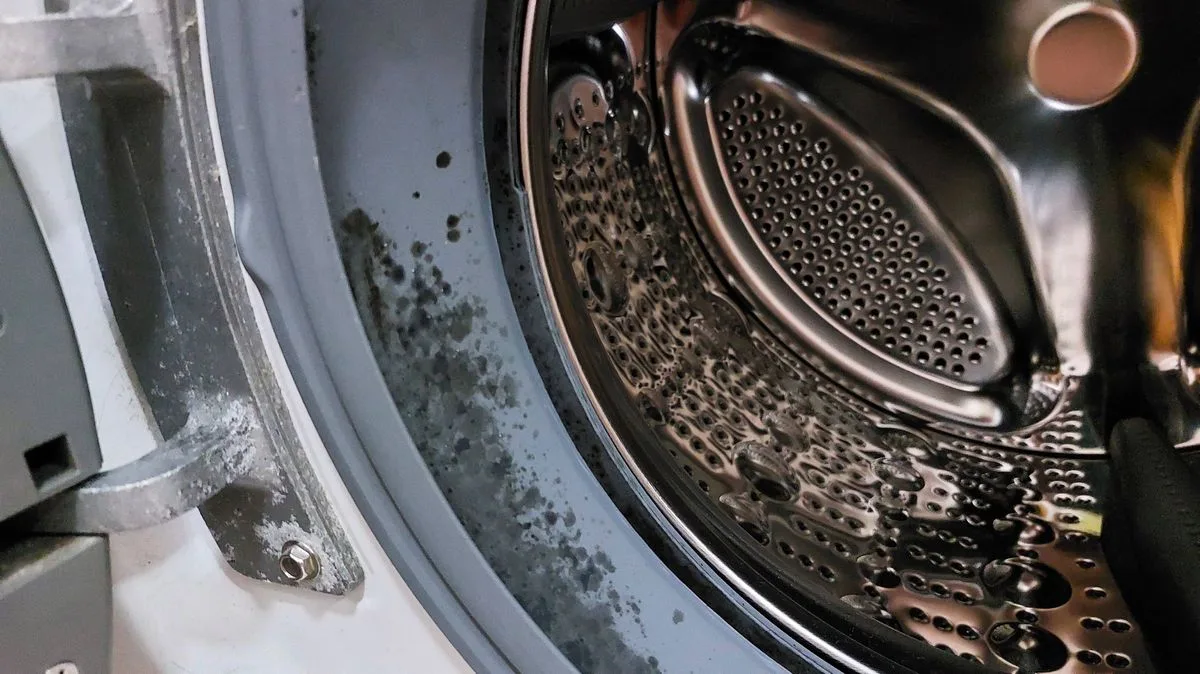
If you've noticed black mould growing in your washing machine seal, there's a simple method to get rid of it in just 15 minutes – no scrubbing or harsh chemicals needed. The rubber seal, also known as the door gasket, is a crucial part of this household appliance. It creates a watertight barrier between the door and the drum, preventing water from leaking during the wash cycle. However, without proper maintenance, the rubber seal can quickly become a hotspot for persistent black mould and mildew.
The warm, damp environment inside the washing machine provides perfect conditions for mould and mildew to thrive, which can also generate foul odours. The washing machine seal makes direct contact with your clothes, meaning any grime or mould present can transfer onto your laundry if not cleaned, completely defeating the purpose of washing them in the first place.
Moreover, a dirty and clogged rubber seal can compromise your washing machine's performance, potentially leading to leaks, diminished efficiency, and even lasting damage to the appliance. With this in mind, cleaning experts at Smol recommend using white vinegar to remove mould from washing machine seals. Speaking about the effectiveness of this common kitchen staple, the specialists claimed that 'vinegar kills mould more effectively than bleach'.
They said: 'Bleach only kills mould spores on the surface of affected materials, whereas vinegar can penetrate porous materials, killing mould at its root.' While leaving an acid such as undiluted vinegar on a surface for prolonged periods could allow it to cause some deterioration, diluting vinegar with water in a wash cycle, or applying a solution and wiping it away, is different.
To properly clean your washing machine seal using white vinegar, mix equal amounts of warm water and clear vinegar, then apply the mixture to the seal with a cloth. Work the solution thoroughly into any mould and allow it to soak for 15 minutes. Once finished, wipe away with a damp cloth and fresh warm water.






