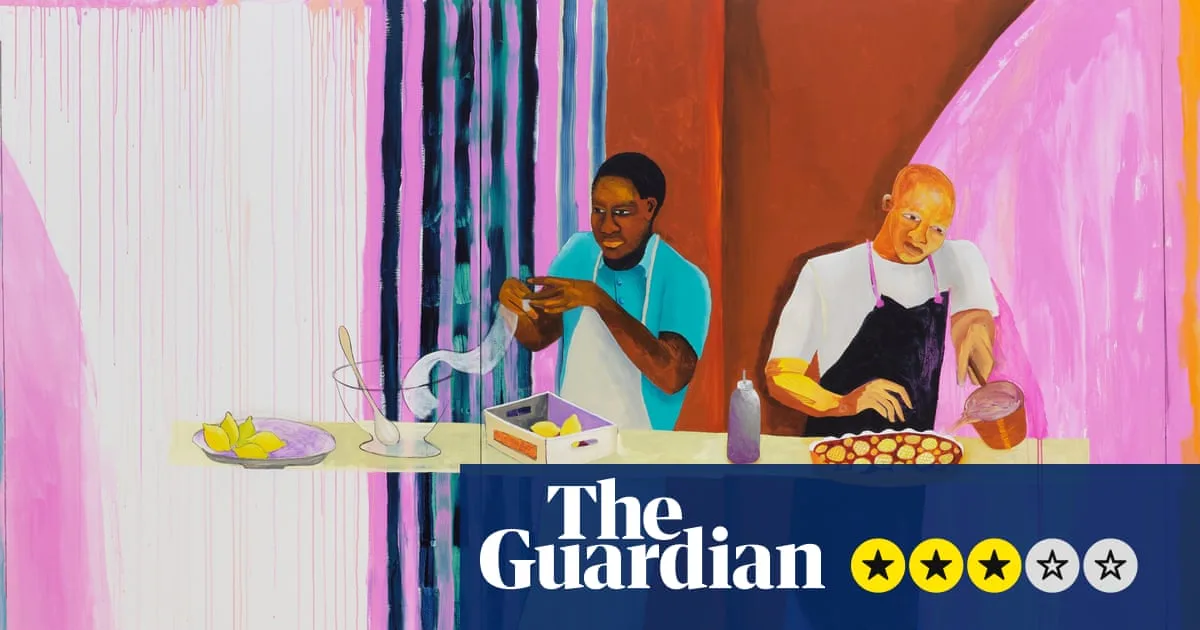
Lubaina Himid’s installation at the British Pavilion in the Venice Biennale presents a tense portrait of Britain, focusing on the experiences of black figures who shape the nation as tailors, cooks, architects, and gardeners. The works feature monumental paintings and a wall of painted oars, accompanied by an audio track of bucolic sounds like lapping waves and bird calls, which contrast with the uneasy glances exchanged by the figures.
The central theme is the question of belonging. The black subjects in the paintings appear disconnected, sharing looks that ask, “What the hell are we doing here?” Himid explores whether one can ever truly feel at home if their roots lie elsewhere. The exhibition is anchored by 26 philosophical questions on the wall, such as “Can flies settle here?” and “Can poison taste delicious?” though these are seen as less profound than intended.
While the show specifically addresses migration and the status of people who move to Britain, it overlooks broader dimensions of alienation. Belonging is complicated by factors like gender, sexuality, and class; millions in Britain feel they don’t belong, regardless of migration background. Visually, the work is not Himid’s strongest, and some critics find a painting show by a celebrated artist underwhelming for the pavilion space.

Nevertheless, the installation effectively conveys anxiety and discomfort. Despite bright colours and calming sounds, Himid reveals a darker truth: for many, Britain’s green and pleasant land will never feel like home.