H Is For Hawk: A Visceral Exploration of Grief Through Nature's Lens
Cinema has long explored the complex terrain of human grief through diverse narratives. From the airborne adventure in Pixar's Up to the haunting Venetian journey in Don't Look Now, filmmakers have sought to capture mourning's many faces. Kevin Costner found solace on a baseball diamond in Field Of Dreams, while Paul Mescal's Shakespeare recently immersed himself in writing Hamlet in the film Hamnet. Now, director Philippa Lowthorpe presents perhaps the most unconventional approach yet in H Is For Hawk, based on naturalist Helen Macdonald's acclaimed memoir.
A Father's Sudden Loss and an Unusual Path Forward
The film introduces us to Helen Macdonald, portrayed with remarkable intensity by Claire Foy, known for her role as Queen Elizabeth II in The Crown. Helen is a chain-smoking Cambridge academic whose world shatters when she receives a devastating phone call from her mother, played by Lindsay Duncan. Her beloved father Alisdair, a renowned newspaper photographer portrayed by Brendan Gleeson, has collapsed and died unexpectedly.
This sudden loss leaves Helen reeling, struggling to process emotions that defy easy categorization. Her relationship with her mother proves brittle, while her brother remains virtually silent throughout much of the narrative. Human connection offers little comfort, even when a potential romantic interest appears, only to be spooked by the emotional self-help books littering Helen's space.

The Goshawk as Unconventional Companion
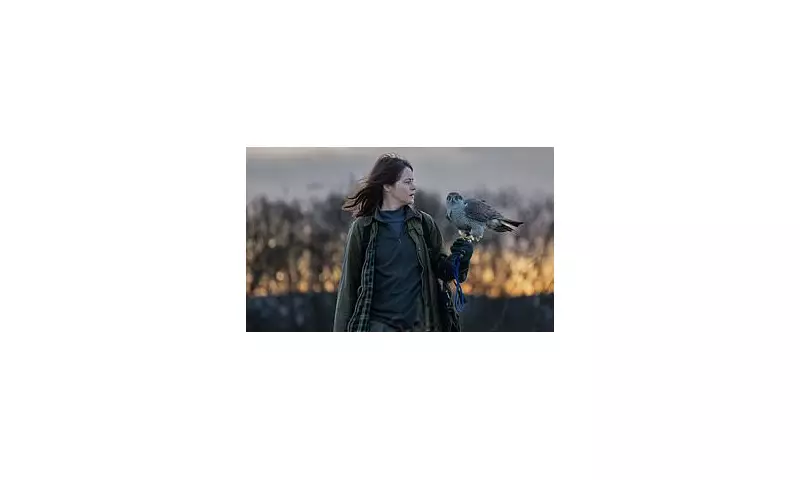
Instead of turning to people, Helen makes a radical decision. She travels to her father's native Scotland to acquire a goshawk, naming the bird Mabel. This choice stems from childhood experiences she shared with her father, who nurtured her fascination with birds of prey. Their bond was strengthened through shared humor and a mutual understanding that made Alisdair the one person who truly comprehended his daughter.
Back in the Cambridgeshire countryside, Helen begins training Mabel under the guidance of a bird-of-prey expert played by Sam Spruell. The film's flying sequences prove particularly breathtaking, capturing the raw power and beauty of the goshawk in flight. Foy reportedly underwent intensive training herself, lending authentic authority to scenes where she handles the formidable bird.
Complex Characters and Unconventional Healing
Lowthorpe, who co-wrote the adaptation with Emma Donoghue, resists simplifying Helen's character or her journey. This isn't a Disney-fied narrative with clear emotional trajectories from pain to catharsis. Instead, we witness Helen's academic work suffering as she becomes increasingly consumed by her bond with Mabel, even neglecting personal hygiene in the process.
The film challenges audience expectations about grief narratives. Rather than providing easy answers or depicting nature as a straightforward healer, it presents a more complicated reality. Helen's emotional struggles don't magically disappear through her connection with Mabel; if anything, they intensify, making for a more demanding but ultimately more rewarding viewing experience.
Authentic Performances and Honest Storytelling
Foy delivers a superb performance at the film's heart, refusing to glamorize Helen or make her conventionally likable. She presents a complex, sometimes difficult character whose grief manifests in ways that challenge those around her. Brendan Gleeson brings warmth and depth to his portrayal of Alisdair, primarily through flashbacks that illuminate the special father-daughter bond at the story's core.
The supporting cast, including Denise Gough as Helen's concerned academic friend, adds texture to this world. The film acknowledges what's lost in adapting Macdonald's literary memoir to screen while finding its own cinematic strengths in visual storytelling and authentic character portrayal.

Set in 2007, H Is For Hawk joins a select group of powerful films exploring father-daughter relationships, offering a welcome addition to this underrepresented category. It doesn't unfold as expected, but then, as the film suggests, grief rarely follows predictable patterns. This very unpredictability becomes the story's strength, resulting in a challenging, worthwhile film that respects its audience's intelligence while delivering emotional authenticity.