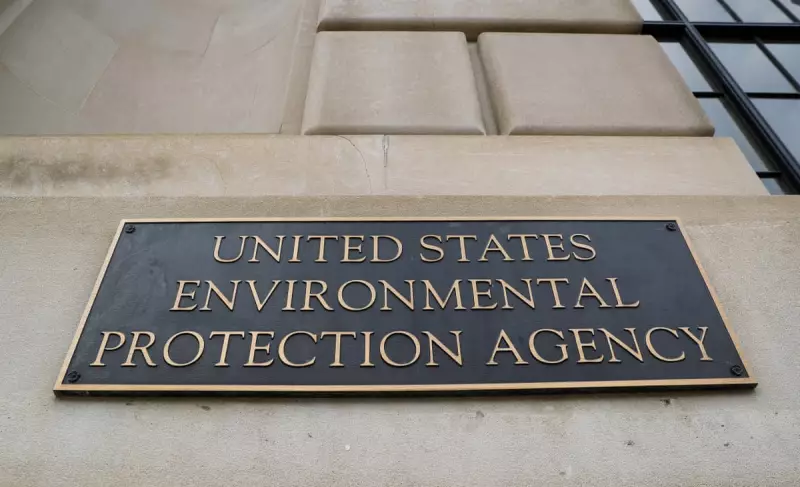
Legal Challenge Over EPA's Approval of Controversial Pesticide
Public health organisations have initiated legal proceedings against the US Environmental Protection Agency (EPA) concerning its authorisation of a PFAS insecticide that industry research indicates likely causes significant testicular damage in laboratory rats. The lawsuit represents a substantial escalation in the ongoing controversy surrounding the utilisation of so-called "forever chemicals" within agricultural pesticides.
Health Risks and Regulatory Oversight
The pesticide in question, isocycloseram, is employed on a wide variety of food crops including apples, oranges, lettuce, spinach, tomatoes, broccoli, and almonds, as well as on lawns and golf courses. According to the plaintiffs, the EPA failed to adequately consider the adverse health effects, particularly on children and developing fetuses, during its safety assessment process.
Nathan Donley, environmental health science director at the Center for Biological Diversity and a plaintiff in the case, stated that the agency did not factor these critical risks into its evaluation. "We are going to fight like hell to make sure these forever pesticides aren't allowed to poison our grandchildren's grandchildren," Donley declared.

Scientific Evidence of Harm
The EPA's own human health risk assessment for isocycloseram documented that long-term dietary exposure in rats resulted in "reduced testes size, increased incidence and severity of tubular degeneration in the testes, reduced sperm and cellular debris in the epididymis." Furthermore, Australian regulators discovered the substance induced skeletal malformations in fetal rats, and additional research suggested potential carcinogenic properties.
PFAS chemicals, numbering approximately 16,000, are notoriously persistent in the environment, earning their "forever chemical" designation because they do not naturally degrade. They accumulate over time and have been linked to serious health conditions including cancer, kidney disease, liver problems, immune disorders, and birth defects.
Broader Environmental and Political Implications
The lawsuit highlights significant tensions within the current administration's environmental policy framework. The approval process has reportedly caused friction between the Robert F Kennedy Jr.-aligned Make America Healthy Again movement, which broadly opposes pesticide use, and elements within the Trump administration aligned with pesticide and chemical industries.
Kelly Ryerson, a Maha advocate, criticised the EPA's decision, stating: "It's another example of the chemical industry lobbyists running the EPA prioritising corporate profits and deregulation over the very fertility of men in our country."
Regulatory Process Under Scrutiny
Donley characterised the EPA's risk assessment process as "like Swiss cheese," filled with questionable assumptions about potential hazards. He alleged the agency failed to follow Food Quality Protection Act mandates requiring a tenfold reduction in health risk thresholds to account for child safety, unless scientific evidence demonstrates such measures are unnecessary.
"There's this assumption that everyone is exposed in a vacuum to this chemical when in real life we're all exposed to a soup of this stuff and that can substantially increase the risk," Donley explained, noting the EPA does not consider cumulative effects of exposure to multiple dangerous substances.
Industry Influence and Agency Leadership
The lawsuit draws attention to the backgrounds of key officials within the EPA's chemical safety and pollution prevention office. According to Donley, all pesticide decisions flow through the top four positions in this office, currently occupied by individuals with previous lobbying roles for pesticide and chemical industry groups.
Kyle Kunkler, a former lobbyist for the pro-pesticide American Soybean Association, oversees the pesticide office. He reports to two former lobbyists for the American Chemistry Council, an industry trade organisation. These officials are supervised by Douglas Troutman, recently confirmed to lead the chemicals office following an endorsement by the same industry council.

Environmental Impact Beyond Human Health
The pesticide's approval raises substantial ecological concerns beyond human health implications. The EPA's own scientific projections indicate the substance would have significant adverse effects on over 1,000 threatened and endangered species. Furthermore, it demonstrates high toxicity to pollinators, with bees potentially exposed to 1,500 times the lethal level when collecting nectar and pollen near treated agricultural fields.
Isocycloseram persists in the environment for centuries and is known to degrade into approximately forty smaller PFAS chemicals, some exhibiting even greater environmental persistence than the original compound.
Administration Response and Ongoing Debate
An EPA spokesperson declined to comment on the ongoing litigation but affirmed the agency's commitment to "tackling PFAS and protecting children's health." The spokesperson added: "Armed with gold-standard science, we are Making America Healthy Again, carrying out our core mission of protecting human health and the environment."
Ryerson expressed concern that administration leadership might be receiving incomplete information, stating: "I worry that he's only hearing from the pesticide lobby. I feel like if this was laid out in front of him, then he would say: 'Why would you allow anything that impacts Americans' testicles?'"
The legal action emerges against a backdrop of increasing scrutiny regarding PFAS chemicals in pesticides. A 2023 analysis of EPA data revealed that at least 60% of active ingredients approved for use in common pesticides over the previous decade fit the most widely accepted definition of PFAS compounds.