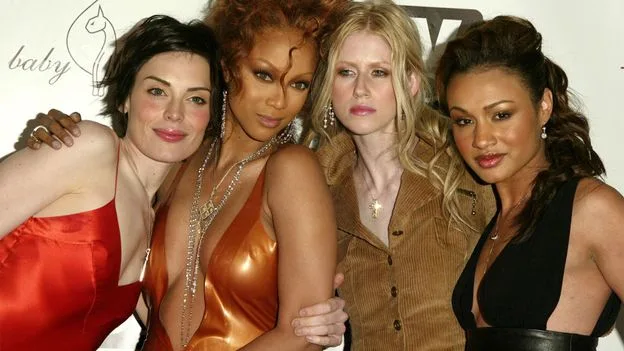
Former Contestants Detail Psychological Manipulation and Strict Control on Reality Show
Stars from the iconic modeling competition America's Next Top Model have come forward with shocking revelations about the strict rules and manipulative tactics they claim producers employed during filming. In a series of recent documentary exposes, former contestants describe an environment they compare to cult techniques, with allegations of psychological control, sleep deprivation, and intentional humiliation.
Netflix and E! Documentaries Uncover Disturbing Allegations
The revelations have emerged through two separate documentary projects that have scrutinized the long-running reality series. Netflix's Reality Check initially brought attention to past incidents of racism, fat-shaming, and an alleged cover-up of a sexual assault case. Now, E!'s two-part docuseries Dirty Rotten Scandals: America's Next Top Model has uncovered even more detailed allegations from former participants.
'Cultish' Control Methods Described by Former Contestants
Sarah Hartshorne, who competed as a plus-size model in cycle nine, provided particularly disturbing insights into the show's methods. 'I read the book Cultish, about cults of every level and the tools they all use... Top Model they used all of them,' she revealed. Hartshorne described how producers controlled every aspect of contestants' lives, including bathroom breaks, eating schedules, sleep patterns, and communication with each other.
Contestants were reportedly isolated from friends and family, denied access to newspapers or magazines, and kept unaware of the date or time. 'They used the same phrase over and over again, "if you violate the confidentiality agreement we will dock your wages for the rest of your life",' Hartshorne recalled. She added that cameras filmed them constantly except when alone in bathrooms, though producers allegedly encouraged them to shower together 'for the environment.'
Physical and Psychological Strain on Participants
The physical demands of the competition were extreme, with elimination days requiring 12 to 18 hours of filming that stretched into early morning hours. Hartshorne remembered being warned on her first day that 'a girl faints every week' and indeed became that week's casualty herself. Punishments for rule violations included confiscation of books and iPods, forcing contestants to sit in silence for hours.
Cycle two winner Yoanna House described the model house conditions as particularly challenging: 'The lights were always on, even when you were ready to go to bed. There was no cell phone usage. You were not allowed to leave the house, no windows were allowed to be opened.' She characterized the experience as making contestants feel 'almost an animal' in what seemed like 'an experiment, to see how easily we could break.'
Trauma Exploitation and Public Humiliation Allegations
Lisa D'Amato, who competed on cycle five and later won cycle 17, described how producers allegedly weaponized her childhood trauma. Having suffered abuse from her mother, D'Amato claims producers pressured her to discuss this trauma on camera, contributing to her emotional distress and erratic behavior. 'All of us were sleep deprived, all of us weren't able to eat enough food,' she noted. 'They know what they're doing and it's intentional.'
D'Amato described a particularly humiliating incident where she drank too much and fell asleep outside, which she attributes to the stressful conditions. 'I was always one moment away from fully losing it. Because they were weaponising my childhood trauma, they wanted to f**k with me emotionally. Tyra made me look absolutely crazy on purpose,' she claimed. Despite this experience, she returned for the All Stars cycle six years later seeking redemption, only to find similar conditions including being forced to sit in a van for four hours with paper bags over their heads.
Historical Controversies Resurface
The documentaries have also brought renewed attention to several controversial aspects of the show's history:
- Racially Insensitive Photoshoots: Season four featured models required to 'swap race' using blackface and other racial stereotypes, a concept repeated in season thirteen.
- Inappropriate Themes: Other photoshoots saw models posing as homeless people alongside actual homeless individuals, and one contestant was required to pose as a crime victim despite her mother having been shot and paralyzed.
- Sexual Assault Allegations: Shandi Sullivan from season two has reframed what was portrayed as a drunken indiscretion as sexual assault, claiming she blacked out and producers failed to intervene.
- Racist Treatment: Season one's Ebony Haith described stylists laughing at her hair texture and giving her three bald spots during a makeover.
- Fat-Shaming: Multiple contestants reported enduring weight-related criticism, with judge Janice Dickinson famously calling one model 'piggy chic' and commenting on her 'gut.'
- On-Set Harassment: Season four's Keenyah Hill described being aggressively pursued by a male model during a photoshoot in Africa with inadequate protection from crew.
- Unwanted Cosmetic Procedures: Contestants reported being pressured into dental work, including one who had her 'signature' gap closed against her wishes and another who underwent extensive, painful dental surgery.
Tyra Banks' Response and Production Accountability
Tyra Banks, the show's creator and host, declined to comment when approached by E! for the documentary. Executive producer Ken Mok has taken responsibility for some controversial decisions, particularly the crime scene photoshoot, calling it a 'mistake to celebrate violence' in that manner. Regarding the sexual assault allegations, Mok explained their filming philosophy: 'We treated Top Model as a documentary. We told the girls that on day one... "There's going to be cameras with you 24/7, day in and day out, and they're going to cover everything."'
Banks has offered some retrospective apologies, particularly regarding the dental procedures, stating: 'I've actually apologised for the issue with Dani and what happened. That was between a rock and a hard place for me.' However, some former contestants have not accepted these apologies, feeling their experiences were exploited for television entertainment.
The Dirty Rotten Scandals documentary premiered on March 11 with two back-to-back episodes, adding to the growing scrutiny of reality television production practices and their psychological impact on participants.