Zanele Muholi Secures 2026 Hasselblad Award, Elevating Marginalised Narratives
South African photographer Zanele Muholi has been announced as the recipient of the 2026 Hasselblad award, a prestigious honour that places them among the world's most celebrated art photographers. Muholi, who identifies as non-binary, joins a distinguished lineage including Carrie Mae Weems, Hiroshi Sugimoto, and Henri Cartier-Bresson, marking a significant milestone in their three-decade career dedicated to transforming African art.
Despite the accolade, Muholi reframes the win as a collective achievement rather than a personal victory. "I can't say it's winning, because that's like you entered a competition," they explain. "This is more a recognition, a dream for most of us doing photography or visualising work that is not often recognised. It's an honour for our people, for the Black LGBTQIA+ community from home – it's for all of us, the queer and trans community in Africa." This perspective underscores the communal ethos that defines their artistic practice, rooted in empowerment and solidarity.
A Journey Forged in Apartheid's Shadow
Born in 1972 in the township of Umlazi, KwaZulu-Natal, Muholi's early life was shaped by the brutal realities of apartheid. They recall poignant memories of their mother, Bester, a domestic worker for 40 years, who often lived away from home. "I remember being at home without my mother, because she was working for a white family," Muholi shares. "The image I remember is of her at workplaces with swimming pools I wasn't allowed to swim in, and her reminding me: 'Don't go close, because it's work and it won't be good for my Madam to see you.' I remember the dogs trained to bite Black people and the segregated beaches."

These experiences of systemic inequality, described by Muholi as "under-resourced" rather than poor, fuelled a DIY urgency in their work. Raised by aunties and neighbours in a supportive township community, they developed a deep sense of responsibility to create art that challenges injustices and celebrates resilience.
Art as Activism: Documenting and Empowering Communities
Muholi's extensive portfolio, including the long-running series Faces and Phases, focuses on documenting professionals and experts within the queer community, ensuring their stories are told with dignity. "I always ask people to look good," they note, "because most images done previously by visual anthropologists distorted Africa. I'm trying to fix that and make sure we are done beautifully." Portraits like Lerato Dumse (2010) highlight Muholi's ability to capture presence, honouring individuals often overlooked in mainstream narratives.
In 2007, Muholi photographed Miss D'Vine, a dancer in Johannesburg's gay bars, using outdoor settings to "undo the closet" and affirm visibility. One image features Miss D'Vine in a beaded isigege, a Zulu maiden's skirt, challenging exclusion from traditional ceremonies. Muholi treasures this photo, as it survived a 2012 burglary where over 20 hard drives were stolen, an act they suspect was homophobic. Undeterred, Muholi declared, "We are a growing nation. There is a struggle that needs to be fought here."
Self-Portraiture and Cultural Reclamation
The series Somnyama Ngonyama (Hail the Dark Lioness) features bold self-portraits inspired by Muholi's mother, using items like combs, clothes pegs, and bike tires to question beauty standards. "What is beauty to you might not be the same to the next person," they assert. "What is fashion in the west might be ritual to us, or part of the culture and traditions of the Bantu people." The title, in isiZulu, politicises photography as a tool for cultural expression beyond western norms.
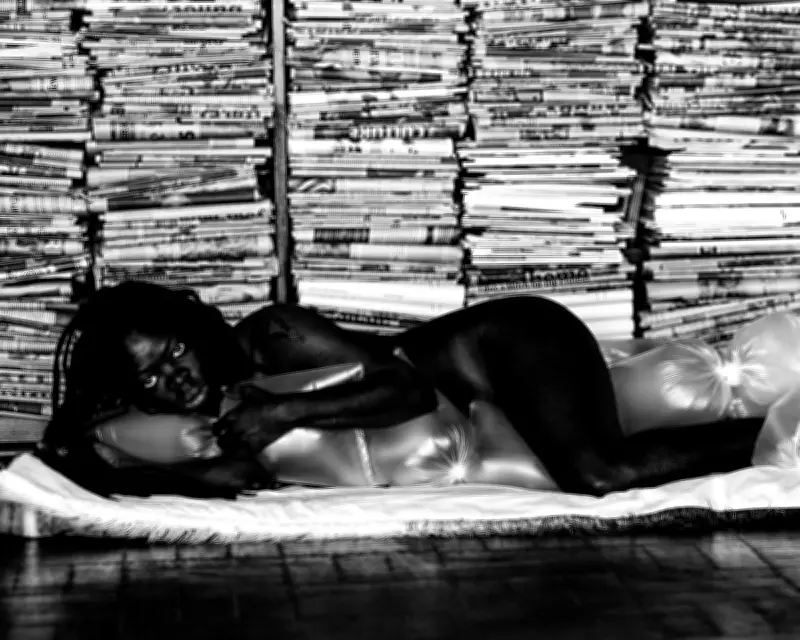
In Julile (the one who thinks deeply), Muholi lies naked amidst plastic bags, reflecting on fibroid surgery and themes of trauma and survival. Another work, Ntozakhe II, reimagines the Statue of Liberty with a jeans headdress, celebrating Black women's representation. "For every beautiful Black girl to be a cover is an honour," they remark.

Muholi views their camera as a weapon against injustice, emphasising photography's role in societal change. Their work will be exhibited at the Hasselblad Center in Gothenburg from 10 October, continuing to amplify voices long silenced by history.