Sea Beneath the Skin Review: Mahler's Song Cycle Transformed by Pacific Culture
Sea Beneath the Skin/Song of the Earth, performed by the Theatre of Kiribati and Britten Sinfonia at Barbican Hall in London, represents a bold fusion of musical traditions. This review explores how Samoan choreographer Lemi Ponifasio's innovative music-theatre piece pushes Gustav Mahler's Das Lied von der Erde into uncharted artistic waters.
A Collision and Collusion of Worlds
Mahler's original work already embodies a cultural clash, with German text inspired by Chinese poetry set to early 20th-century Viennese music. Sea Beneath the Skin takes this concept a whole ocean further, creating an unclassifiable performance that feels less like a collision and more like a deliberate collusion between disparate artistic worlds. The piece begins with a woman walking onto a dark, glossy-floored stage, where two white pillars stretch upward to represent giant kauri tree trunks.
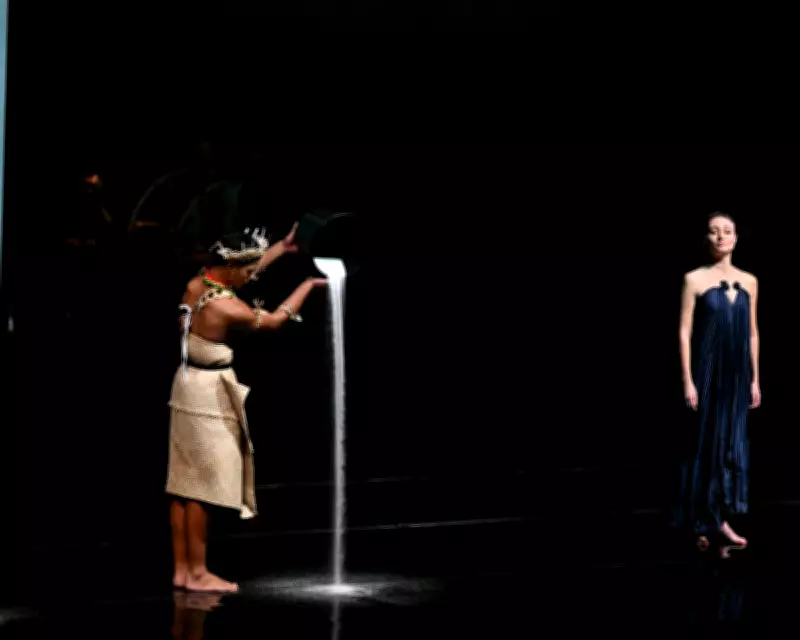
Her rich-toned, short-phrased song is eventually answered by another woman high in the auditorium, their duet growing in urgency and intensity. The performance unfolds with four black-clad men executing a neat cyclical routine involving extensive body percussion, followed by a third woman delivering terrifyingly aggressive shouted chants. A young man in Kiribati ceremonial dress then pours white sand onto the stage from a black plastic bucket. While the precise meanings of these elements remain ambiguous, they collectively frame and link the six movements of Mahler's song cycle, with the two singers appearing as characters in an undefined narrative.

Musical Innovation and Visual Ambiguity
The first notes of Mahler's music sounded ornate, strange, and almost bejewelled in this new context. The Britten Sinfonia performed a version by Iain Farrington that condenses Mahler's huge orchestra to just 16 players, executed with both efficiency and imagination. Translations were provided for the Mahler texts but not for the Pasifika chants, which might reinforce the perception of the latter as "exotic" components in a London setting. However, this omission could also be seen as allowing greater space for the audience's imagination.
The actual texts of Mahler seemed secondary to the passionate delivery by tenor Sean Panikkar, who sounded particularly heroic in the first song, and mezzo-soprano Fleur Barron, whose velvet-toned performance added depth. They, along with conductor Nuno Coelho, were only partly visible, performing from behind a gauze at the back of the stage. This gauze served as a screen for largely monochrome videos depicting flowers opening, underwater explosions, and people wading through floods. These images, often blurry and fragmented by the tree trunks, were difficult to decipher and did not appear precisely synchronised with the music.
A Work in Progress with Powerful Impact
Having premiered in its current form in Luxembourg in 2024, Sea Beneath the Skin still carries the feel of a work in progress. Yet, when placed alongside other works addressing climate change—such as those featured in the Barbican's Fragile Earth series—it stands out as absorbingly and strikingly different. Rather than delivering a lecture, the piece makes a profound appeal to the senses and the imagination, offering a unique perspective on environmental themes through its innovative blend of cultural and musical elements.