Paula Rego's Largest Drawing Exhibition Unveils Intimate Narratives of Struggle and Resilience
The largest exhibition ever dedicated to the drawings of Portuguese-born artist Paula Rego is currently on display at Victoria Miro in London. Curated by her son, Nick Willing, this comprehensive show features works on paper spanning from the 1950s, shortly after Rego settled in Britain, up to her death in 2022. The exhibition, titled "Story Line," runs until 23 May and offers a profound glimpse into Rego's artistic evolution and thematic concerns.
Early Beginnings and Personal Connections
Among the earliest pieces is a tender sketch from Rego's childhood, created when she was just nine years old. This drawing depicts her grandmother seated comfortably in a chair, with hair pinned back, wearing dangly earrings and thick-rimmed glasses on a chain. The young artist diligently signed and dated the work, with her neat script shooting up from the tip of her grandmother's shoe like a flare in a night sky. This small, intimate work sets the tone for an exhibition that delves deeply into personal and political narratives.
Themes of Female Oppression and Political Commentary
Rego, born in 1935 during the early years of the Salazar dictatorship in Portugal, consistently criticised the fascist regime in her art until its overthrow in 1974. Her father advised her to leave Portugal at age 17, declaring it "no country for a woman," due to the repression women faced. This experience fueled her lifelong rally against female oppression, which is vividly expressed in her drawings.

One poignant example is an intimate pencil drawing made in response to the failed 1998 referendum to legalise abortion in Portugal. It portrays the sad and lonely aftermath of a backstreet abortion, with a girl sitting alone in a room, her back to the viewer, legs crossed, and head dipped in despair. Another work, Study for Annunciation from 2002, features Mary modelled on a schoolgirl who cocks her head as she weighs up a vast, winged angel before her, nervously pressing her knees together. These pieces highlight Rego's ability to intertwine personal and political struggles.
Literary and Biblical Inspirations
The exhibition also showcases Rego's engagement with literary and biblical themes. A beautiful and moving 2002 pastel of the pieta depicts the Christ figure's right arm twice, in two different angles, as if it had flopped about before death. Literary references include a sturdy figure of Jane Eyre, a young and handsome Mr Rochester, wild and free depictions of Orpheus and the maenads, and Germaine Greer sitting with her knees apart and the soles of her feet together. These works demonstrate Rego's broad cultural influences and her skill in reinterpreting classic stories through a feminist lens.
Intuitive Techniques and Emotional Depth
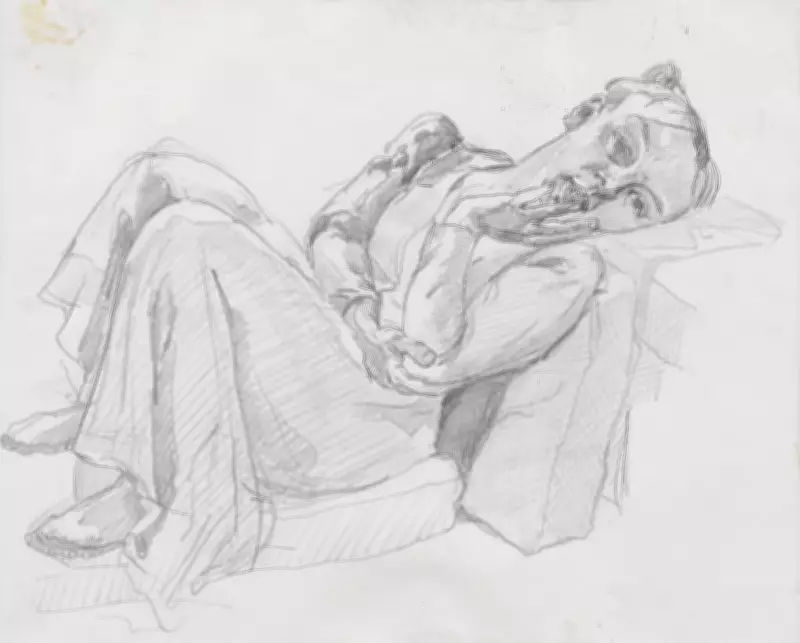
Rego's drawings are characterised by their intuitive touch, with sharp pencil lines, delicate strokes of pen, pastel smudges, and washes of watercolour. This medium allowed her to convey emotion through subtle gestures rather than overt actions. For instance, in Rape from 2009, the horror is conveyed not by the act itself but by the woman turning her head to one side and fixing her gaze determinedly on something far away. Similarly, studies for paintings like The Policeman's Daughter from 1987 show two versions of a girl polishing her father's boot, with small tweaks—such as a relaxed jaw versus a clenched jaw or a flat foot versus a flexed foot—shifting the mood from dutiful to defiant.
Personal Struggles and Artistic Process
The exhibition includes studies from the late 1980s, a period when Rego was caring for her husband, fellow artist Victor Willing, who died of multiple sclerosis in 1988. These works reveal her personal turmoil and resilience. Displayed in a cabinet are photographs of Rego crouching over drawings on the floor, along with notes, letters, and sketchbooks. She often worked on the floor and sometimes walked over drawings she had tossed there earlier, leaving smudges of fingerprints and shoeprints on the paper. This connection to the medium is evident in the raw, unfiltered quality of her drawings.

Legacy and Final Works
Towards the end of the exhibition, a self-portrait from 2017 shows Rego in her 80s, with an aged face bearing deep purple rings beneath watchful eyes and lips parted to reveal white teeth against red gums. This portrait contrasts with her childhood sketch of her grandmother, yet both reflect a focused dedication to her craft. Nearby, a lone finger, probably gripping a pastel, appears as if floating in space, symbolising her enduring artistic drive.
Paula Rego's "Story Line" at Victoria Miro offers a tantalising exploration of her drawings, revealing how her intuitive techniques and emotional depth brought to life mischievous, moving, and troubled tales of female oppression. The exhibition not only celebrates her artistic legacy but also underscores her unwavering commitment to challenging societal norms through art.